
Wall Avenue’s crypto footprint has by no procedure been bigger. BlackRock by myself reported nearly about $150 billion in digital asset-linked AUM in its 2026 chairman’s letter. Public firms preserve over 1.1 million $BTC on their steadiness sheets. Institutions relate extra than 513,000 $BTC by ETF wrappers.
But combination numbers obscure the question that issues most. Who the truth is holds what, whereby infrastructure, and why?
This text maps Wall Avenue’s crypto ownership all over five layers.
It begins with SEC 13F filings, strikes by company steadiness sheets, follows the money into tokenized fund rails, traces the custodial chokepoints the set apart keys focus, and ends the set apart filings droop gloomy, with on-chain OTC flows that present holders no quarterly represent captures.
SEC 13F Filings Expose Secrets and programs About Wall Avenue Crypto ETF Holdings
No matter a 23% mark decline in Q4 2025, global Bitcoin ETF flows remained particular at $3.7 billion. Full-300 and sixty five days knowledgeable ETF ownership grew 32% versus 18% for the broader ETF investor negative.
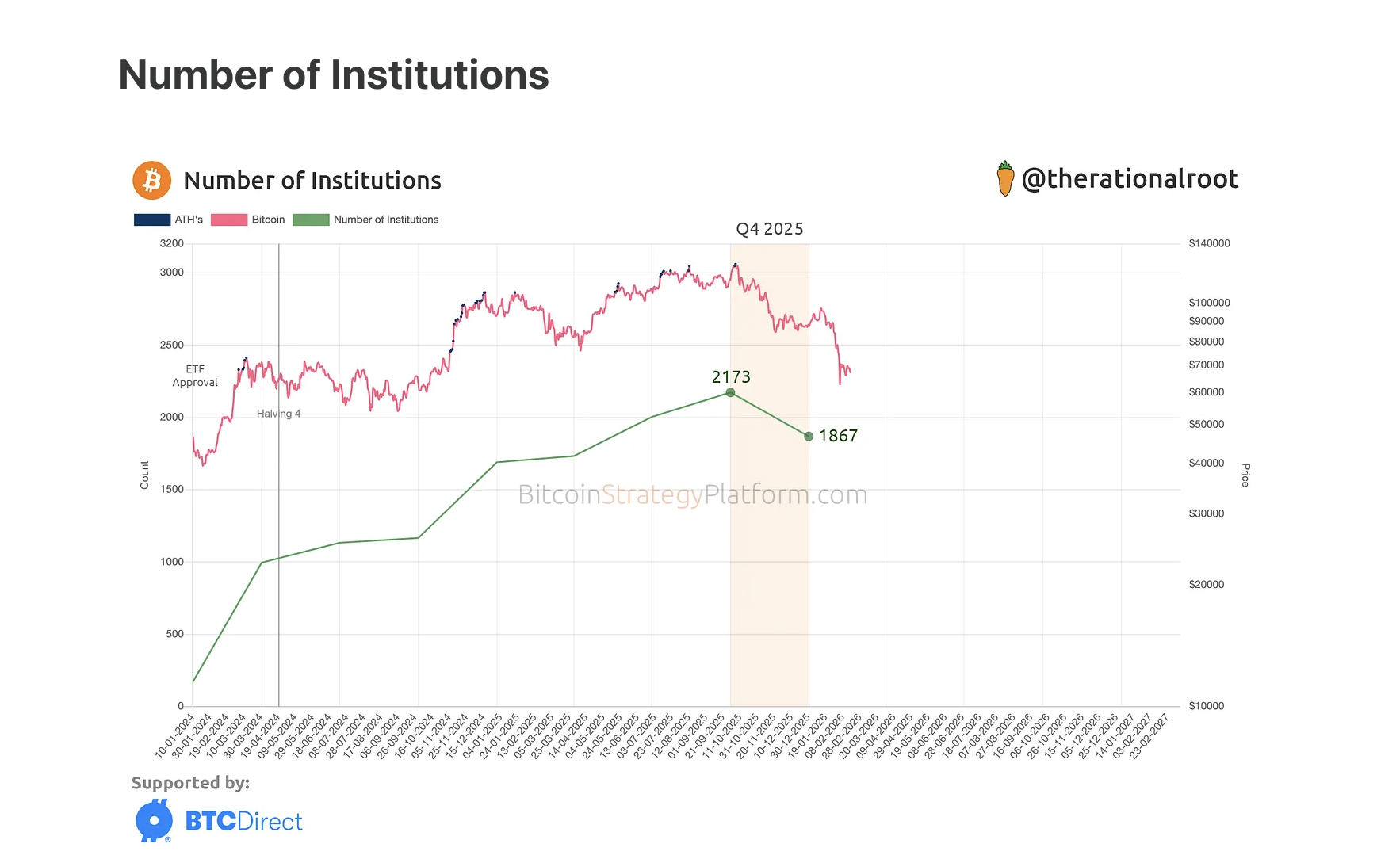
Institutions tranquil held over 513,000 $BTC by ETFs, though filer rely declined from 2,173 to 1,867.
No longer all of this is conviction capital. The foundation exchange, a technique animated an extended set apart ETF space paired with a brief CME futures space, has been a indispensable institutional technique since ETF approval.
Hedge fund publicity declined nearly about 10% in Q4, as leverage unwound and the premise spread narrowed.
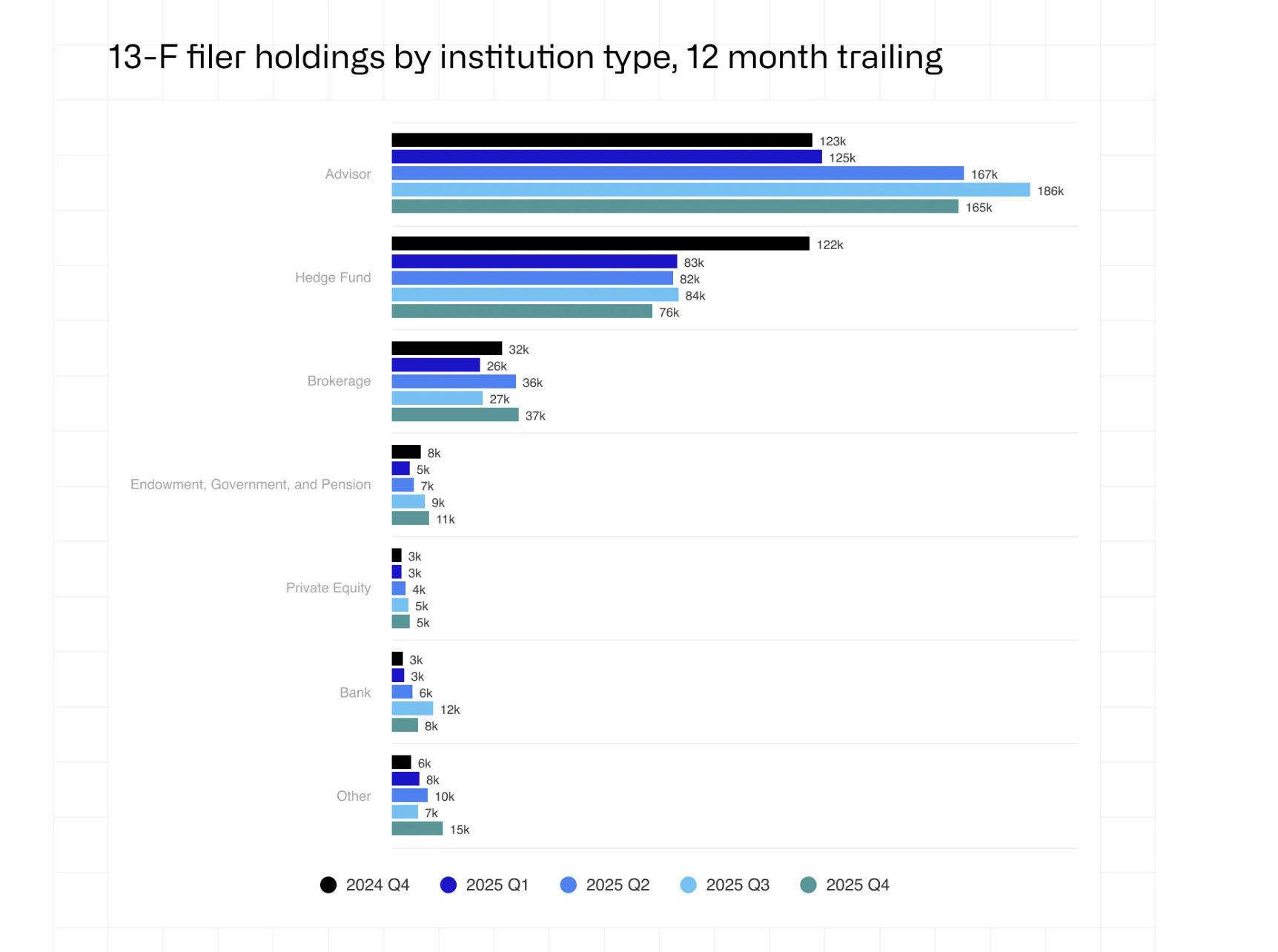
Cohort rotation, no longer capitulation, defined Q4. Millennium added 8,100 $BTC. Abu Dhabi’s Mubadala added 2,300 $BTC. Morgan Stanley added 1,900 $BTC. Dartmouth grew to turn out to be the fourth Ivy League endowment to enter.
On utterly different hand, Brevan Howard lower 17,700 $BTC, Harvard trimmed roughly 20%, and Royal Bank of Canada fully exited, all of which are talked about in the CoinShares Q4 2025 represent.
Mixture pension fund and endowment crypto holdings peaked at $1.48 billion in Q3 2025, then declined to $965 million in Q4.
On the opposite hand, ETFs most appealing present who is procuring for the wrapper. For these that are keeping the asset itself, the steadiness sheets relate a obvious memoir.
Company Treasuries Tag Who Holds Bitcoin Without delay on the Steadiness Sheet
Beyond ETFs, a increasing number of public firms preserve Bitcoin without delay as a treasury reserve asset. As of March 31, 2026, publicly traded firms represent a blended 1,134,324 $BTC on their steadiness sheets.
The focus is terrifying. Technique Inc, formerly MicroStrategy, held 762,000 $BTC as of April 2, 2026. Other huge names in the house consist of Twenty One Capital, MARA Holdings, Japan’s Metaplanet, and extra.
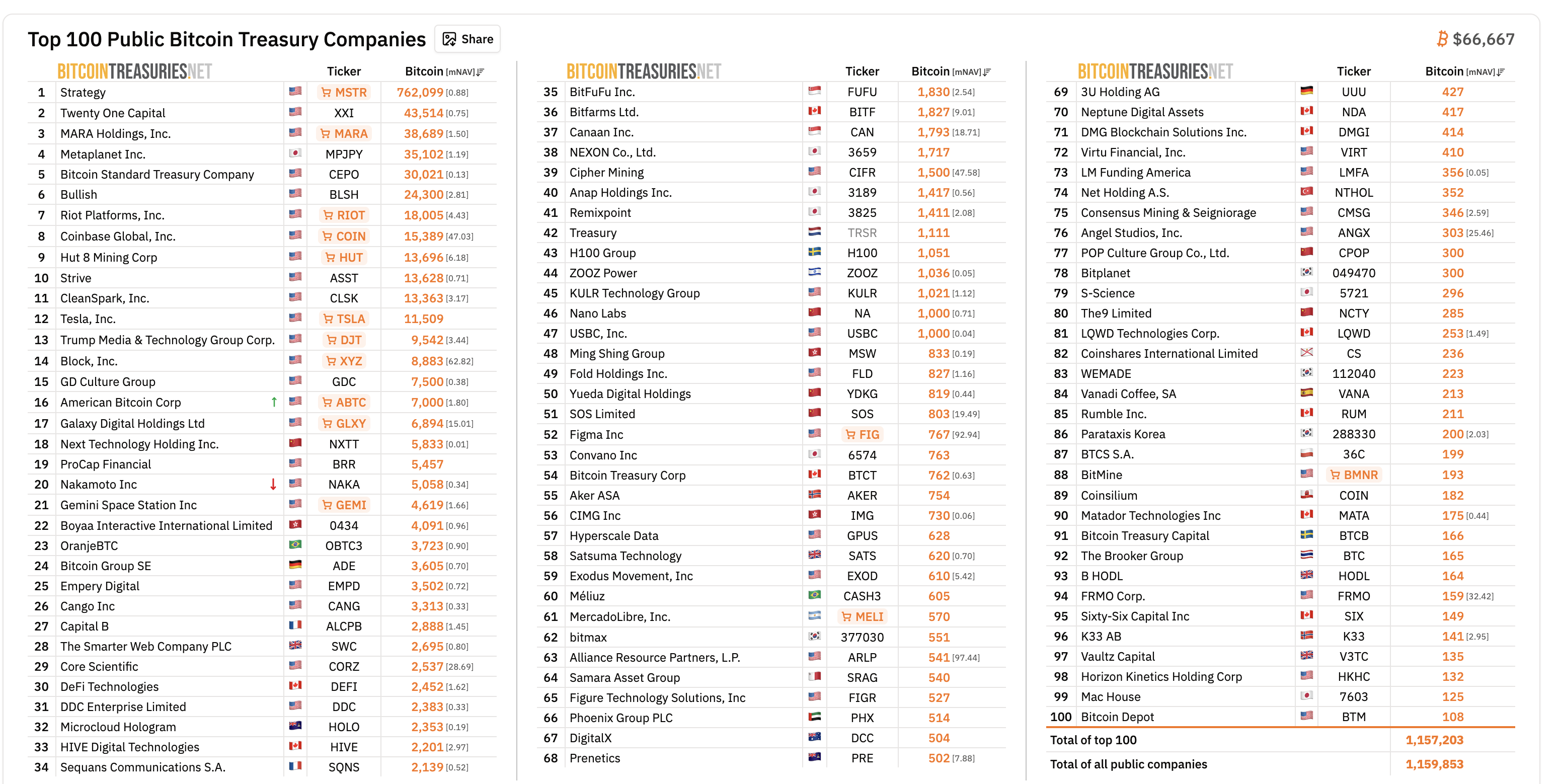
New entrants are reshaping the describe. Trump Media (DJT) held 11,542 $BTC sooner than pledging 2,000 $BTC as collateral below a hedge association with rehypothecation rights, reducing on-steadiness-sheet holdings to 9,542 $BTC. MARA bought 15,133 $BTC in March 2026 at a loss to provider debt.
🚨 Arkham Analyst Corrects: Trump Media Did not Sell 2000 $BTC, It Became as soon as Transferred as Collateral
Arkham analyst Emmett Gallic has corrected his old assertion referring to Trump Media & Expertise Body of workers (TMTG) selling 2000 $BTC. Gallic has deleted the novel tweet and clarified…
— 0xzx (@0xzxcom) February 28, 2026
But company treasuries most appealing yarn for scream set apart ownership. Wall Avenue’s greatest gamers are building crypto publicity by an fully utterly different mechanism, one which does no longer require keeping a single Bitcoin.
Tokenized Funds and RWA Holdings Tag Where On-Chain Meets TradFi
Some of Wall Avenue’s greatest firms now construct crypto publicity with out keeping a single token. As a substitute, they set apart veteran resources on-chain by tokenization.
BlackRock’s BUIDL fund, a tokenized US Treasury money market product, reached $2.85 billion in entire resources ($2.17 billion at press time).
In February 2026, BlackRock began procuring and selling BUIDL on Uniswap’s decentralized exchange and bought UNI governance tokens. That marked its first scream engagement with DeFi procuring and selling infrastructure.
The agency’s 2026 chairman’s letter reported $65 billion in stablecoin reserves, $80 billion in digital-asset ETPs, and nearly about $150 billion in entire digital asset-linked AUM.
The broader market is scaling fast. RWA.xyz data as of April 2026 shows $12.67 billion in on-chain US Treasury debt, representing roughly 46% of the entire $27.59 billion in tokenized real-world resources.
That entire RWA figure grew 31.61% in only the closing 30 days by myself, with 708,377 asset holders in every single place in the ecosystem.
Here is Wall Avenue keeping crypto infrastructure, no longer crypto resources. On the opposite hand, all of it’s miles reckoning on one thing. Who has the keys.
The Custody Diagram Finds a Single Level of Failure
Shining who owns Wall Avenue’s crypto is most appealing half the describe. Different half is who holds the keys.
Coinbase custodies over 80% of US Bitcoin and Ethereum ETF resources, a figure confirmed by CEO Brian Armstrong. Coinbase become as soon as the custodian for eight of the 11 set apart Bitcoin ETF listings at open. Most productive Constancy self-custodies its include fund. VanEck selected Gemini.
This focus creates a single-cluster dependency. A cyber incident, provider disruption, or governance failure at one custodian would possibly maybe maybe maybe enjoy an ticket on quite a bit of funds simultaneously, with knock-on effects for creations, redemptions, and procuring and selling liquidity.
On the tokenized side, Bank of New York Mellon serves as BUIDL’s cash and securities custodian, while Anchorage Digital, BitGo, Copper, and Fireblocks toughen BUIDL subscribers.
As of March 2026, discussions are emerging around multi-occasion computation custody and multi-custodian mandates to spread worry. No structural changes enjoy materialized yet.
The custody draw unearths a paradox on the heart of Wall Avenue’s crypto publicity. A decentralized asset class funneled by extra and extra centralized infrastructure. And that infrastructure tranquil leaves predominant holders invisible, particularly these with out a submitting duty at all.
The Shadow Holders and What No Filing Can Tag
13F filings most appealing observe to US institutional managers with over $100 million in qualifying resources. Family places of work, offshore entities, and sovereign autos working by intermediaries are no longer field to disclosure tasks.
That creates a structural blind set apart in Wall Avenue’s draw of crypto ownership.
On-chain data unearths what filings can no longer.
Cumberland DRW, one in all Wall Avenue’s indispensable OTC desks, has processed a complete of $123.58 billion in deposits and $97.71 billion in withdrawals all over predominant exchanges since 2018.
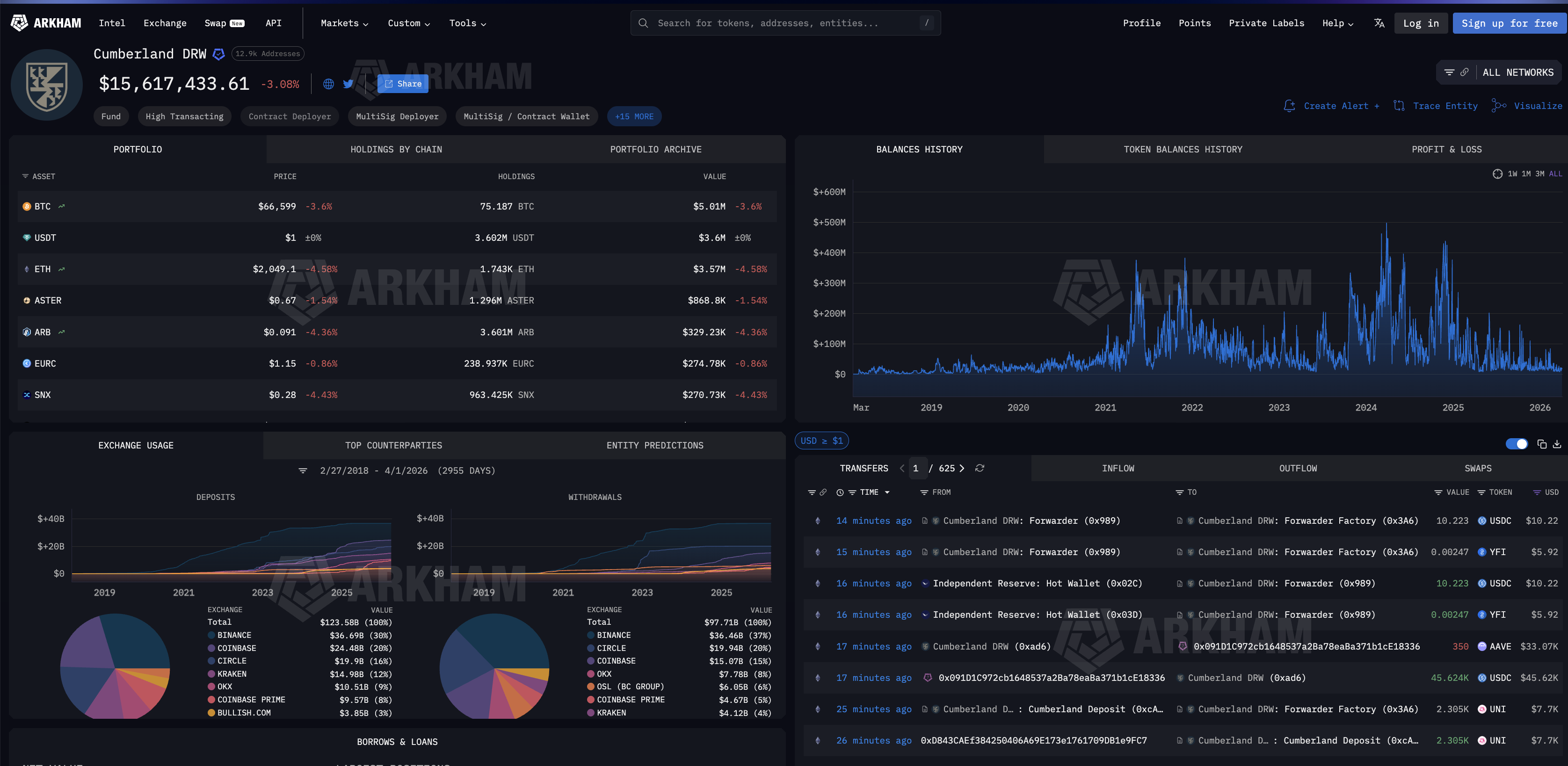
Filtering Cumberland’s outflows unearths the set apart institutional capital the truth is goes. The finish all-time outflow destinations consist of $17 billion to Binance, $14.fifty three billion to Coinbase Prime, doubtless for ETF creations, and $10.12 billion to Block Inc..
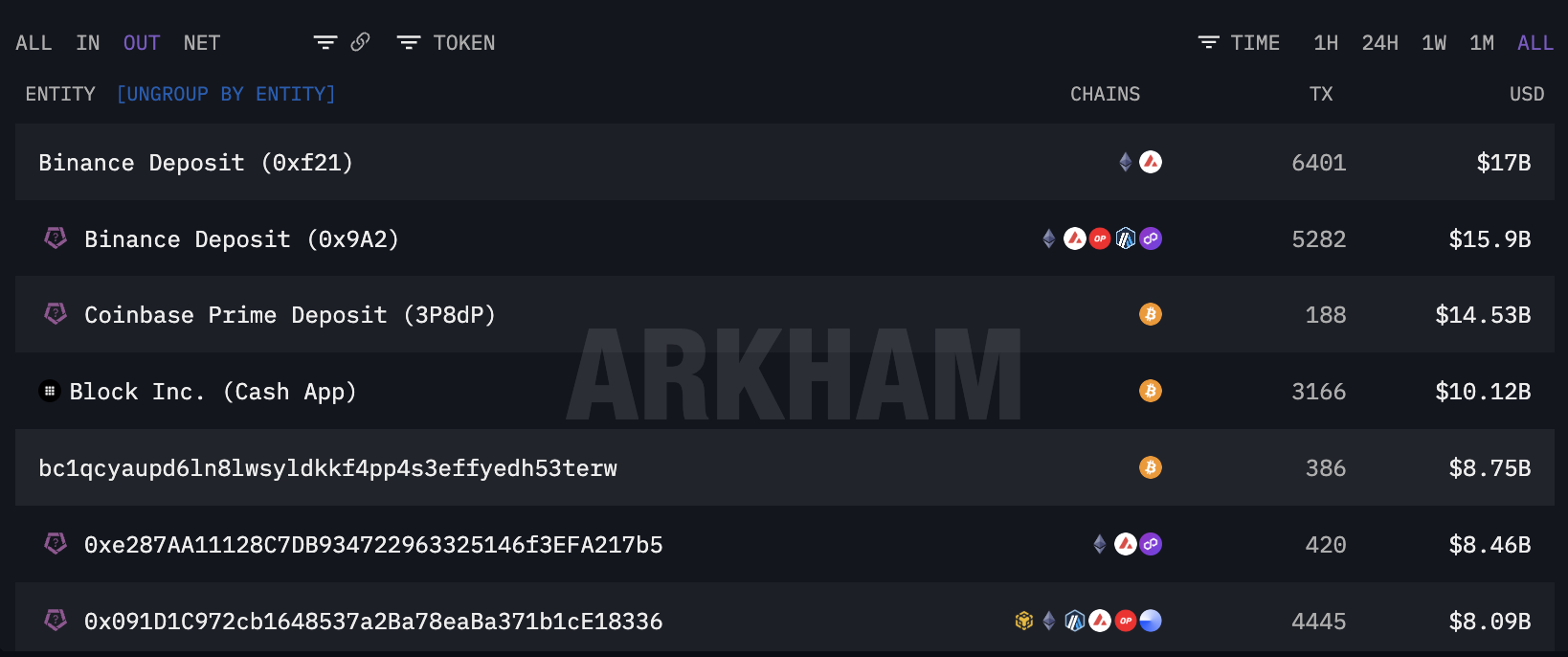
Scrolling extra down the counterparty listing confirms extra ETF and institutional plumbing. Constancy’s FBTC ETF inflows appear at $7.28 billion all over 171 transactions.
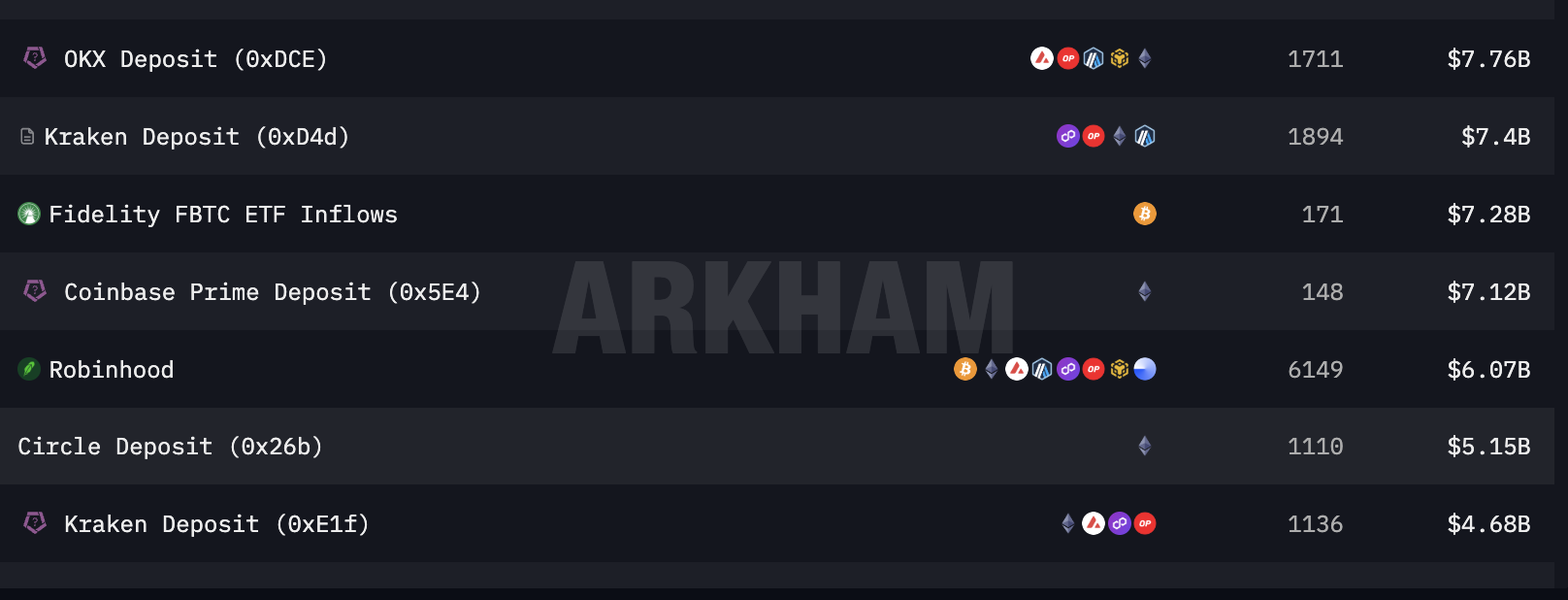
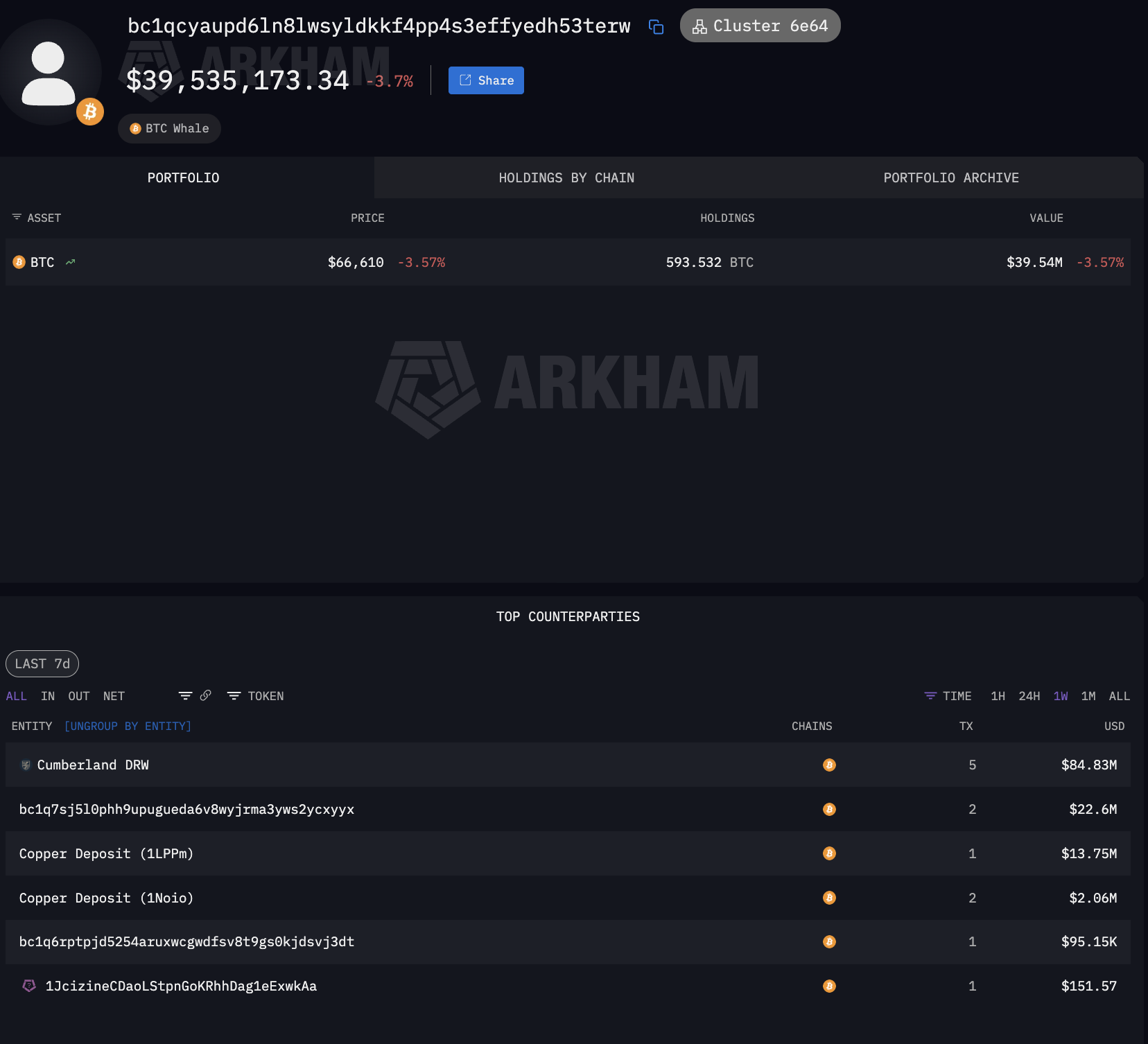
Alongside these labeled flows take a seat billions extra directed to unlabeled wallets. The one greatest unlabeled $BTC recipient, wallet bc1qcyau..., bought $8.75 billion all over 386 transactions.
It on the moment holds 593 $BTC and uses Copper’s institutional prime brokerage for custody.
That pattern, huge OTC sourcing by a Wall Avenue procuring and selling agency paired with institutional-grade prime brokerage custody, is precisely the profile of a household office or sovereign automobile working by the a similar infrastructure as ETF issuers, appropriate with out the submitting duty.
The filings show allotment of the acknowledge. The chain shows the leisure.
The outlet between the 2 hides sturdy ask from shadow holders who bought by a drawdown and tranquil preserve by institutional custody, suggesting deeper structural toughen than any ETF tracker captures.
That same hole also hides an untracked focus that can maybe maybe crack it.