Markets are already reacting to rising geopolitical possibility. Loads of Polymarket insiders who efficiently bet on the starting up date of the Iran war are now making a bet heavily on US boots on the ground in Iran.
Now, merchants are asking a sharper quiz: what happens to financial markets if the Iran war transforms real into a enviornment similar to Iraq in 2003? History provides a framework—nonetheless no longer a straightforward acknowledge.
A Polymarket myth that has correctly predicted 9 US attacks is making a bet on “US forces entering Iran” by March 31. https://t.co/sHIslhMIMy
— Zachary Foster (@_ZachFoster) March 5, 2026
How Financial Markets Reacted to the Iraq War in 2003
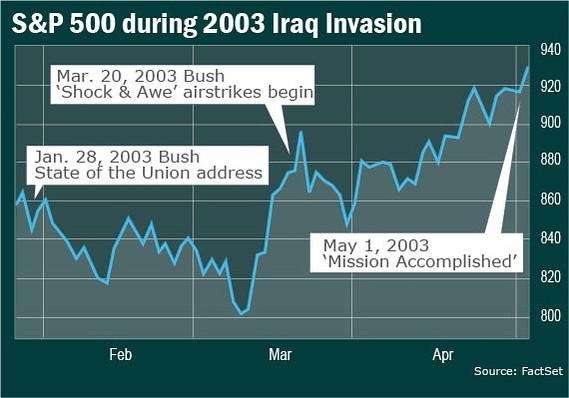
Study on the 2003 Iraq invasion reveals that US shares had already priced in a quantity of effort earlier than the war formally began.
In assorted phrases, markets had been carrying a transparent “war decrease model” because merchants had been fearful about how unfriendly the warfare would possibly perhaps well well web.
Once the invasion began and the worst-case fears did no longer straight play out, that decrease model began to unwind.
Over the duration studied, the S&P 500 rose by roughly 3.8% to 4%, whereas oil costs fell by about $6.5 to $7. That means markets had been reacting much less to the war itself and more to the true fact that uncertainty had began to obvious.
The same research also discovered that a key Treasury-primarily primarily based possibility-free charge proxy fell by about 40 foundation ingredients as war odds shifted.
That helped shares because decrease charges on the final make stronger valuations. On the comparable time, it confirmed that merchants had been mild shopping for safety.
Sector efficiency also adopted a transparent pattern. Energy and defense names tend to again first for the duration of war scares because merchants quiz elevated oil-connected earnings and more military spending.
In incompatibility, sectors fancy financials and technology in overall depend more on movements in yields and growth expectations.
Russia-Ukraine Confirmed a Various Macro Scenario in 2022
The market reaction in 2022 appeared very assorted. On the day Russia sent floor troops into Ukraine, US shares swung sharply nonetheless ended elevated by the shut.
The S&P 500 finished up about 1.5%, whereas the Nasdaq rose about 3.3%, exhibiting how swiftly markets can reverse when positioning gets too bearish.
On the comparable time, the ten-yr US Treasury yield fell by around 3 foundation ingredients to roughly 1.97%. That confirmed merchants had been entering into bonds for safety and had been changing into more fearful about growth.
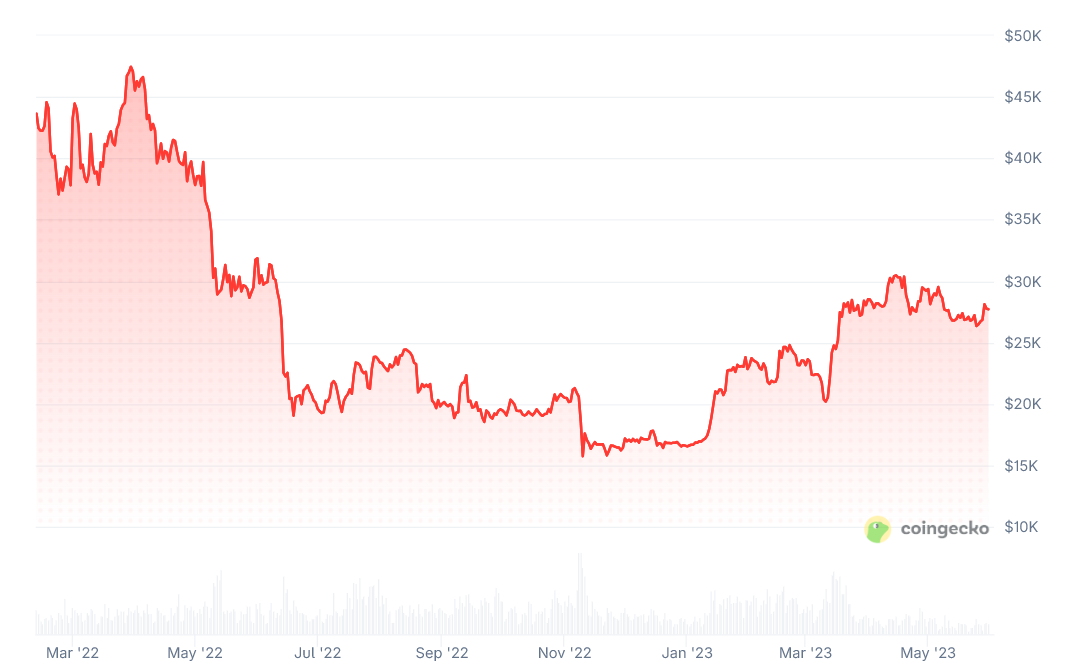
Bitcoin behaved very in yet every other diagram. It dropped sharply in the initial shock, fell to a one-month low, and lost roughly 7% amid headlines about the invasion.
That’s mandatory since it confirmed Bitcoin buying and selling fancy a possibility asset, no longer fancy a derive haven, for the time being of height uncertainty.
Crypto fund float recordsdata from that duration also confirmed provocative, war-driven volatility for the duration of digital asset merchandise.
What These Episodes Relate about Bitcoin’s “War Beta”
These two episodes indicate one key takeaway. Bitcoin in overall does no longer behave fancy gold for the duration of the first segment of a essential war shock.
As an alternative, it tends to commerce fancy a excessive-possibility asset, especially for the duration of the first 24 to 72 hours when headlines are driving markets.
Stocks, on the opposite hand, can usually enhance sooner than expected even for the duration of war. That took screech in 2003, when uncertainty began to obvious, and again in 2022, when the first bother selling modified into too low.
That creates an uneven setup for Bitcoin. If a unique warfare appears to be like open-ended, oil costs can defend excessive, inflation fears can upward thrust, Treasury yields can pass up, and liquidity can tighten. That’s in overall unfriendly for speculative sources fancy Bitcoin.
If the market sees the warfare as short-lived and contained, Bitcoin would possibly perhaps well well mild tumble first after which enhance in a relief rally.
But even then, the rebound would rely on one ingredient: whether yields and broader financial prerequisites open to stabilize.
BREAKING: Iran’s International Minister Araghchi staunch now on likely peace talks with the US:
“We attain no longer have any religion that negotiations with the US will yield any results. The belief stage is at zero.” pic.twitter.com/dnSzCrUBsa
— The Kobeissi Letter (@KobeissiLetter) March 31, 2026
The Key Driver: Yields, Now not War Headlines
The greatest affect does no longer reach from war itself. It comes from what war does to inflation and pastime charges.
A floor invasion would seemingly:
- Push oil costs elevated
- Contrivance bigger inflation expectations
- Power yields elevated
- Delay or cancel Fed charge cuts
That aggregate tightens liquidity for the duration of markets.
And Bitcoin is extremely at ease to liquidity.
Out of the ordinary algorithmic voice:
Oil costs staunch fell -5% in 3 minutes after Iran’s President acknowledged they’re ready to finish the war with “guarantees.”
Yet, the demanded “guarantees” are largely unknown simply now.
Over $1 trillion in market cap became once driven by this headline in a… pic.twitter.com/m6D9Ql2Sd5
— The Kobeissi Letter (@KobeissiLetter) March 31, 2026
What Happens Subsequent: Three Scenarios
If the US enters Iran, Bitcoin’s reaction depends on how the market interprets the match.
1. Short, contained warfare: Bitcoin drops at the starting up place, then stabilizes or rebounds as uncertainty clears.
2. Prolonged floor war: Bitcoin faces sustained plan back as yields stay excessive and liquidity tightens.
3. Chunky escalation: A deeper selloff becomes seemingly, driven by continual inflation possibility and global possibility-off positioning.
Backside Line
Bitcoin does no longer answer to war the vogue many quiz.
It reacts to liquidity, charges, and macro stress. If a floor invasion pushes yields elevated and delays easing, the short-duration of time outlook for crypto stays bearish.
For now, the imprint is clear: escalation possibility is rising, and Bitcoin is buying and selling accordingly.