
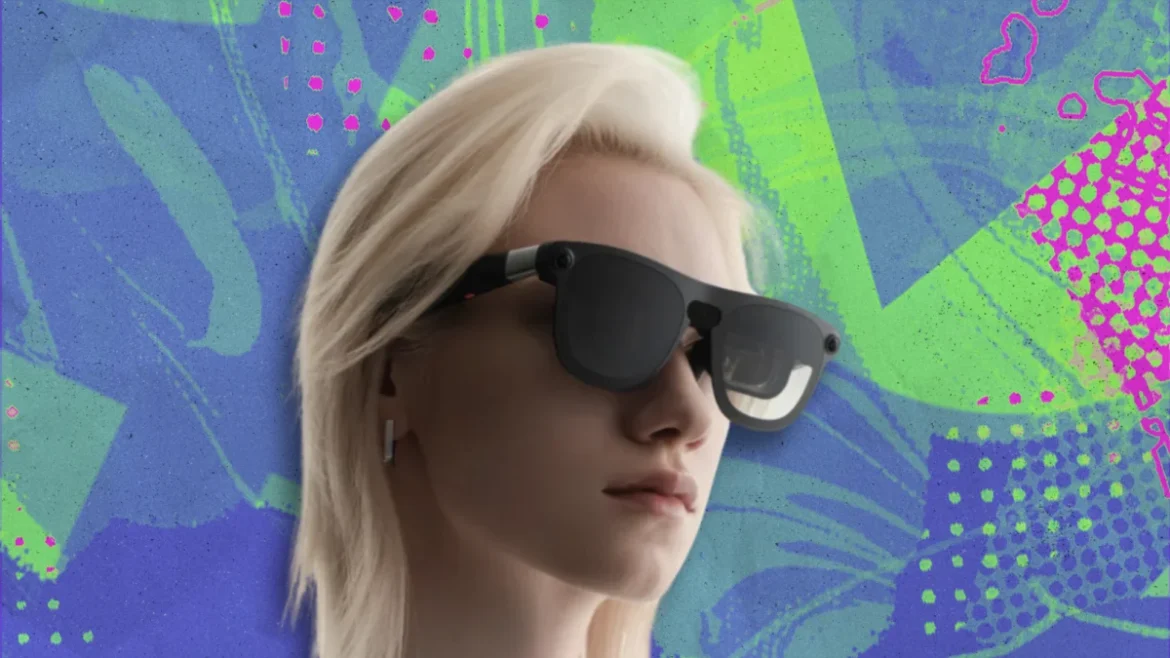
The landscape of consumer technology is undergoing a profound paradigm shift as spatial computing transitions from bulky, isolated headsets to lightweight, everyday eyewear. Leading this charge is the Xreal Aura, a pioneering pair of smart glasses developed in strategic partnership with Google and powered by the cutting-edge Android XR operating system. First teased earlier in the year at Google I/O 2026, the device has officially entered its pre-order phase, signaling a major milestone for wearable tech enthusiasts and early adopters alike. Priced initially at $1,279 with an introductory $180 discount bringing preorders down to $1,099, the Xreal Aura aims to bridge the gap between digital immersion and physical reality. Deliveries are scheduled to commence in mid-November, positioning the glasses as one of the most anticipated consumer electronics releases of the holiday season.
The Genesis of Android XR and the Xreal Partnership

The journey toward the Xreal Aura began years before its official unveiling, driven by an industry-wide recognition that standalone augmented reality (AR) and virtual reality (VR) headsets, while technologically impressive, often suffered from ergonomic limitations. Bulky form factors, limited peripheral vision, and heavy face-mounted hardware restricted extended use, keeping immersive technologies confined to niche gaming and enterprise applications. Google’s development of Android XR was conceived to address these exact pain points. By creating a standardized, robust operating system explicitly tailored for spatial computing, Google sought to unify the ecosystem much like it did with mobile operating systems.
Xreal, a dominant force in the tethered AR glasses market, emerged as the ideal hardware partner for Google’s software ambitions. Known for projecting massive virtual displays into a user’s field of view through sleek, glasses-like designs, Xreal possessed the manufacturing expertise required to miniaturize spatial computing components. The collaboration culminated in the Xreal Aura, a device that merges the transparent lenses of traditional AR with the software capabilities and spatial tracking typically reserved for heavy headsets. According to Chi Xu, co-founder and CEO of Xreal, the product was engineered specifically for consumers who desire deep technological integration without being physically isolated from their immediate environments.
Hardware Specifications and Engineering Design

At the core of the Xreal Aura’s hardware prowess are dual Sony Micro-OLED displays. These high-resolution panels generate a virtual canvas boasting a 70-degree field of view, a maximum brightness of 1,050 nits, and a fluid 120Hz refresh rate. This combination ensures that virtual text remains crisp, graphics appear vibrant, and motion blur is virtually eliminated, creating a seamless visual overlay that adapts naturally to ambient lighting conditions.
Unlike fully wireless, standalone smart glasses such as Snap’s recently announced Specs—which carry a hefty $2,195 price tag and a noticeably chunkier chassis—the Xreal Aura utilizes a tethered configuration. The glasses connect to a dedicated companion "puck." This pocket-sized device houses the primary battery and a significant portion of the computing architecture, driven by Qualcomm’s advanced Snapdragon Reality Elite Platform. By offloading heavy processing tasks to the external puck, Xreal successfully maintained a lightweight, comfortable profile for the frames resting on the user’s face, circumventing the neck fatigue associated with front-heavy headsets like the Apple Vision Pro.
Furthermore, the Aura incorporates an array of onboard sensors and tracking cameras. These components enable intuitive multimodal interaction, allowing users to control the interface not only through traditional connected peripherals but via natural voice commands and precise hand movements.

Immersive Ecosystem and Software Capabilities
Running on the foundational architecture of Android XR, the Xreal Aura grants users immediate access to a robust ecosystem of applications right out of the box. Google’s ecosystem integration runs deep, most notably through native support for Gemini, Google’s advanced conversational AI. Gemini functions as an intelligent assistant within the glasses, capable of contextual awareness. Users can query the AI about their physical surroundings, extract information from real-world objects, or streamline complex multitasking workflows across multiple virtual application windows floating in their space.
Media consumption and spatial photography also receive a dramatic upgrade. Leveraging Google Photos, the platform allows users to view standard 2D photos and videos in converted 3D formats, while traditional panoramic images are expanded into fully immersive, 360-degree spatial environments. Google Maps integration takes virtual exploration to new heights, enabling users to navigate destinations in intricate 3D via aerial perspectives or ground-level Street View overlays. Additionally, support for 360-degree and VR180 video formats on YouTube ensures a steady stream of immersive entertainment content from day one.

At launch, Xreal confirmed that the Aura will support a curated library of over 150 dedicated XR experiences, with a continuous rollout of third-party applications planned for the coming months. This diverse software catalog aims to cater to three distinct pillars of use: workplace productivity, immersive entertainment, and next-generation spatial gaming.
Market Positioning and Competitive Landscape
The launch of the Xreal Aura arrives at a fiercely competitive inflection point for the spatial computing industry. Tech giants and hardware manufacturers are aggressively positioning themselves to capture the nascent smart glasses market before mainstream consumer habits solidify.

In comparison to the Apple Vision Pro, which popularized high-end spatial computing by turning a user’s environment into a comprehensive 360-degree canvas, the Xreal Aura adopts a fundamentally different philosophy. While headsets excel at total isolation for maximum focus, they inherently block peripheral vision and limit mobility. Xreal’s form factor preserves situational awareness, allowing wearers to move fluidly through the physical world while interacting with digital overlays.
The competitive landscape also includes rival hardware such as Snap’s Specs and Meta’s upcoming VR glasses line. Snap’s fully wireless approach appeals to untethered purists, but its restrictive $2,195 pricing tier limits mass-market adoption. Conversely, Meta’s forthcoming glasses, priced competitively at $1,299, are not slated for commercial release until the spring of 2027. This temporal advantage places the Xreal Aura in a highly favorable window, allowing it to capture early adopters and tech enthusiasts looking for an immediate entry point into the Android XR ecosystem ahead of Meta’s hardware rollout.
Pre-Order Details and Industry Implications

Consumers interested in securing an Xreal Aura can currently place preorders exclusively through the official Xreal online store. While the standard retail price is set at $1,279, the early-bird promotion slashes $180 off the cost, bringing the barrier to entry down to $1,099. Initial shipments are slated to fulfill mid-November, providing a crucial real-world stress test for Google’s Android XR platform outside of controlled developer environments.
The broader implications of the Xreal Aura extend far beyond corporate sales figures. As the first wired smart glasses to operate on Android XR, the device serves as a vital proof-of-concept for Google’s software strategy in the wearable space. If the Aura successfully demonstrates that high-performance spatial computing can be delivered in a lightweight, comfortable form factor without sacrificing processing power or software versatility, it could accelerate industry-wide migration away from cumbersome headsets.
Ultimately, the Xreal Aura represents a crucial stepping stone in the evolution of human-computer interaction. By combining Google’s sophisticated AI and operating system capabilities with Xreal’s refined hardware design, the device brings the long-promised future of ubiquitous, ambient computing significantly closer to everyday reality.
