
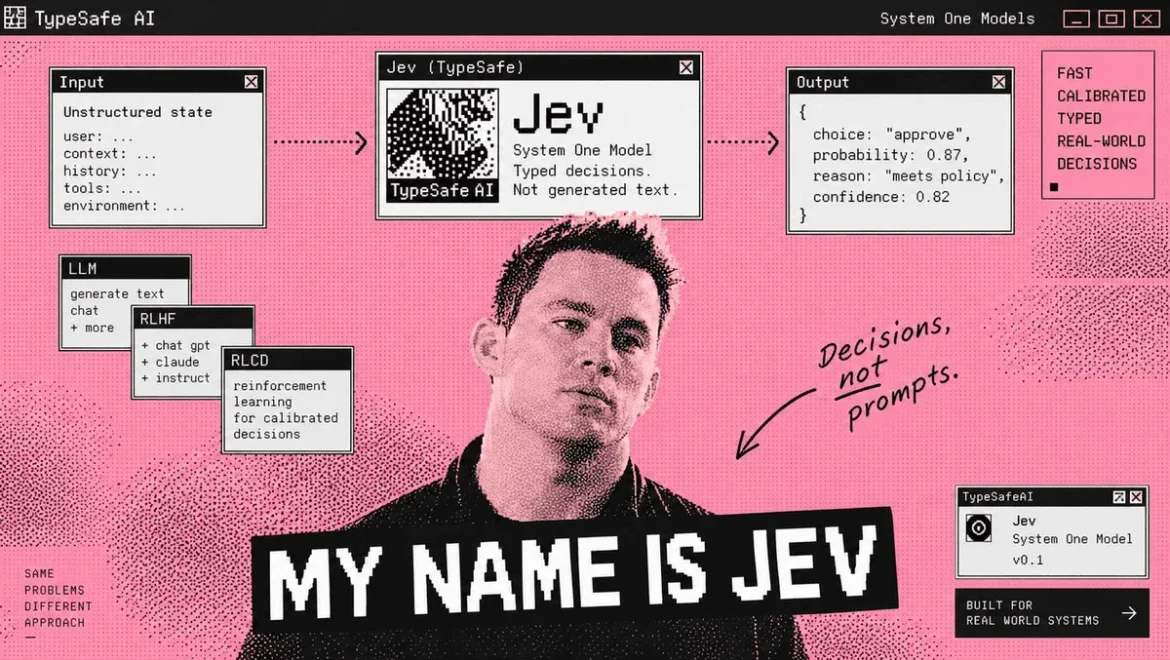
The rapid ascent of generative artificial intelligence has fundamentally altered the landscape of software engineering, leading to a surge in specialized models designed to handle tasks previously reserved for general-purpose Large Language Models (LLMs). Among the most discussed entries in this new category is Jev, developed by TypeSafe AI. As social media discourse and influencer commentary continue to frame Jev as a groundbreaking shift in artificial intelligence, a closer technical inspection reveals a more nuanced reality: Jev is not an invention of an entirely new category of intelligence, but rather a specialized, highly optimized architecture designed to address the long-standing challenges of probabilistic, structured decision-making in machine learning.
The Core Architecture of System One Models
To understand Jev, one must first distinguish between the prevailing paradigms of AI processing. TypeSafe AI classifies Jev as a "System One Model," a term derived from the dual-process theory of cognition popularized by psychologist Daniel Kahneman. In this framework, System 1 thinking is fast, intuitive, and automatic, whereas System 2 thinking is slow, deliberate, and logical.
Most frontier LLMs, such as OpenAI’s GPT-4 or Anthropic’s Claude, operate in a manner analogous to System 2. They engage in intensive reasoning, multi-step planning, and token-by-token generation to construct complex outputs. While effective, this process is inherently computationally expensive and latent. In contrast, Jev is architected for the speed of System 1. Rather than generating prose, it processes input text and immediately outputs structured data—typically a probability distribution across a set of predefined labels.
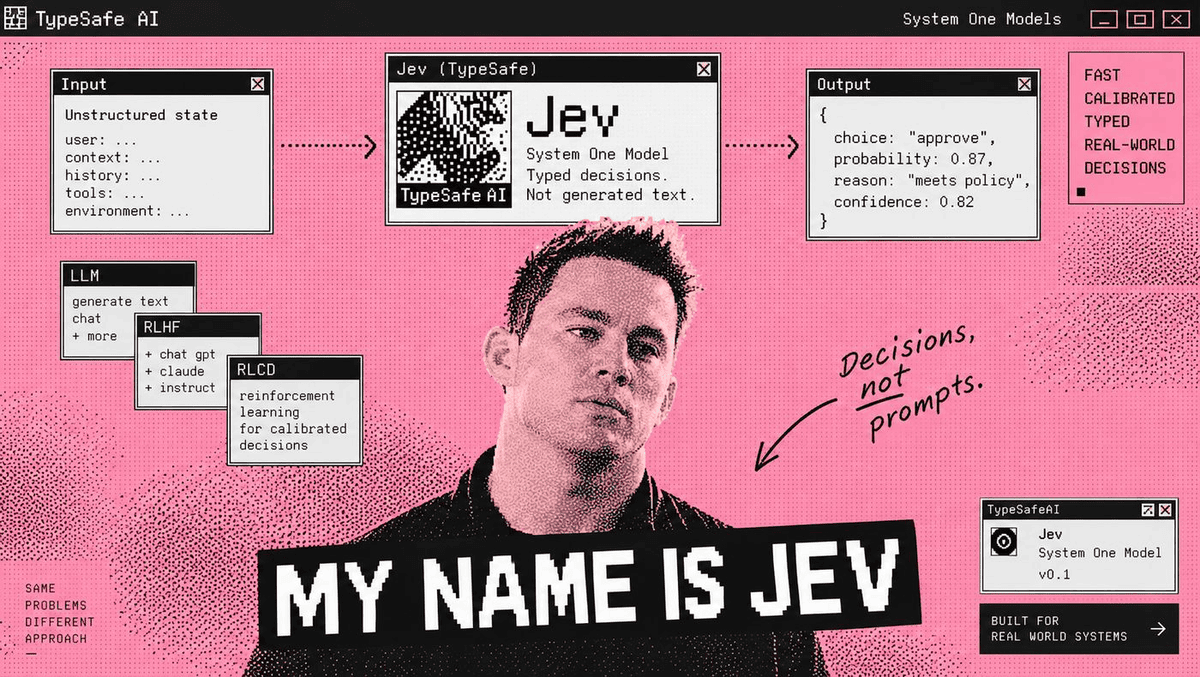
This architectural shift moves away from the generative paradigm. By bypassing the need to generate coherent text, Jev avoids the overhead of autoregressive token prediction. Instead, it utilizes parallel inference to compute the likelihood of various outcomes simultaneously. This allows developers to integrate the model directly into high-throughput production pipelines, such as automated ticket routing, intent classification, and real-time content moderation.
Historical Context and Evolution of NLP
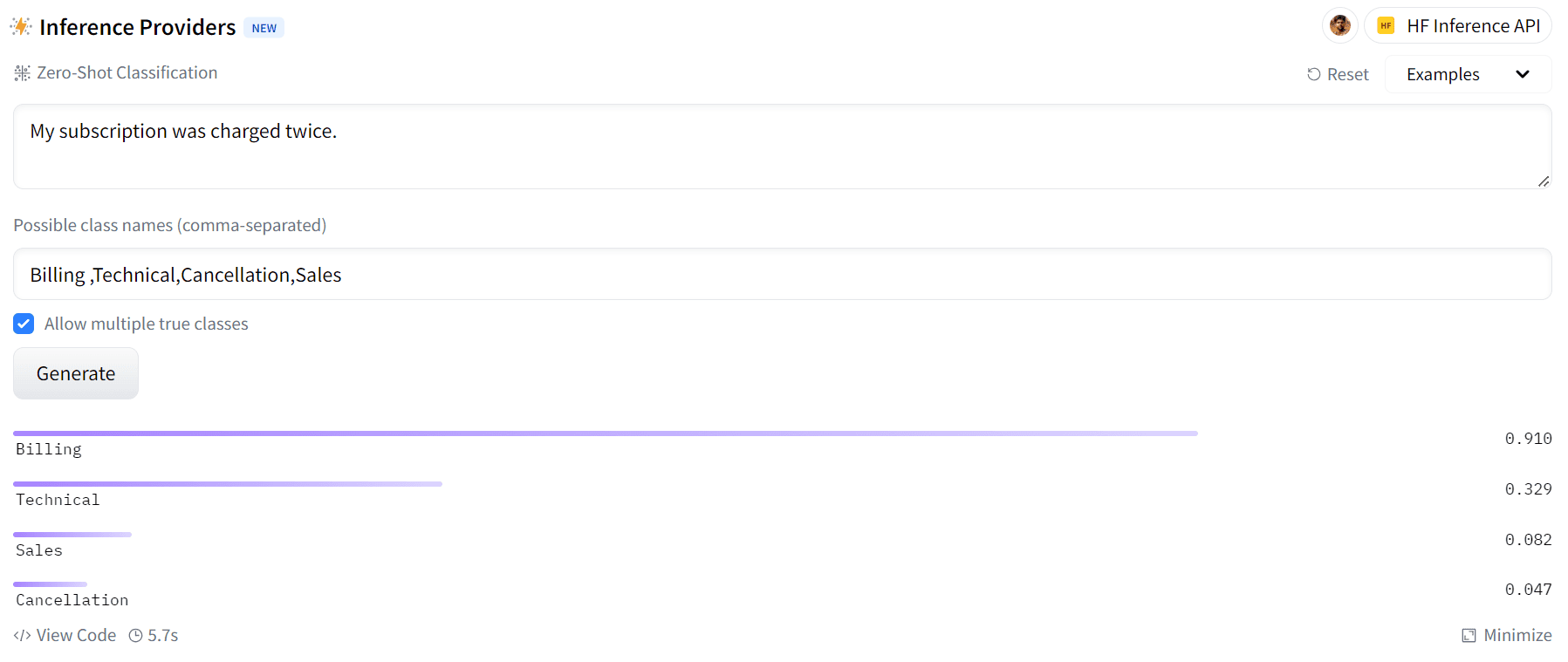
The problems Jev aims to solve—classification, intent detection, and routing—are foundational to natural language processing. For decades, engineers have utilized various techniques to categorize data. In the mid-2010s, deep learning models like BERT (Bidirectional Encoder Representations from Transformers) revolutionized these tasks by providing context-aware embeddings. By 2019 and 2020, zero-shot classification via Natural Language Inference (NLI) became the industry standard for models like Facebook’s BART (Bidirectional and Auto-Regressive Transformers).
NLI-based zero-shot classifiers allowed developers to pass arbitrary labels to a model without retraining it for specific categories. Jev represents the next logical step in this evolutionary timeline. While it shares the "spirit" of zero-shot classification, TypeSafe AI has introduced a proprietary training regimen known as Reinforcement Learning for Calibrated Decisions (RLCD). This method ensures that the model’s probability outputs are not just accurate, but calibrated, meaning the numerical confidence score provided by the model accurately reflects its actual performance reliability.
The Myth of Hallucination-Free AI
One of the most common marketing claims surrounding Jev is its resistance to hallucinations. In the context of large language models, a hallucination typically refers to the generation of false or fabricated information. However, in the context of structured classification models, "hallucination" is a misnomer.

Jev operates within a rigid schema. If a user defines a set of categories—for example, "Billing," "Technical," and "Sales"—the model is mathematically constrained to return a probability distribution across only those variables. It cannot output a category outside of this predefined set. While this effectively eliminates "out-of-schema" hallucinations, it does not guarantee accuracy. The model remains susceptible to misclassification; it may, for instance, label a "Technical" support request as "Billing." Therefore, while Jev provides structural stability, it remains subject to the inherent limitations of statistical inference.
Technical Performance and Independent Evaluation
As of the current reporting cycle, empirical data regarding Jev’s performance remains limited to TypeSafe AI’s internal benchmarks and preliminary, third-party experiments. TypeSafe AI cites a 68% accuracy rate on its internal workflow evaluations. However, industry analysts caution that these metrics are derived from comparisons against frontier LLMs rather than absolute, ground-truth data sets.
Early independent tests provide a mixed picture. A small-scale fact-checking evaluation reported an accuracy of 96.3%, while a separate assessment of 275 documents showed significant alignment with human labeling. Despite these promising indicators, the lack of a standardized, peer-reviewed benchmark makes it difficult to definitively rank Jev against established alternatives. The current consensus among machine learning practitioners is to view Jev as a high-potential tool for specific, narrow-scope applications rather than a universal replacement for existing classification frameworks.
The Economic Case for Specialized Models
The primary value proposition of Jev lies in its economic efficiency. General-purpose LLMs are notoriously expensive to run due to their massive parameter counts and the computational cost of generating long-form text. In a production environment, routing a support ticket through an LLM is often overkill, consuming unnecessary compute cycles for a task that requires only a single output label.
Jev addresses this through "narrow-task optimization." Because the model is trained specifically for decision-making rather than generation, it is inherently leaner. By reducing the complexity of the inference process, TypeSafe AI has lowered the barrier to entry for companies looking to implement AI-driven automation at scale. This suggests that the future of enterprise AI may not lie in larger, more complex models, but in a tiered ecosystem where specialized, low-latency models handle the "System 1" tasks, while larger, more expensive models are reserved for complex "System 2" reasoning.
Broader Implications for AI Development
The development of Jev underscores a growing trend in the AI industry: the maturation of specialized architectures. As organizations move from the initial "experimentation" phase of AI adoption to the "integration" phase, the demand for precision, reliability, and cost-effectiveness is eclipsing the demand for general-purpose versatility.
If TypeSafe AI can successfully prove that RLCD produces models with superior calibration, it could set a new standard for how AI systems communicate uncertainty. In many mission-critical applications—such as medical diagnostics, financial fraud detection, or legal document review—knowing how confident a model is in its decision is often as important as the decision itself. A system that can automatically route "high-confidence" cases for execution and "low-confidence" cases for human intervention represents a significant advancement in operational efficiency.
Ultimately, Jev is not a revolutionary break from the past, but a sophisticated refinement of the foundational principles of machine learning. By packaging these principles into a user-friendly, specialized product, TypeSafe AI is signaling that the next wave of AI innovation will likely be defined by efficiency and reliability rather than sheer scale. As more organizations subject Jev to rigorous, independent testing, the industry will gain a clearer picture of whether this "System One" approach can become the new backbone of intelligent, automated decision-making.
