
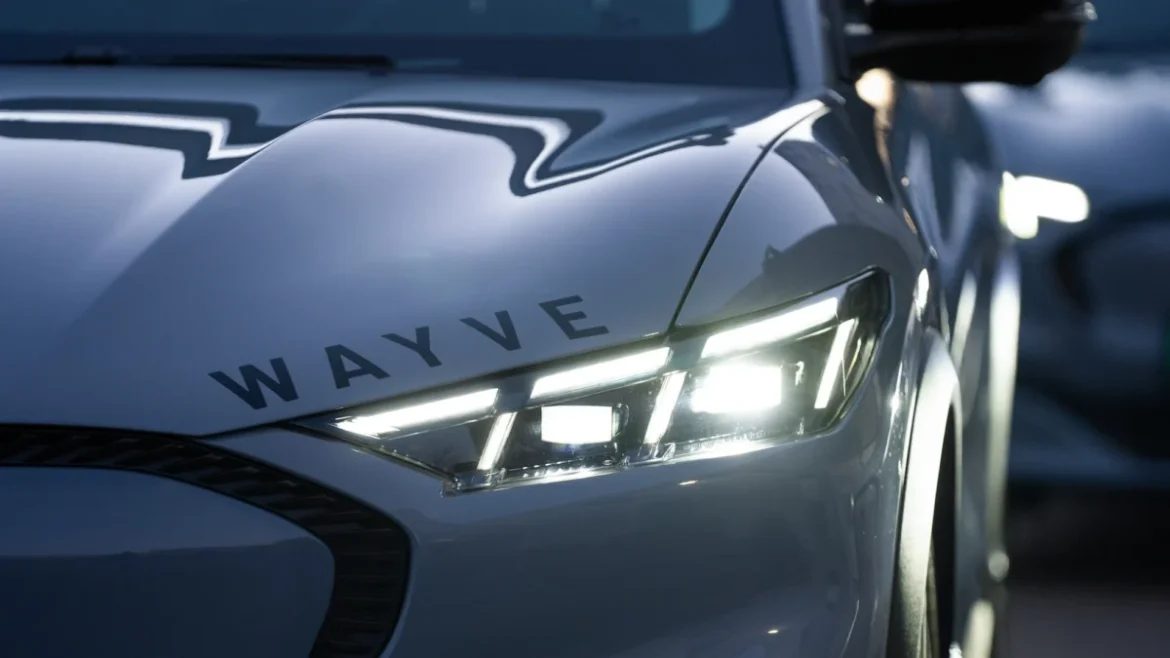
In a significant consolidation of the semiconductor industry’s interest in the future of autonomous transportation, British self-driving technology pioneer Wayve announced on Wednesday a $60 million extension to its recent Series D funding round. This latest injection of capital comes from a powerful trio of chipmaking giants—AMD, Arm, and the venture arm of Qualcomm—bringing the total Series D package to over $1.26 billion. The investment marks a pivotal moment for the London-based startup, signaling a shift in how the automotive industry approaches the integration of artificial intelligence and hardware architecture.
The involvement of these three silicon leaders is not merely a financial transaction; it represents a strategic alignment aimed at solving one of the most persistent hurdles in the autonomous vehicle (AV) sector: hardware-software interoperability. By securing the backing of firms that design the world’s most prevalent compute architectures, Wayve is positioning its "AI Driver" software as a hardware-agnostic solution capable of running on a diverse array of silicon platforms, ranging from high-performance server-grade processors to energy-efficient mobile and edge computing chips.
The Strategic Expansion of Series D Funding
Wayve’s Series D round had already established itself as one of the most significant funding events in the history of the United Kingdom’s technology sector. Prior to the addition of AMD, Arm, and Qualcomm, the round was led by SoftBank Vision Fund 2 and featured a prestigious roster of strategic investors, including Mercedes-Benz, Nissan, and Stellantis. Existing backers such as Nvidia, Microsoft, and Uber also participated, underscoring a broad industry consensus on Wayve’s technological trajectory.
The financial landscape for Wayve is further bolstered by a milestone-based commitment from Uber. The ride-hailing giant has pledged an additional $300 million, contingent upon the successful deployment of robotaxis equipped with Wayve’s technology on the streets of London. This tiered investment structure highlights the industry’s cautious but optimistic approach to commercialization, moving away from the speculative "moonshot" funding of the previous decade toward a model based on tangible performance metrics and production readiness.
With the new $60 million extension, Wayve intends to accelerate the integration of its software across various automotive compute platforms. This is critical for original equipment manufacturers (OEMs) who seek flexibility in their supply chains. In an era of geopolitical uncertainty and semiconductor shortages, the ability to port sophisticated autonomous driving software across different chipsets provides automakers with a vital safeguard against supply chain disruptions.
A Paradigm Shift: From Rule-Based Systems to Embodied AI
Wayve’s core value proposition lies in its departure from traditional autonomous driving methodologies. For years, the industry relied on "brute force" robotics, which utilized high-definition (HD) maps, expensive LiDAR sensors, and complex, hand-coded rules to govern vehicle behavior. These systems often struggled with "edge cases"—rare or unpredictable road scenarios that the programmers had not explicitly accounted for.
In contrast, Wayve has pioneered what it calls "Embodied AI." This approach utilizes an end-to-end neural network that learns to drive much like a human does: through observation and experience. The software does not rely on HD maps or a rigid set of rules. Instead, it processes raw data from onboard sensors—typically cameras and radar—to make real-time driving decisions. By using generative AI and foundation models, Wayve’s system can generalize its learning from one environment to another, allowing a vehicle trained in the narrow streets of London to adapt more quickly to the grid-like layouts of American cities or the chaotic traffic of emerging markets.
This hardware-agnostic nature is what makes the investment from AMD, Arm, and Qualcomm so significant. Because Wayve’s software is built on a unified neural network architecture rather than being hard-coded for a specific chip’s instruction set, it can be optimized to run efficiently across the different processing environments offered by these chipmakers. Whether it is the high-throughput performance of AMD’s hardware, the power efficiency of Arm’s designs, or the integrated automotive solutions provided by Qualcomm’s Snapdragon Digital Chassis, Wayve’s AI Driver is designed to be the universal "brain" of the modern vehicle.
Product Portfolio and Commercial Roadmap
Wayve is currently marketing two distinct products to its global partners. The first is an "eyes on" assisted-driving system, classified under the SAE Level 2 and Level 3 categories. This technology serves as an advanced driver-assistance system (ADAS) that requires the driver to remain attentive but significantly reduces the cognitive load of driving by handling lane-keeping, adaptive cruise control, and complex urban navigation.
The second product is an "eyes off" fully automated-driving system. This Level 4 solution is intended for use in robotaxis and specialized consumer vehicles, capable of handling all driving tasks within specific geofenced environments or under certain conditions without human intervention.
The commercial timeline for these products is already taking shape. Nissan has confirmed that it will begin integrating Wayve’s technology into its ADAS offerings starting in 2027. Mercedes-Benz and Stellantis have also signaled their intent to utilize Wayve’s software in future models, though specific release dates have yet to be finalized. These partnerships represent a major win for Wayve, as they provide a direct path to mass-market production, bypassing the need for the startup to manufacture its own vehicles—a pitfall that claimed several early AV competitors.
Chronology of Wayve’s Growth
The journey of Wayve reflects the broader evolution of the AI industry. Founded in 2017 by Alex Kendall and Amar Shah, researchers from the University of Cambridge, the company initially operated in relative obscurity compared to Silicon Valley giants like Waymo or Cruise.
- 2017-2018: Wayve establishes its headquarters in London and begins testing small-scale autonomous platforms, focusing on reinforcement learning.
- 2019: The company achieves a milestone by demonstrating an autonomous vehicle navigating a street it had never seen before, using only computer vision and without the aid of GPS or HD maps.
- 2022: Wayve raises $200 million in a Series B round, attracting interest from Microsoft and prominent venture capital firms. This capital allowed the company to scale its data collection efforts using a fleet of delivery vans in partnership with UK grocery chains like Ocado and Asda.
- 2024: The announcement of the $1.2 billion Series D round catapults Wayve into the top tier of global AI startups, marking the largest-ever investment in a UK-based AI company.
- 2025: Strategic partnerships with Nissan and the announcement of the Uber robotaxi pilot program in London solidify the company’s transition from research to commercial deployment.
- 2026: The April extension involving AMD, Arm, and Qualcomm completes the strategic circle, linking the software provider with the world’s most essential hardware architects.
Analysis of Market Implications
The entry of AMD, Arm, and Qualcomm into Wayve’s investor pool carries deep implications for the competitive landscape of the automotive industry. For years, Nvidia has held a dominant position in the AI hardware space, providing the "gold standard" for training and running complex models. By backing Wayve, AMD and Qualcomm are signaling their intent to challenge this hegemony in the automotive sector.
For Arm, the investment is a natural extension of its "Arm Automotive" initiative. As vehicles become increasingly defined by software, the underlying architecture must balance immense computational power with the thermal and energy constraints of an electric vehicle (EV) battery. Wayve’s efficient neural networks are a perfect match for Arm’s power-efficient designs.
Furthermore, this investment highlights the growing importance of "sovereign AI" and regional tech hubs. Wayve is the crown jewel of the UK’s AI strategy. At a time when the US and China are leading the AI race, Wayve provides Europe and the UK with a homegrown champion in one of the most economically significant applications of artificial intelligence. The support from global chipmakers ensures that Wayve remains at the cutting edge of global standards while maintaining its roots in the British research ecosystem.
Future Outlook: The Road to 2027
As Wayve moves toward its 2027 production target with Nissan, the focus will shift from fundamental research to rigorous safety validation and regulatory compliance. The UK government has been proactive in creating a regulatory framework for autonomous vehicles, passing the Automated Vehicles Act to provide clarity on liability and safety standards. This legislative environment provides Wayve with a stable "testbed" in London before expanding into more fragmented markets like the United States or mainland Europe.
"For embodied AI to scale, automakers need design choice and supply chain flexibility," said Alex Kendall, co-founder and CEO of Wayve, in a statement accompanying the announcement. "Expanding our relationships with leading silicon companies helps bring that into production at a global scale."
The success of Wayve will likely be measured by its ability to democratize autonomous driving. If the "AI Driver" can indeed be ported seamlessly across different vehicle platforms and chipsets, it could do for the automotive industry what Android did for the smartphone market: provide a powerful, standardized operating layer that allows hardware manufacturers to focus on design and manufacturing while the software handles the complexity of intelligence.
As the $1.26 billion Series D round concludes, Wayve stands as a testament to the power of the "AI-first" approach. By eschewing the rigid rules of the past and embracing the fluid learning of neural networks, the company has not only attracted the world’s largest automakers but has now secured the foundations of the global semiconductor supply chain. The road to 2027 is now paved with the silicon of the world’s most influential chipmakers, setting the stage for a new era of mobility.
