
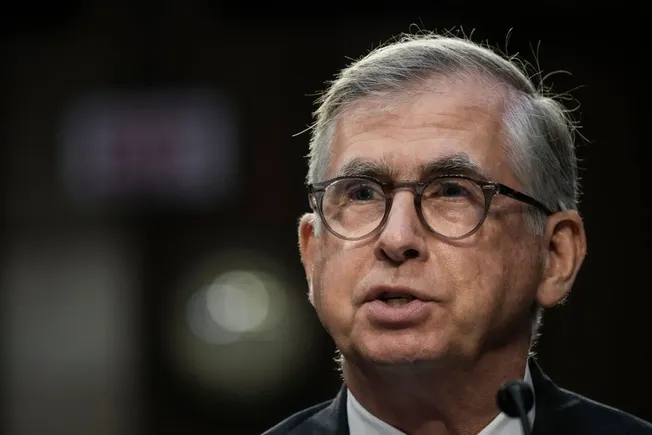
Incoming Truist CEO Mike Lyons is poised to usher in a new era of enhanced performance and accelerated growth for the Charlotte, North Carolina-based financial institution. Outgoing CEO Bill Rogers expressed confidence on Friday that Lyons, who officially takes the helm on September 1st, will bring a vital blend of "acceleration, assurance, and intensity" to the bank’s strategic objectives aimed at bolstering profits and revitalizing expansion. This leadership transition marks a significant moment for Truist, a $550 billion-asset super-regional bank, as it navigates a dynamic financial landscape.
Rogers, who has helmed Truist since its formation in 2021 through the merger of BB&T and SunTrust, will transition to the role of executive chair through April 2027, at which point he plans to retire. This planned succession, carefully orchestrated over more than a year, underscores a commitment to a smooth and strategic handover.
A New Leader for a New Chapter
Mike Lyons brings a wealth of experience from his previous leadership roles. He most recently served as the chief executive officer of the global financial technology company Fiserv, a position that honed his expertise in payments and digital innovation. Prior to that, he held the role of president at PNC Bank, gaining deep insight into the intricacies of large-scale commercial and retail banking operations.
Analysts covering Truist have largely welcomed Lyons’ appointment, characterizing him as a "welcome outsider" who will provide a "fresh perspective." This sentiment stems from the bank’s ongoing efforts to improve its financial performance and adapt to evolving market demands. During Truist’s second-quarter earnings call, Rogers lauded Lyons’ capabilities, stating, "Mike’s an accomplished and respected financial services leader with a proven ability to drive growth, improve performance and create long-term shareholder value. Throughout the selection process, it was clear to our board that he’s the right leader for his future."
Rogers further emphasized the strong alignment between Lyons and the Truist board regarding the bank’s strategic opportunities. The succession planning process, according to Rogers, was meticulous, focusing on identifying a leader who not only possessed a deep understanding of the bank’s core business but also demonstrated expertise in technology, payments, and an astute foresight into future industry trends – a profile that Lyons, in Rogers’ assessment, "perfectly" fits.
Charting a Course for Enhanced Profitability
The immediate focus for Lyons is expected to be on driving Truist towards its long-term financial targets, notably the ambitious goal of achieving a 16% to 18% return on tangible common equity (ROTE). When questioned by UBS analyst Erika Najarian on this specific target during the earnings call, Rogers expressed unwavering confidence: "Mike came in here to lead and run a high-performing company, and I don’t think there’ll be any doubt on that."
This commitment to high performance is particularly crucial as Truist works to optimize its integration and operational efficiencies post-merger. The banking sector, especially in the wake of recent economic shifts and heightened competition, demands robust strategies for profitability and sustained growth. Lyons’ background in technology and payments suggests a potential emphasis on leveraging digital capabilities and innovative solutions to enhance customer experience and streamline operations, thereby contributing to improved financial metrics.
Navigating Talent and Market Dynamics
The appointment of an outsider CEO can sometimes present challenges in retaining top talent within an organization. UBS analyst Najarian raised this point, inquiring about the reassurance provided to existing employees. Rogers acknowledged the competitive landscape for talent, particularly in major banking hubs like Charlotte, where firms such as JPMorgan Chase, Citi, and Sumitomo Mitsui Banking Corp. are expanding their presence.
"We re-recruit everyone every day," Rogers stated, underscoring the bank’s ongoing commitment to employee engagement and retention. He also highlighted the importance of certainty in leadership transitions. "Also, certainty helps," he added, referring to the clarity now provided regarding his own timeline and the bank’s future leadership. "There was probably a little uncertainty of my timeline, and now we have a lot of certainty."
Rogers further elaborated on the importance of a strong platform, career opportunities, and certainty for top performers. He likened the leadership transition to a relay race, where the baton is passed to enable the next runner to "run the last lap at a lot of speed." This metaphor signifies a desire for a seamless handover that allows the new leadership to execute with momentum and effectiveness.
Wells Fargo analyst Mike Mayo offered a pragmatic observation on this analogy, quipping, "Hopefully, no one drops the baton," a sentiment that reflects the inherent risks and expectations associated with any major leadership change in a large financial institution.
Truist’s Financial Performance: A Snapshot
The leadership transition occurs against a backdrop of solid, albeit mixed, financial results for Truist. In the second quarter, the bank reported a net income of $1.5 billion, representing a significant 27% increase year-over-year. Revenue also saw a healthy uptick of 5.5%, reaching $5.3 billion. However, Truist slightly trimmed its full-year revenue growth guidance to a range of 3.5% to 4%, down from a previous forecast of 4%. This adjustment suggests a cautious outlook on certain revenue streams or an anticipation of moderating economic conditions.
On the deposit front, Truist has observed a trend of customers seeking higher yields, leading to some migration into more interest-bearing products. Chief Financial Officer Mike Maguire noted that while average deposits increased by 1.1% year-over-year to $405 billion, the cost of interest-bearing deposits rose by 1 basis point quarter-over-quarter to 2.1%, and the overall cost of total deposits increased by 1 basis point to 1.56%. Rogers characterized this deposit behavior as more of a "client behavior than competitive pressure," indicating that customers are actively managing their funds in response to prevailing interest rate environments. This is a common phenomenon across the banking industry as rates have risen, prompting depositors to optimize their returns.
The Strategic Imperative for Lyons
Lyons’ tenure is expected to be defined by his ability to build upon the existing foundation while introducing strategic innovations. His experience at Fiserv, a company at the forefront of payment technologies and digital transformation, suggests a potential focus on enhancing Truist’s digital offerings, optimizing payment processing, and exploring new revenue streams within the fintech ecosystem.
Furthermore, Lyons’ background at PNC provides him with a comprehensive understanding of traditional banking challenges and opportunities, including managing credit risk, optimizing balance sheets, and navigating regulatory environments. The integration of these diverse experiences will be critical as he aims to steer Truist toward sustained profitability and market leadership.
The banking industry is undergoing a profound transformation, driven by technological advancements, evolving customer expectations, and a dynamic macroeconomic climate. For Truist, the leadership change signifies an opportunity to re-energize its strategic direction and capitalize on emerging trends. Lyons’ mandate will be to leverage his external perspective and proven track record to identify and execute initiatives that drive both short-term performance improvements and long-term sustainable growth.
Looking Ahead: A Focus on Execution
While specific strategic initiatives under Lyons’ leadership remain to be detailed, the overarching objective is clear: to enhance Truist’s competitive position and deliver superior value to shareholders and customers alike. The transition from Bill Rogers, a key architect of the merged entity, to Mike Lyons, an experienced external leader, signals a commitment to continuous improvement and adaptation.
The coming months will be crucial as Lyons settles into his role, assesses the bank’s current operations, and begins to implement his strategic vision. The market will be watching closely to see how his leadership translates into tangible results, particularly in achieving the bank’s profitability targets and navigating the competitive landscape. The success of this transition will be a testament to Truist’s ability to evolve and thrive in an ever-changing financial world. The passing of the baton, as Rogers described, is a pivotal moment, and the industry will be observing Truist’s performance with keen interest.
