
The cybersecurity landscape witnessed a significant shift on Wednesday as Glow, a Palo Alto-based startup led by a roster of former executives from Meta and Snowflake, officially emerged from stealth mode. The company announced it has secured $180 million in an all-equity Series A funding round, a massive injection of capital that instantly propels the firm to a $1.2 billion valuation. This milestone marks Glow as one of the few cybersecurity startups to achieve "unicorn" status before publicly disclosing specific revenue metrics, reflecting intense investor confidence in the team’s ability to address the burgeoning security challenges posed by generative artificial intelligence.
The funding round was led by a heavyweight syndicate including Sequoia Capital, Cyberstarts, Greenoaks, and Redpoint Ventures. Additional participation came from Index Ventures, Swish Ventures, Lux Capital, Operator Collective, and Holly Ventures. The capital infusion is earmarked for the rapid scaling of Glow’s AI-native endpoint security platform, which aims to redefine how enterprises protect the various devices—from laptops to servers—that form the perimeter of modern corporate networks.
The Evolution of the Endpoint Security Crisis
For over a decade, the primary focus of enterprise security has been the transition to the cloud and the proliferation of Software-as-a-Service (SaaS) applications. However, the sudden and pervasive integration of artificial intelligence has redirected the security focus back to the "endpoint"—the physical devices used by employees. According to Glow’s leadership, the traditional methods of securing these devices are no longer sufficient in an era where AI agents and complex developer tools are running locally on hardware.
"If you think of the past decade, everything was moving to the cloud and SaaS. Suddenly, AI lands on the endpoint in a way we’ve never seen," said Roi Tiger, co-founder and Chief Executive Officer of Glow. Tiger, a former Vice President of Engineering at Meta, argues that the current generation of security tools was designed for a pre-AI world. As enterprises deploy large language models (LLMs) and AI-driven automation, the "attack surface"—the total number of points where an unauthorized user can enter or extract data—has expanded exponentially.
The urgency of this shift is underscored by recent developments in the AI industry itself. The cybersecurity community has been on high alert since Anthropic unveiled its "Mythos" AI model. Reports indicate that Mythos demonstrated advanced, and perhaps alarming, capabilities in identifying and exploiting software vulnerabilities. This development has sparked a global debate over the dual-use nature of AI: while it can help developers write better code, it can also be weaponized by bad actors to automate phishing campaigns, develop polymorphic malware, and launch sophisticated, multi-stage cyberattacks that can bypass traditional defenses.
A Leadership Team Forged in Big Tech
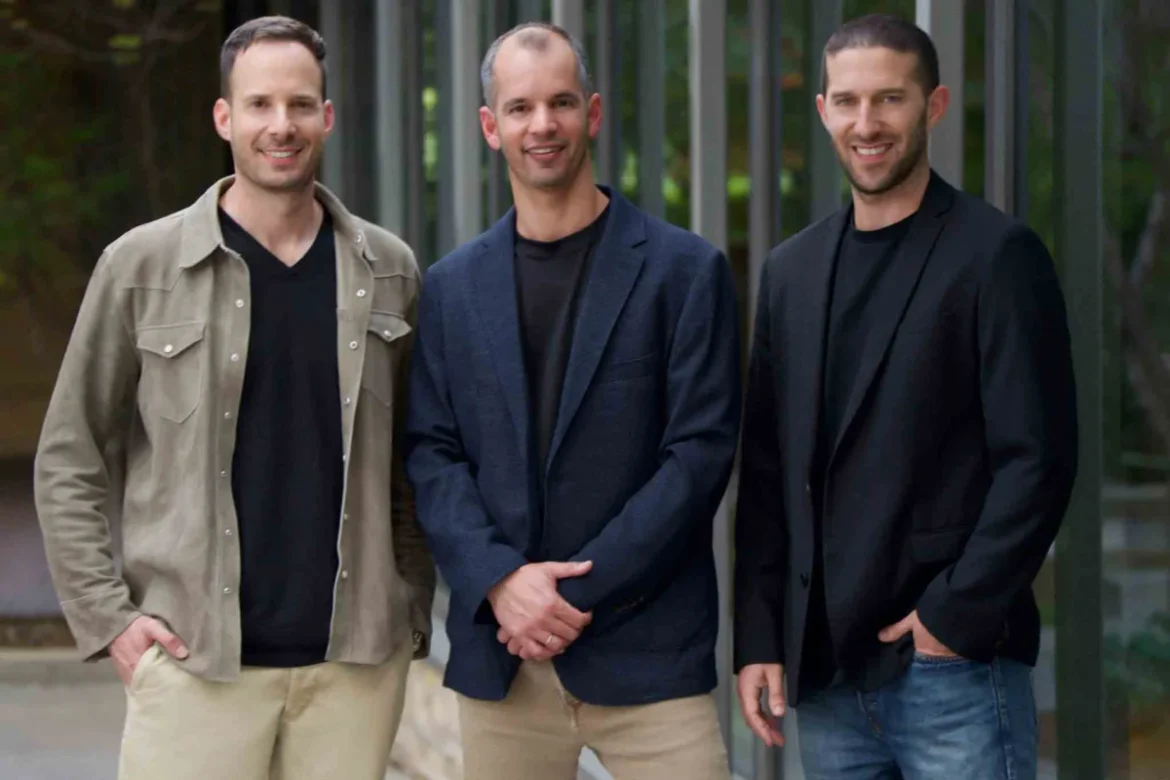
Glow’s rapid ascent to unicorn status is inextricably linked to the pedigree of its founding team. The startup was established in 2025 by a group of industry veterans who have managed security and engineering at a massive scale. Alongside CEO Roi Tiger, the founding team includes:
- Omer Singer: Previously the head of cybersecurity strategy at Snowflake, Singer brings deep expertise in data security and the challenges of protecting large-scale enterprise environments.
- Ophir Arie: A former Vice President of Research and Development at Claroty, Arie has a background in securing industrial and critical infrastructure.
- Arnon Joseph: An engineering leader from Meta who worked alongside Tiger to build some of the world’s most robust digital infrastructures.
Adding further weight to the leadership is Chief Operating Officer Emily Heath. Heath’s resume includes stints as the Chief Information Security Officer (CISO) for both United Airlines and DocuSign. Crucially, she served on the board of Wiz, the cloud security giant, during its high-profile journey through a $32 billion acquisition attempt by Google. Her transition from a partner at Cyberstarts to an operational role at Glow signals a strategic move to bridge the gap between technical innovation and the practical needs of global CISOs.
Technical Architecture: AI Defending Against AI
Glow’s platform is built on the premise that only AI can effectively defend against AI-driven threats. The startup has developed an endpoint security platform that utilizes specialized AI agents to monitor and control the software and developer tools running on employee devices. Unlike traditional Endpoint Detection and Response (EDR) tools, which often act as "digital recorders" that help security teams investigate a breach after it has occurred, Glow is designed for proactive prevention.
To power its platform, Glow leverages a hybrid approach to AI models. It utilizes Anthropic’s models and Google’s Gemini via Amazon Bedrock to provide high-level reasoning and analysis. However, the "secret sauce" lies in Glow’s proprietary software layer. This layer provides the third-party AI models with the necessary enterprise context—understanding which users should have access to specific data and which processes are normal for a given department—thereby reducing "hallucinations" and improving the reliability of security decisions.
In real-world applications, Tiger claims the platform has already demonstrated its efficacy. During its stealth phase, Glow’s technology reportedly prevented the installation of malicious npm packages—third-party software components that are frequently used by developers but have become a primary vector for supply-chain attacks. The platform also identified rogue AI agents attempting to pull in unauthorized software and detected instances where existing security tools, such as legacy EDRs, were either missing or had been tampered with by malware to reduce their functionality.
The Competitive Landscape and Market Dynamics
Glow enters a market that is both crowded and highly competitive. It faces off against established giants such as CrowdStrike, Microsoft, SentinelOne, and Palo Alto Networks. These companies have dominated the endpoint security space for years, moving toward "XDR" (Extended Detection and Response) platforms that integrate data from across the entire enterprise.
However, Glow’s strategy is to carve out a new category: "AI-native endpoint security." The company argues that legacy players are essentially "bolting on" AI features to aging architectures, whereas Glow was built from the ground up with AI as its core operating principle.
Industry analysts suggest that the "prevention-first" model is particularly attractive to sectors with high-security requirements. Despite being in its infancy, Glow claims to already have paying customers across the healthcare, retail, and financial services sectors. While the company has declined to name specific clients, Tiger noted that typical deployments currently cover tens of thousands of employee devices across global organizations.
Global Footprint and Workforce
The startup currently employs nearly 100 people, reflecting a rapid hiring pace since its 2025 inception. Its workforce is strategically split between two major tech hubs: approximately 70% of the staff is based in Israel, a global epicenter for cybersecurity innovation, while the remaining 30% is located in the United States, focusing on go-to-market strategies and corporate operations.
This dual-geography approach allows Glow to tap into the deep technical talent of the Israeli security ecosystem—where many engineers gain experience in elite military intelligence units—while maintaining close proximity to the headquarters of the world’s largest enterprises in Silicon Valley and beyond.
Broader Implications for the Future of Cybersecurity
The emergence of Glow at a billion-dollar valuation highlights a broader trend in the venture capital market: the "AI security gold rush." As businesses rush to adopt generative AI to improve productivity, they are inadvertently creating new vulnerabilities. The "Shadow AI" phenomenon—where employees use unauthorized AI tools to process sensitive corporate data—has become a top concern for CISOs.
Glow’s success or failure will likely be seen as a bellwether for the viability of AI-native security startups. If the platform can prove that its AI agents can consistently outperform human-led security operations centers (SOCs) in preventing breaches, it could trigger a massive wave of displacement in the cybersecurity industry.
Furthermore, the involvement of Sequoia Capital and other top-tier firms suggests that the investment community views the "Mythos" era of threats as a fundamental turning point. The debate over whether AI-assisted cyberattacks will become the new norm appears to be settled in the eyes of investors; the focus has now shifted to who can build the most effective "digital immune system" to counter them.
As Glow moves out of stealth, the company faces the challenge of scaling its technology to meet the demands of the world’s largest and most complex organizations. While its pedigree and funding are peerless, the ultimate test will lie in its ability to stay one step ahead of the very AI models it uses to protect its clients. In the rapidly escalating arms race between AI-driven attackers and AI-driven defenders, Glow has positioned itself on the front lines, betting that the future of security lies not in human oversight, but in the autonomous intelligence of the endpoint.
