
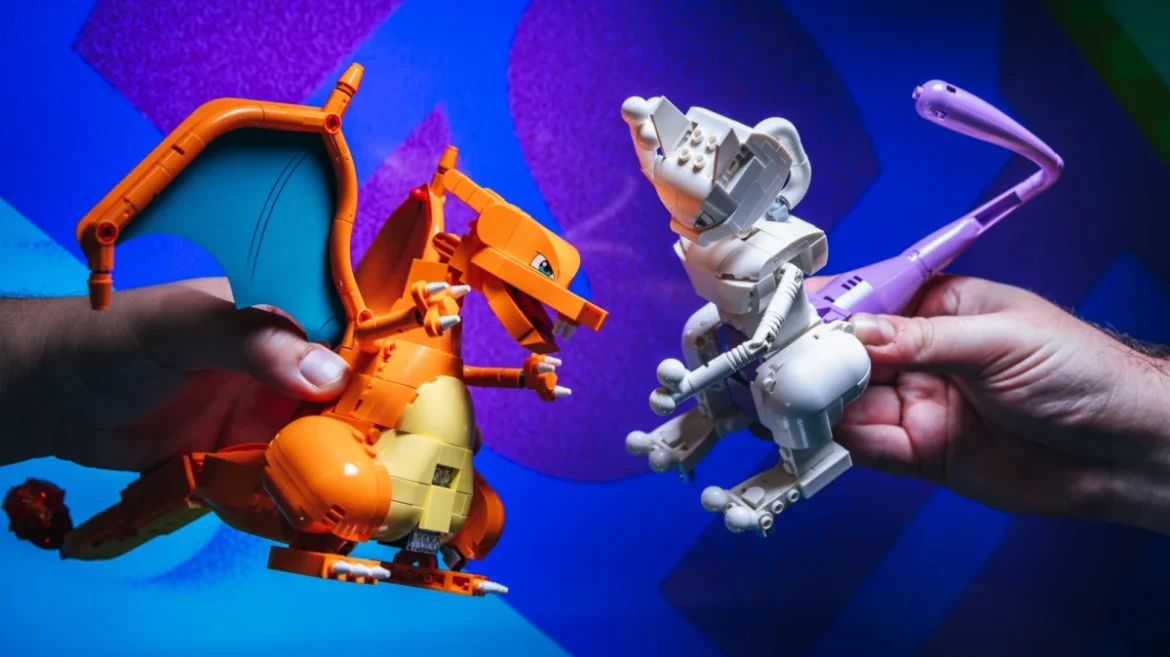
The Lego Group has officially announced the expansion of its high-tech "Smart Play" ecosystem with a new line of interactive Pokémon sets, scheduled for a global release on August 1. This launch represents a significant milestone in the company’s efforts to merge traditional tactile building experiences with sophisticated digital interactivity. Built around the proprietary "Smart Brick" technology first unveiled at the 2026 Consumer Electronics Show (CES), the Pokémon series aims to address previous consumer feedback regarding interactive playability while leveraging one of the most successful media franchises in history.

The new collection introduces a range of iconic characters, including Pikachu, Squirtle, Charmander, Bulbasaur, and Mewtwo, each integrated with the Smart Play system. Unlike standard Lego minifigures, these interactive iterations utilize the Smart Brick—a modified 2×4 Lego element packed with a suite of sensors—to provide real-time audio and visual feedback. The August 1 launch is expected to be a pivotal moment for the toy manufacturer as it seeks to solidify its "phygital" (physical plus digital) strategy in an increasingly competitive global toy market.
Technical Architecture: The Smart Brick and Smart Tag System
At the core of the Lego Pokémon Smart Play sets is the Smart Brick, a technological marvel that serves as the "brain" of the assembly. Lego engineers have successfully integrated an array of hardware into the dimensions of a standard brick, including a three-axis accelerometer, a gyroscope, a color sensor, and magnetic field sensors. These components are complemented by integrated microphones, high-fidelity speakers, and multi-color LED lights.

The Smart Brick operates by identifying "Smart Tags" embedded within specific sets and accessories. When a Pokémon figure equipped with a Smart Brick is placed on a designated tag—such as the "Murphy Bed" in the Pikachu Treehouse set—the system triggers a specific response. In this instance, the sensor detects the magnetic signature of the bed, prompting the speaker to emit snoring sounds while the internal LEDs pulse to simulate sleep.
To ensure sustained play, the sets include a proprietary wireless charging pad. This hardware allows users to recharge the Smart Bricks without deconstructing the models, a design choice that reflects Lego’s commitment to user-centric engineering. The system’s color sensor also plays a vital role, allowing the figures to recognize and react to different colored bricks, simulating various environments like water, grass, or fire.

Interactive Gameplay and the "Battle Mode" Mechanic
The defining feature of the Pokémon Smart Play line is the introduction of "Battle Mode," a gameplay mechanic that moves beyond simple sound effects to offer a structured, competitive experience. This mode allows users to "level up" their Pokémon through training stations included in specific kits. By interacting with these stations, the Smart Brick records data, theoretically increasing the Pokémon’s performance in simulated encounters.
During a battle, the Smart Brick’s accelerometer and gyroscope monitor the user’s physical movements. Players can "charge" special abilities by moving the figures in specific patterns. However, the system requires precision; if a user shakes the figure too aggressively, the sensors register a "fizzle," and the move fails. This adds a layer of skill-based play that distinguishes the Pokémon line from the earlier Star Wars Smart Play sets, which some critics and early adopters found lacked depth.

Furthermore, the Pokémon are programmed to interact with one another. When two Smart Brick-equipped figures are placed in proximity, they engage in "chatter," utilizing their microphones and speakers to recognize and respond to each other’s presence. This inter-set connectivity is designed to encourage the collection of multiple kits, as different Pokémon pairings unlock unique dialogue and sound sequences.
Chronology of the Smart Play Development
The journey toward the August 1 Pokémon launch began in early 2026 at the Consumer Electronics Show in Las Vegas. There, the Lego Group first demonstrated the Smart Brick as a conceptual leap forward from their previous "Hidden Side" and "Lego Super Mario" lines. While those earlier products relied heavily on smartphone integration and Augmented Reality (AR), the Smart Play system was designed to be "screen-free," keeping the focus on the physical bricks themselves.

Following the CES debut, Lego launched a series of Star Wars-themed Smart Play sets in early 2026. While the Star Wars line was praised for its technical ambition, consumer reception was mixed. Market analysts noted that the interactivity felt somewhat detached from the core building experience. In response, Lego hosted a dedicated launch event in London during the summer to showcase how the Pokémon line would implement a more integrated and "cute" auditory experience to better suit the target demographic.
The Pokémon sets represent the second generation of this hardware rollout. By focusing on "adorable" interactions—such as Squirtle’s buggy making engine noises or Geodude reacting to being "tapped"—Lego is pivoting toward a more character-driven interactive model. This evolution suggests that the company is actively iterating on its hardware and software based on real-world usage data.

Market Analysis and Product Tiers
The Lego Pokémon Smart Play collection is structured into distinct tiers to accommodate different price points, a strategy aimed at maximizing market penetration. The "All-in-One" kits, such as the Training House with Pikachu and the Charizard vs. Jolteon Ultimate Battle set, are priced at approximately $69.99. These sets are essential for new users as they include the necessary Smart Brick and wireless charger.
For consumers who already own the core hardware, Lego is offering "Smart Play Compatible" add-on sets starting at $19.99. These include:

- Mewtwo’s Lab Break: A mid-tier set focusing on action features and laboratory-themed Smart Tags.
- Trainer’s Buggy Adventure with Squirtle: A vehicle-based set that highlights the accelerometer’s engine-noise functionality.
- Charmander and Geodude’s Cavern Clash: An entry-level battle set designed for tactical play.
- Eevee and Lapras’s Treasure Hunt: A set focused on exploration and environment-based sensor triggers.
- Berry Bash with Bulbasaur and Bidoof: A social-interaction set emphasizing the "chatter" feature.
- Cubone and Gengar’s Spooky Showdown: A themed set utilizing the LED lighting capabilities of the Smart Brick for atmospheric effects.
Industry experts suggest that this pricing model is a direct response to the high cost of the initial Star Wars Smart Play sets. By offering entry-level interactive kits for under $20, Lego is making the technology accessible to a broader audience while maintaining a high-margin "starter kit" requirement.
Strategic Implications for the Lego Group and Nintendo
The partnership between the Lego Group and the Pokémon Company (largely owned by Nintendo) is a significant shift in the licensing landscape. For years, the Pokémon construction license was held by Mattel’s Mega Construx. The transition to Lego signifies a consolidation of Nintendo’s most valuable intellectual properties under the Lego umbrella, following the massive success of the Lego Super Mario and Lego Animal Crossing lines.

From a business perspective, the Smart Play Pokémon sets serve as a hedge against the rising dominance of digital entertainment. By embedding technology directly into the plastic, Lego is attempting to capture the attention of "Generation Alpha," children who are accustomed to interactive, responsive devices. This strategy also provides Lego with valuable data on how children play, which can inform future product development.
Furthermore, the "Battle Mode" and "Leveling Up" features mimic the core mechanics of the Pokémon video games, creating a cross-platform synergy that encourages brand loyalty. Analysts predict that if the Pokémon launch is successful, Lego may expand the Smart Play technology to other high-value licenses, such as Marvel or Harry Potter, potentially standardizing the Smart Brick across all major licensed themes.

Consumer Outlook and Future Prospects
As the August 1 release date approaches, anticipation among both the Lego AFOL (Adult Fans of Lego) community and younger fans is high. Early hands-on demonstrations at media events have highlighted the "charm factor" of the Pokémon line, with many noting that the tactile feedback and character-specific sounds provide a more emotional connection than previous electronic Lego products.
However, the success of the line will ultimately depend on the durability of the Smart Brick and the depth of the "Battle Mode" software. Unlike traditional Lego bricks, which can last for decades, the electronic components of the Smart Play sets have a finite lifespan. Lego has addressed this by ensuring the sets remain fully functional as traditional building toys even if the electronics are not in use, but the premium price tag remains a point of consideration for some parents.

In conclusion, the Lego Pokémon Smart Play sets are more than just new toys; they are a sophisticated experiment in the future of play. By combining the world-building potential of Lego with the interactive "magic" of the Pokémon universe, the Lego Group is positioning itself at the forefront of the modern toy industry. Whether this technology becomes a permanent fixture of the Lego catalog or remains a niche offering will be determined by the reception of this ambitious August launch. For now, the "Smart Brick" stands as a testament to the enduring relevance of the plastic brick in a digital age.
