
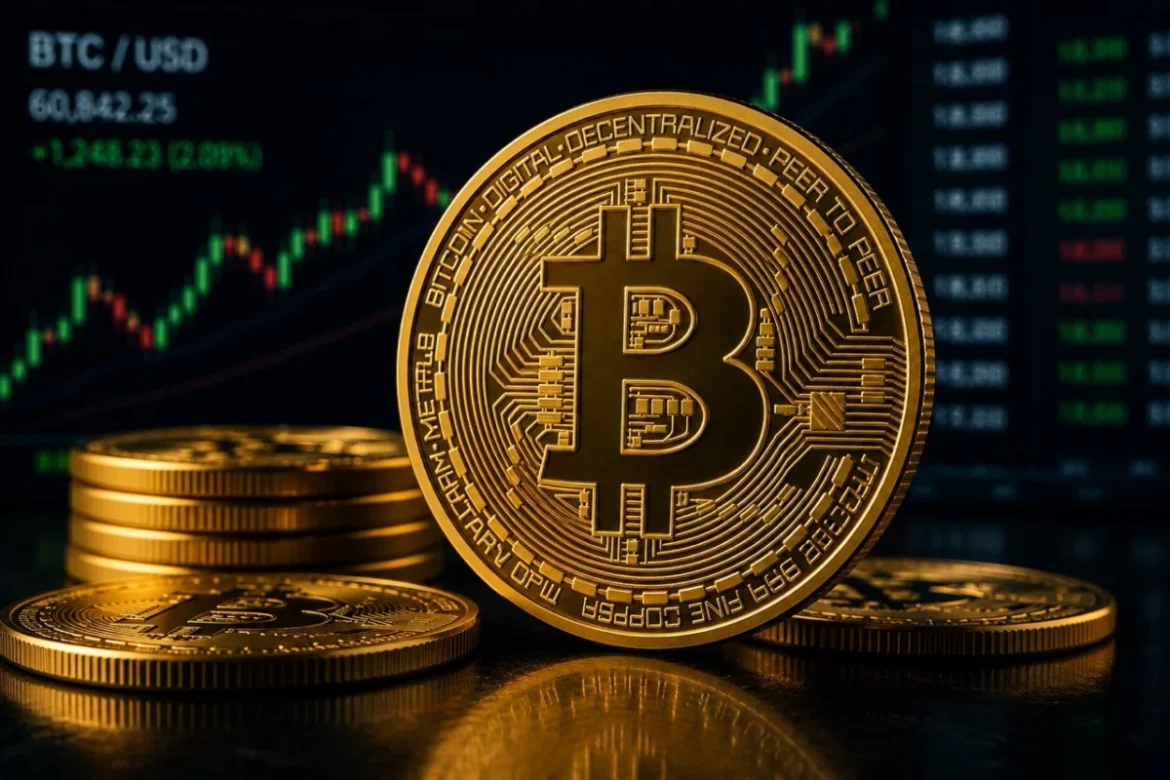
The impending Q2 2026 earnings report from Tesla, scheduled for release on July 22, has once again cast a spotlight on the electric vehicle manufacturer’s substantial Bitcoin holdings. Investors, market analysts, and cryptocurrency enthusiasts alike are keenly awaiting confirmation on whether the company has maintained its reported corporate treasury position of 11,509 BTC throughout the quarter. This figure, which has remained consistent across recent official disclosures, serves as a crucial checkpoint for one of the most prominent corporate Bitcoin holders operating outside the traditional cryptocurrency industry. The market’s anticipation underscores the enduring symbolic weight Tesla carries within the digital asset space, even as its core business remains rooted in electric vehicles, energy, and AI.
Tesla’s Bitcoin Odyssey: A Chronology of Corporate Digital Asset Adoption
Tesla’s journey into the world of Bitcoin has been as dynamic and closely watched as its innovations in sustainable energy and automotive technology. The company’s initial foray into cryptocurrency began in early 2021, marking a significant milestone for institutional adoption. In February 2021, Tesla announced a groundbreaking purchase of $1.5 billion worth of Bitcoin, a move that sent shockwaves through both traditional financial markets and the burgeoning crypto ecosystem. This decision, championed by CEO Elon Musk, was framed as a strategy to diversify the company’s balance sheet and maximize returns on cash not immediately required for operations. At the time of this announcement, Bitcoin’s price surged, briefly touching new all-time highs as the news lent considerable legitimacy to the digital asset.
Following this initial acquisition, Tesla briefly ventured into accepting Bitcoin as a payment method for its vehicles in March 2021. This move was celebrated by Bitcoin proponents as a tangible step towards mainstream utility. However, this acceptance was short-lived. By May 2021, Tesla reversed its decision, citing environmental concerns over the energy consumption associated with Bitcoin mining. This reversal triggered a market downturn for Bitcoin and ignited a fierce debate about the ecological footprint of proof-of-work cryptocurrencies.
The company’s first significant disclosure regarding its Bitcoin holdings came in its Q2 2021 earnings report, where it revealed a sale of 10% of its initial position. Elon Musk clarified that this sale was a test of Bitcoin’s liquidity, demonstrating that it could be easily converted to fiat currency without negatively impacting the market. Despite this partial sale, Tesla maintained a substantial portion of its original investment throughout the latter half of 2021.
The most substantial change to Tesla’s Bitcoin treasury occurred in Q2 2022, when the company sold approximately 75% of its remaining holdings. This sale, which generated $936 million in proceeds, reduced its Bitcoin balance to the current 11,509 BTC. At the time, Tesla attributed this divestment to the need to maximize its cash position amidst uncertainty surrounding COVID-19 lockdowns in China and broader economic pressures. Since that Q2 2022 sale, Tesla has consistently reported maintaining its 11,509 BTC position, with no further purchases or sales disclosed in subsequent quarterly filings. This consistent holding pattern has transformed the upcoming Q2 2026 report into another pivotal moment for market observation.
The Enduring Significance of 11,509 BTC
While the volume of 11,509 BTC might seem modest compared to the holdings of dedicated crypto firms, its continued presence on Tesla’s balance sheet carries immense symbolic weight. The primary reason for this heightened attention is Tesla’s identity as a non-crypto-native firm. When a cryptocurrency miner, exchange, or a company explicitly structured around Bitcoin treasury management holds BTC, it aligns with market expectations. However, when a global technology and manufacturing powerhouse like Tesla, whose primary revenue streams are derived from electric vehicles, battery storage, and artificial intelligence, chooses to maintain a significant digital asset position, the signal reverberates far more broadly.
This signal suggests a strategic endorsement of Bitcoin as a legitimate, long-term reserve asset rather than a fleeting speculative experiment. For Bitcoin supporters, this psychological reinforcement is invaluable. It bolsters the "corporate treasury adoption" narrative, which posits that operating companies will increasingly integrate Bitcoin alongside traditional assets like cash, government securities, and other balance-sheet components. This narrative stands distinct from the growth driven purely by exchange-traded funds (ETFs) or specialized crypto funds, focusing instead on real-world corporate integration. Tesla, with its high profile and influential CEO, remains a quintessential test case for this broader adoption thesis.
Furthermore, the estimated current value of 11,509 BTC is significant. Assuming an average Bitcoin price of approximately $60,000 (a hypothetical figure for illustration, actual prices fluctuate), Tesla’s holdings would be valued around $690 million. While this is a fraction of Tesla’s multi-trillion-dollar market capitalization, it is by no means an insignificant sum, making its movements or continued stability a matter of financial relevance for the company.
Tesla vs. MicroStrategy: A Tale of Two Corporate Bitcoin Strategies
It is crucial to differentiate Tesla’s Bitcoin strategy from that of companies like MicroStrategy. While both are public companies holding substantial amounts of Bitcoin, their motivations, scale, and strategic positioning are fundamentally different. MicroStrategy, under the leadership of Michael Saylor, has explicitly pivoted its entire corporate strategy around Bitcoin accumulation. It has consistently utilized various financial instruments, including convertible notes and stock offerings, to raise capital specifically for purchasing Bitcoin, viewing the digital asset as its primary treasury reserve and a core component of its enterprise software business strategy. MicroStrategy’s identity has become inextricably linked to Bitcoin, making its holdings central to its market valuation and investor appeal. As of recent disclosures, MicroStrategy holds over 200,000 BTC, a figure vastly exceeding Tesla’s position.
Tesla, in stark contrast, maintains its core focus on innovation in electric vehicles, energy solutions, and artificial intelligence. For Tesla, Bitcoin is a treasury position, a component of its balance sheet management, rather than the central pillar of its capital allocation strategy. This distinction means that while Tesla’s Bitcoin holdings are noteworthy, they are only one piece of a much larger and more complex financial picture. Investors primarily scrutinize Tesla’s earnings reports for metrics such as vehicle deliveries, production targets, profit margins, AI spending, energy revenue growth, operating costs, and forward guidance. These operational and strategic elements typically exert a far greater influence on Tesla’s stock performance than its digital asset holdings.
However, for the broader Bitcoin market, Tesla’s treasury line retains its symbolic importance. A continued hold reinforces the idea that major, diversified corporations can maintain Bitcoin exposure without transforming into dedicated "Bitcoin companies." This nuanced approach offers valuable validation for the broader adoption narrative, suggesting that Bitcoin can serve as a legitimate, albeit non-primary, asset for a wide range of corporate entities.
Accounting Complexities and Market Expectations
Corporate Bitcoin holdings are not typically updated in real-time, necessitating a wait for official quarterly filings, earnings materials, or investor updates to confirm any changes. This makes earnings season particularly vital for companies with known crypto exposure. Tesla’s Q2 2026 report is one such critical checkpoint.
One of the significant complexities surrounding corporate Bitcoin holdings involves accounting standards. Under current Generally Accepted Accounting Principles (GAAP) in the United States, Bitcoin and other cryptocurrencies are often classified as indefinite-lived intangible assets. This classification means they are subject to "impairment" charges if their market value drops below the company’s cost basis, even if the price subsequently recovers. Companies cannot record gains until the asset is sold, leading to a potentially volatile impact on reported earnings. However, the Financial Accounting Standards Board (FASB) has recently moved towards fair-value accounting for digital assets, which, once fully implemented, would allow companies to reflect both gains and losses in real-time on their income statements, providing a more accurate and less volatile representation of their holdings. Until these changes are universally adopted and applied, the impairment rule adds another layer of scrutiny to Tesla’s Bitcoin position.
If Tesla confirms an unchanged 11,509 BTC balance in its Q2 report, the market will likely interpret this as continuity and stability rather than a new catalyst. It would reinforce the perception that Tesla is content with its current strategic allocation. Conversely, any change in the balance could trigger a more pronounced reaction due to Tesla’s market influence. A sale, for instance, could prompt questions about the company’s confidence in digital assets as a treasury reserve or signal potential liquidity needs. Such a move might generate negative sentiment within the crypto community, given Tesla’s high profile. Conversely, a purchase, however unlikely given its recent history, would undoubtedly revive enthusiastic discussions around broader corporate Bitcoin adoption and potentially spark a positive market reaction for Bitcoin itself. The absence of any change would simply reaffirm the existing position, suggesting a steady-as-she-goes approach to its digital asset strategy.
Broader Implications for Bitcoin Adoption and Market Dynamics
The implications of Tesla’s Q2 2026 Bitcoin disclosure extend beyond the company’s financial health to the broader cryptocurrency landscape. Corporate treasury adoption is frequently cited as one of Bitcoin’s most robust long-term growth narratives, independent of retail speculation or even the success of investment vehicles like spot Bitcoin ETFs. When established, non-crypto-centric companies like Tesla hold Bitcoin, it lends credibility and institutionalizes the asset in a way that mere investment products cannot. It asks whether operating companies are genuinely willing to hold Bitcoin alongside their traditional fiat and securities portfolios, treating it as a legitimate balance-sheet asset.
The psychological impact on Bitcoin supporters cannot be overstated. Tesla’s continued holding provides a powerful data point for the thesis that Bitcoin is maturing into a viable corporate treasury asset. It demonstrates resilience, even after previous volatility and divestments, and suggests a strategic conviction that transcends short-term price fluctuations.
Furthermore, the timing of the report relative to overall market conditions for Bitcoin will influence its interpretation. If Bitcoin is experiencing a strong bull run leading up to July 22, an unchanged Tesla balance might amplify bullish sentiment, seen as a confirmation of institutional conviction. If Bitcoin prices are weak or volatile, the same unchanged balance might be perceived as less significant or even as a missed opportunity, depending on the prevailing market narrative. Context, therefore, plays a vital role in how the market processes this information.
What to Scrutinize in the Q2 2026 Report
When Tesla releases its Q2 2026 earnings report, several specific details related to its digital asset holdings will warrant close attention:
- Confirmation of the 11,509 BTC Figure: The most immediate point of interest will be whether the precise figure of 11,509 BTC is explicitly re-confirmed in the company’s financial statements or accompanying disclosures. Any deviation from this number would be the primary news.
- Language and Commentary on Digital Assets: Investors will search for any explicit language from Tesla regarding its digital asset strategy, impairment charges (if applicable under current accounting rules), fair-value adjustments (if new rules are in play), or general treasury philosophy concerning cryptocurrencies. Even subtle changes in wording or the inclusion of new commentary, especially from CEO Elon Musk during the earnings call, could attract significant attention given the historical scrutiny of Tesla’s Bitcoin position.
- Impact on Financials: While unlikely to be a primary driver for Tesla’s overall financial performance, any realized gains or losses from digital asset transactions, or impairment charges, will be noted within the balance sheet and income statement.
- Market Reaction: The immediate reaction from both Tesla’s stock (TSLA) and Bitcoin’s price (BTC) will provide insight into how critically the market views the disclosure. While Bitcoin is not Tesla’s core business, its symbolic weight can still trigger short-term market movements.
In conclusion, the July 22 earnings report for Q2 2026 represents a significant official update point for investors and the wider crypto community regarding Tesla’s enduring Bitcoin treasury. It is crucial to approach this disclosure with a balanced perspective, refraining from overstating its potential impact before the official documents are released. Tesla has not provided any preliminary indication of a Q2 Bitcoin purchase or sale in current materials. The fundamental story remains that one of the world’s most visible and influential public companies is approaching another disclosure window with a substantial Bitcoin treasury still prominently in focus. This alone is sufficient to warrant considerable attention and careful observation from financial markets worldwide. This article is based on publicly available Tesla investor relations materials and general market analysis.
