
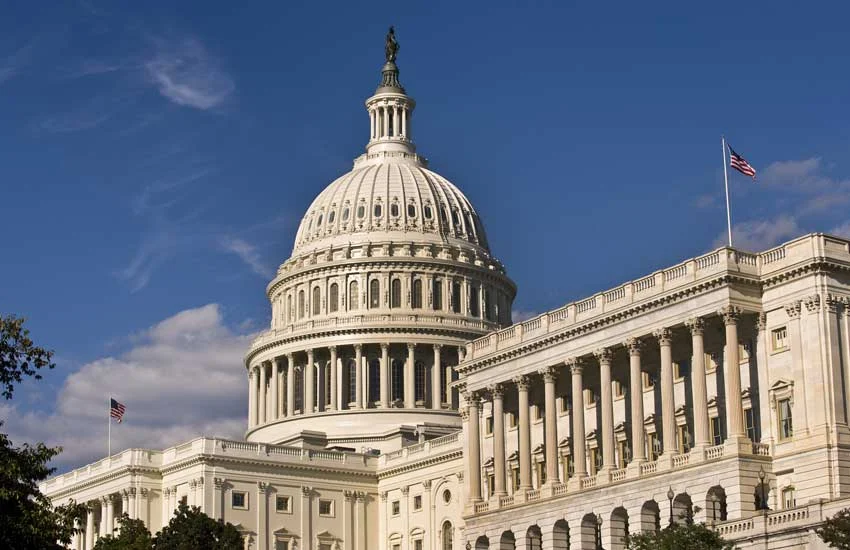
The United States Senate is scheduled to hold a pivotal cloture vote this afternoon on the highly debated Clarity Act, a piece of legislation designed to establish a comprehensive regulatory framework for the burgeoning cryptocurrency and digital asset industry. To successfully advance past this legislative hurdle, the bill requires a formidable threshold of 60 votes. Given the current composition of the Senate, this mathematical requirement dictates that proponents of the measure must secure the backing of at least seven senators outside of the Republican caucus, turning the vote into a crucial test of cross-party consensus and legislative negotiation.
Ahead of this afternoon’s proceedings, lawmakers introduced a flurry of last-minute modifications to the text of the bill. These late-stage revisions specifically target and refine provisions related to federal ethics standards and the payment of interest on stablecoins. As Capitol Hill braces for the outcome, financial markets, digital asset firms, and legal scholars are closely monitoring the debate, recognizing that the legislative choices made today could permanently alter the landscape of American financial technology and monetary policy.
Background and Context of the Clarity Act
The journey toward today’s cloture vote has been marked by intense lobbying, protracted committee hearings, and deep ideological divisions over how aggressively the federal government should regulate decentralized finance, blockchain technology, and digital currencies. Traditional banking regulators, investor protection advocates, and securities enforcement agencies have long argued that the digital asset ecosystem operates within a regulatory vacuum, exposing retail investors to systemic fraud, market manipulation, and systemic financial risks. Conversely, technology advocates and the broader cryptocurrency industry have cautioned that overly burdensome or ambiguous rules could stifle American innovation, drive emerging blockchain enterprises overseas, and preemptively cripple a transformative sector of the modern economy.
The Clarity Act emerged out of this friction as an attempt to forge a middle ground. It seeks to clarify the jurisdictional boundaries between the Securities and Exchange Commission (SEC) and the Commodity Futures Trading Commission (CFTC), establishing clear statutory definitions for when a digital asset constitutes a security versus a digital commodity. Furthermore, the bill addresses the rapidly growing market for stablecoins—cryptocurrencies pegged to the value of a fiat currency, most notably the U.S. dollar—and sets forth explicit parameters regarding reserves, backing transparency, and whether issuers are permitted to distribute yield or interest to token holders.
Bipartisan Negotiations and Partisan Friction
The legislative path leading to this afternoon’s vote has been anything but smooth. Republican Senator Lummis, one of the primary architects and champions of the bill, emphasized the exhaustive nature of the legislative process leading up to this moment. In a statement addressing the impending vote, Lummis underscored the collaborative effort required to reach this stage.
"After over a year of bipartisan negotiations and over 100 changes requested by Democrats, it is time for the Senate to move this strong, bipartisan bill forward," Lummis stated.
Despite these extensive negotiations, the legislation remains a lightning rod for controversy. Proponents of the bill argue that establishing a functional regulatory baseline—even one that requires compromise—is infinitely preferable to maintaining the current regulatory vacuum characterized by enforcement-driven oversight and legal uncertainty. However, critics and progressive lawmakers contend that the bill makes dangerous concessions to financial conglomerates and fails to adequately protect everyday consumers. The tension centers not only on financial mechanics, but also on questions of political ethics, conflicts of interest, and the application of federal rules to high-profile political figures involved in the digital asset sector.

Scrutiny Over Ethics Provisions and Family Crypto Holdings
One of the most intensely scrutinized aspects of the late-stage amendments involves the bill’s ethics provisions. These rules have been subjected to rigorous analysis by ethics watchdogs and legal experts, particularly regarding how the legislation impacts the digital asset business activities of prominent political families, most notably the Trump family.
The critical test for these updated ethics rules is whether prominent commercial enterprises—such as the Trump family’s crypto initiatives—could have still operated under the newly proposed framework. A detailed examination of the updated text indicates that, in most instances, these activities could indeed continue, provided that the individuals involved comply with a set of procedural requirements and regulatory "hoops."
Specifically, the loopholes embedded within the legislation permit family members to engage in digital asset ventures through the utilization of blind trusts or by structuring corporate operations in a manner that ensures crypto-related activity does not constitute the single largest source of revenue for a given enterprise. These structural carve-outs have sparked sharp debates in the halls of Congress.
For instance, former President Donald Trump’s current financial stake in the family crypto firm is held within a trust managed by his son as trustee. Under the updated provisions of the Clarity Act, this arrangement would no longer suffice in its current form; it would necessitate a formal conversion into a fully qualified blind trust to meet the statutory compliance standards. While supporters of the amendments argue that this requirement introduces a necessary layer of separation and transparency, skeptics contend that the provisions are drafted with sufficient flexibility to effectively grandfather in existing political commercial ventures, creating an appearance of self-dealing that could undermine public trust in the integrity of the regulatory framework.
Chronology of Key Legislative Milestones
To understand the current urgency surrounding the Clarity Act, it is instructive to review the sequence of events that brought the legislation to the Senate floor:
- Early 2023: Initial bipartisan working groups form in both the House and the Senate to draft comprehensive digital asset market structure legislation, following a series of high-profile corporate collapses within the cryptocurrency sector.
- Late 2023 to Early 2024: Committee markups reveal deep divisions between financial services panels regarding the appropriate regulatory authority for stablecoins and decentralized finance protocols.
- Mid 2024: House committees advance various iterations of digital asset bills, prompting behind-the-scenes negotiations in the Senate to harmonize competing priorities and incorporate feedback from Democratic leadership and the White House.
- Late 2024 to Early 2025: Negotiations intensify as the cryptocurrency industry mobilizes significant lobbying resources to push for legislative clarity before the conclusion of the congressional session.
- Days Preceding the Vote: Lawmakers introduce over 100 requested modifications, focusing intensely on refining stablecoin interest frameworks and tightening ethics guidelines to appease hesitant centrist and opposition senators.
- Today: The Senate convenes for the scheduled cloture vote, requiring a 60-vote supermajority to overcome procedural hurdles and advance the bill toward final debate and amendment processes.
Economic and Market Implications
The outcome of today’s cloture vote carries profound implications for the trajectory of the United States financial technology sector. For years, industry leaders have complained of "operation chokepoint" dynamics and regulatory hostility, arguing that the absence of clear statutory rules forces innovative startups out of the United States and into jurisdictions with more accommodating legal environments, such as the European Union, Singapore, the United Kingdom, and the United Arab Emirates.
If the Clarity Act successfully clears the 60-vote threshold and ultimately passes both chambers of Congress, it will provide institutional investors with the regulatory certainty required to allocate capital safely into digital asset markets. Pension funds, asset managers, and corporate treasuries—traditionally hesitant to enter the asset class due to compliance and legal risks—would gain a defined roadmap for digital asset custody, trading, and product development.
Conversely, the stablecoin interest provisions contained within the bill could radically reshape the competitive dynamics between traditional commercial banks and digital currency issuers. By clarifying whether and how stablecoin platforms can distribute yield to token holders, the legislation directly impacts the deposit-gathering capabilities of traditional financial institutions. Critics of stablecoin interest fear that allowing unregulated or lightly regulated entities to offer attractive yields could trigger a modern bank run, drawing capital away from federally insured depository institutions during periods of economic volatility. On the other hand, proponents argue that free-market competition benefits consumers by forcing traditional banks to offer more competitive interest rates on standard savings accounts.
Official Responses and Stakeholder Reactions
Reaction to the impending vote has exposed deep ideological fractures across the political spectrum. Financial industry trade associations have largely thrown their weight behind the push for cloture, arguing that a imperfect bill is vastly superior to prolonged legislative paralysis. Representatives from leading blockchain advocacy groups have pointed out that without federal legislation, the United States risks forfeiting its historical leadership position in global financial infrastructure.
Conversely, consumer protection organizations and several progressive lawmakers have voiced strong opposition to the rushed nature of the amendments. In statements released ahead of the vote, these groups argued that last-minute alterations—particularly those addressing ethics and stablecoin mechanics—were drafted behind closed doors without adequate public transparency or committee scrutiny. They contend that rushing a complex financial overhaul through the Senate undermines the legislative process and caters disproportionately to well-funded lobbying interests at the expense of systemic financial stability.
Outlook and Next Steps in the Legislative Process
As the Senate prepares for the roll call, the immediate focus remains squarely on whether leadership can whip the necessary 60 votes. Securing the support of at least seven non-Republican senators requires intense last-minute negotiations, assurances regarding future amendments, and delicate coalition-building.
Should the cloture motion succeed, the Clarity Act will open the floor for a series of further amendments, allowing senators to propose additional modifications, tighten remaining loopholes, or adjust the implementation timelines for the new regulatory mandates. If the motion fails, the bill will effectively stall, throwing the future of federal digital asset regulation back into legislative limbo and leaving regulatory enforcement to the discretion of federal agencies and the courts for the foreseeable future.
Regardless of the immediate outcome of today’s vote, the debate over the Clarity Act marks a watershed moment in the intersection of federal governance and financial technology. As digital assets continue to weave themselves into the fabric of the global economy, the decisions made on the Senate floor will reverberate through financial markets for decades to come, defining the boundaries between technological innovation, consumer protection, and political accountability.
