

Abbott Laboratories, a global healthcare giant, finds itself embroiled in a complex dual cybersecurity challenge, currently investigating two distinct incidents that have cast a spotlight on its digital defenses. The first, confirmed by the company, involves unauthorized access to internal legacy systems within its Cancer Diagnostics business, a breach swiftly attributed to the notorious ShinyHunters extortion gang. Concurrently, Abbott is probing a separate claim from a threat actor identified as ShadowByt3$, who alleges a breach of the company’s LabCentral customer portal, leading to the exfiltration of sensitive business and intellectual property documents. These incidents underscore the persistent and evolving cyber threats facing critical healthcare infrastructure and raise significant questions about data security protocols within large enterprises.
The Confirmed Breach: ShinyHunters Targets Cancer Diagnostics (Legacy Exact Sciences)
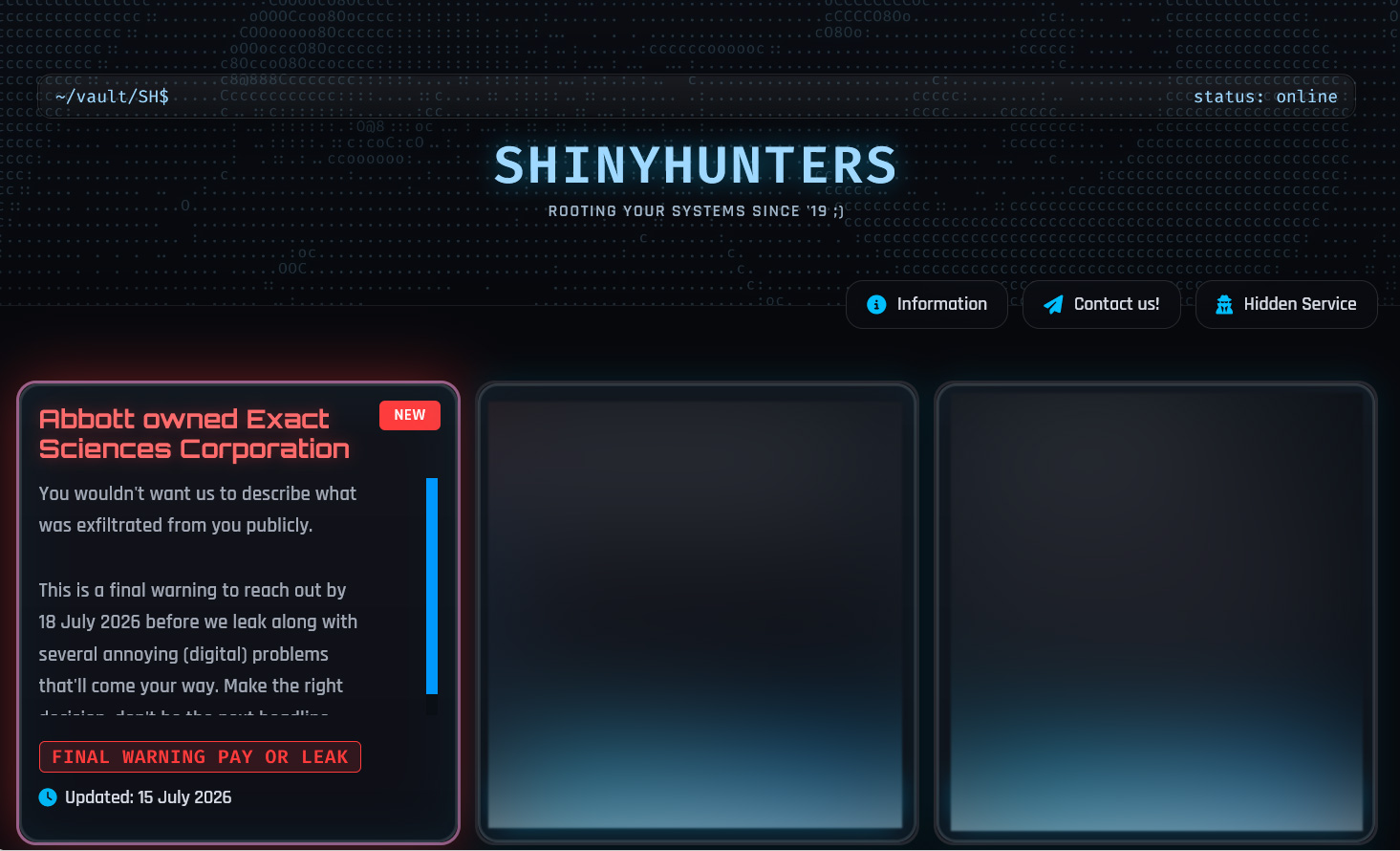
The first incident came to light when the prolific ShinyHunters data extortion group added Abbott to its dark web data leak site. The group initially threatened to publish allegedly stolen data after July 18, before extending this deadline to July 21, signaling their intent to negotiate or expose information if their demands were not met. This public declaration prompted immediate action and an official response from Abbott.
Upon inquiry, Abbott directed BleepingComputer to a statement published on its corporate newsroom, confirming the compromise. "Abbott is investigating a cyber incident in which there was unauthorized access to a limited number of internal systems in our Cancer Diagnostics business only," the company affirmed. Crucially, Abbott sought to reassure stakeholders and the public, stating, "This does not impact any business operations, product or product availability, manufacturing or lab operations, or our ability to serve patients." The company further emphasized that the security incident had not affected any other Abbott businesses or systems, clarifying that the compromised "legacy Exact Sciences systems are separate from Abbott’s" core infrastructure. This distinction is vital, suggesting a contained breach within a specific, older segment of their digital environment.
In response to the identified intrusion, Abbott activated its comprehensive incident response procedures without delay. This included engaging external cybersecurity experts to assist with forensic analysis and remediation efforts, as well as notifying relevant law enforcement agencies to facilitate a broader investigation into the malicious activity. Despite the seriousness of the breach, Abbott publicly stated its expectation that the incident would not have a material impact on its overall business operations or financial results, a common initial assessment in such situations, though the full scope of any data exfiltration often takes time to ascertain.
ShinyHunters’ Modus Operandi: Vishing and SSO Compromise

ShinyHunters, a group known for its sophisticated social engineering tactics and data extortion, claimed to BleepingComputer that their access to Abbott’s systems was achieved through a vishing attack. Vishing, a portmanteau of "voice" and "phishing," involves attackers using phone calls to trick individuals into divulging sensitive information or performing actions that compromise security. According to the threat actor, this vishing campaign targeted several Abbott employees in mid-June. The success of this attack allegedly allowed ShinyHunters to compromise a Microsoft Entra single sign-on (SSO) account, which subsequently granted them unauthorized access to internal systems.
This method aligns perfectly with ShinyHunters’ established pattern of attack. Since last year, the extortion group has been actively conducting social engineering campaigns specifically designed to target employees’ SSO accounts across various platforms, including Microsoft Entra, Okta, and Google SSO. The objective of these campaigns is to gain an initial foothold, which then allows the threat actors to pivot and steal data from a wide array of connected Software-as-a-Service (SaaS) applications. These often include critical business platforms such as Salesforce, Microsoft 365, Google Workspace, SAP, Slack, Adobe, Atlassian, Zendesk, Dropbox, and numerous others, which house a treasure trove of corporate and customer data.
The Alleged Data Haul and Broader Implications for MedTech
ShinyHunters provided BleepingComputer with a detailed list of the data they purportedly exfiltrated from Abbott’s compromised systems. Their claims include data stolen from Microsoft Entra, ServiceNow, SharePoint, Databricks, and Coupa. The alleged data types encompass a broad spectrum of sensitive information, including internal documents, contracts, and customer information. More alarmingly, the group claimed to have stolen over 30 million rows of customer personally identifiable information (PII) from multiple datasets. This PII allegedly includes names, email addresses, phone numbers, physical addresses, and dates of birth. Furthermore, ShinyHunters asserted possession of more than one million Social Security numbers, a highly sensitive data point that can lead to severe identity theft and financial fraud. The claims extended to over 22 million client notes, which could contain confidential doctor-patient conversations, more than 20 million medical orders, and various customer agreements and non-disclosure agreements (NDAs). It is imperative to note that BleepingComputer has not independently verified these extensive claims regarding the stolen data.
This incident is not an isolated event but rather fits into a concerning trend of ShinyHunters increasingly targeting companies within the medical technology (medtech) sector. The group’s past victims include prominent names such as Medtronic, OneMedical, and AdaptHealth. BleepingComputer has also reported that ShinyHunters was behind the iRhythm data breach and even targeted Stryker shortly after that company had recovered from a destructive Iranian data-wiping attack. The consistent targeting of medtech firms underscores the immense value threat actors place on healthcare data, both for its monetary value in black markets and potentially for corporate espionage or disruption. The sensitive nature of medical data and the critical services provided by these companies make them particularly vulnerable and attractive targets for financially motivated cybercriminals.
The Second Incident: ShadowByt3$’s Claims Against LabCentral
Parallel to the ShinyHunters investigation, Abbott is also contending with a separate claim from a threat actor known as ShadowByt3$. This group contacted BleepingComputer, alleging that they had successfully breached Abbott’s Core Laboratory diagnostics business via its LabCentral customer portal. According to ShadowByt3$, their access was gained using compromised customer credentials, identifying what they described as a "weak point" within the environment.
The threat actor claimed to have initiated the breach on July 4, 2026, and subsequently engaged in a slow, methodical exfiltration of files by targeting API endpoints. The alleged stolen data, according to ShadowByt3$, is highly technical and proprietary in nature. It reportedly includes CE manufacturing certificates, crucial for product regulatory compliance in Europe; operation manuals; technical specifications; regulatory documentation; product requirement archives; calibrator value assignments; assay files; and other product documentation related to Abbott’s sophisticated laboratory diagnostic systems. Significantly, ShadowByt3$ explicitly stated that no customer data was stolen in this particular breach, but they claimed to have obtained sensitive business documents and intellectual property. As purported proof of their intrusion, the group provided BleepingComputer with screenshots and a file listing.
Abbott, however, offered a different perspective on the LabCentral incident. While acknowledging awareness of the "potential" cyber incident, the company disputed ShadowByt3$’s characterization of the data allegedly stolen. An Abbott spokesperson clarified to BleepingComputer, "LabCentral is an externally facing third-party hosted portal used by Abbott’s core laboratory diagnostics business. It houses publicly available technical product reference documents, including operating manuals, troubleshooting checklists and product specifications, and does not contain proprietary/sensitive customer or business information." This statement suggests that while an intrusion might have occurred, the impact on sensitive data might be minimal if the accessed information is indeed publicly available or non-critical. The discrepancy between the threat actor’s claims and Abbott’s assessment highlights the challenges in verifying the true scope of a breach in its early stages.
Timeline and Chronology of Events
To provide a clearer picture of these unfolding events, a chronological overview is helpful:
- Mid-June (Alleged): ShinyHunters allegedly conducts a vishing attack targeting Abbott employees, leading to the compromise of a Microsoft Entra SSO account.
- Early July 2026 (Alleged): ShadowByt3$ claims initial access to Abbott’s LabCentral customer portal on July 4, 2026, beginning a slow data exfiltration process.
- Prior to July 18: ShinyHunters adds Abbott to its data leak site, threatening to publish allegedly stolen data from the Cancer Diagnostics business.
- July 18: ShinyHunters’ initial deadline for data publication passes without public release.
- July 21: ShinyHunters extends its deadline for data publication.
- Ongoing: Abbott confirms the Cancer Diagnostics incident, initiates incident response, engages cybersecurity experts, and notifies law enforcement.
- Ongoing: Abbott acknowledges a "potential" incident related to LabCentral but disputes the sensitivity of the claimed stolen data.
- Present: Neither ShinyHunters nor ShadowByt3$ has publicly released any data they claim to have stolen from Abbott.
Broader Implications and Industry Context
These dual incidents at Abbott Laboratories serve as a stark reminder of the persistent and multifaceted cybersecurity challenges confronting the healthcare and medtech sectors. These industries are particularly attractive targets for cybercriminals due to the immense value of the data they handle. Patient PII, highly sensitive medical records, proprietary research, and intellectual property (IP) related to medical devices and diagnostics are all highly sought after on the dark web for various nefarious purposes, from identity theft to corporate espionage.
The ShinyHunters breach highlights the critical vulnerability of human elements and identity management systems. Vishing, a sophisticated form of social engineering, preys on human trust and can bypass even robust technical controls if employees are not adequately trained and vigilant. The compromise of an SSO account, a single point of entry to numerous interconnected applications, demonstrates how a single breach point can cascade into widespread data exposure across an enterprise’s digital ecosystem. The focus on legacy systems, as in the Exact Sciences case, also underscores the challenges large organizations face in securing sprawling, often heterogeneous IT environments that include older infrastructure which may not benefit from the latest security updates or architectural designs.

The LabCentral incident, while Abbott claims the data is non-sensitive, brings to the fore the risks associated with third-party portals and external-facing systems. Even if the data itself is public, unauthorized access to such portals can indicate broader vulnerabilities or serve as a stepping stone for further intrusions. Claims of stolen intellectual property, such as manufacturing certificates and technical specifications, could have significant competitive and regulatory implications, irrespective of whether customer data is involved. Protecting IP is paramount for innovation-driven companies like Abbott.
From a regulatory perspective, incidents involving PII, especially health-related data, can trigger stringent compliance requirements under laws such as HIPAA in the United States, GDPR in Europe, and CCPA in California, among others. While Abbott has stated no material financial impact, the costs associated with forensic investigations, remediation, potential legal fees, credit monitoring for affected individuals (if PII exposure is confirmed), and potential regulatory fines can be substantial. Beyond direct financial implications, reputational damage can erode patient trust and investor confidence, which are invaluable assets for a healthcare company.
Abbott’s Ongoing Response and Future Steps
Abbott’s swift activation of incident response procedures, engagement of cybersecurity experts, and notification of law enforcement are standard and necessary steps in managing such crises. However, the ongoing nature of these investigations means that the full extent of the impact, particularly regarding the ShinyHunters claims, is yet to be definitively determined.
Moving forward, Abbott, like all organizations in critical sectors, will need to continuously strengthen its cybersecurity posture. This includes:
- Enhanced Employee Training: Regular and sophisticated training on social engineering tactics, especially vishing, is crucial to empower employees as the first line of defense.
- Multi-Factor Authentication (MFA) and Identity Management: Robust MFA across all systems, particularly SSO accounts, is non-negotiable. Regular audits of identity and access management policies are also essential.
- Legacy System Modernization and Segmentation: Isolating or modernizing legacy systems to reduce their attack surface and prevent lateral movement in case of a breach is a strategic imperative.
- Third-Party Risk Management: Rigorous security assessments and continuous monitoring of third-party vendors and external portals are vital to mitigate supply chain risks.
- Proactive Threat Intelligence: Staying abreast of emerging threat actors and their tactics, techniques, and procedures (TTPs), like those employed by ShinyHunters, allows for proactive defense.
Conclusion
The dual cybersecurity investigations at Abbott Laboratories represent a significant challenge for the company, highlighting the relentless and evolving nature of cyber threats. While Abbott maintains that operational impact has been minimal and disputes the sensitivity of some alleged stolen data, the claims made by ShinyHunters regarding extensive PII and sensitive internal documents are concerning. As both investigations proceed, the healthcare industry and the broader public will be watching closely for definitive conclusions regarding the scope of the breaches, the data compromised, and the ultimate implications for patient data security and corporate intellectual property. These incidents serve as a powerful reminder that in the interconnected digital age, vigilance, robust defenses, and rapid response are paramount for safeguarding critical infrastructure and sensitive information.
