
Panos Panay, the head of Amazon’s devices and services division, has provided a clarifying stance on the company’s hardware ambitions, specifically addressing long-standing rumors regarding a potential return to the smartphone market. In a comprehensive interview with the Financial Times, Panay signaled that while the tech giant remains deeply committed to the integration of artificial intelligence across its ecosystem, the development of a traditional smartphone is not currently a primary objective for the company. These comments come in the wake of intensifying speculation that Amazon was preparing a second attempt at the mobile hardware sector, more than a decade after the commercial failure of its inaugural Fire Phone.
The discussion surrounding Amazon’s mobile strategy was reignited in March 2026 following a report from Reuters, which claimed the company was exploring the development of an AI-centric smartphone. According to the report, which cited four individuals familiar with the project, the device was being developed under the internal codename "Transformer." The premise of the project was purportedly to leverage Alexa not merely as a voice assistant, but as a foundational operating system designed to prioritize Amazon’s proprietary artificial intelligence and cloud services. However, Panay’s recent remarks suggest a more nuanced and cautious approach to the mobile form factor, emphasizing that the company is looking beyond the traditional "slab" phone to define the next era of personal computing.
The Legacy of the Fire Phone and Historical Context
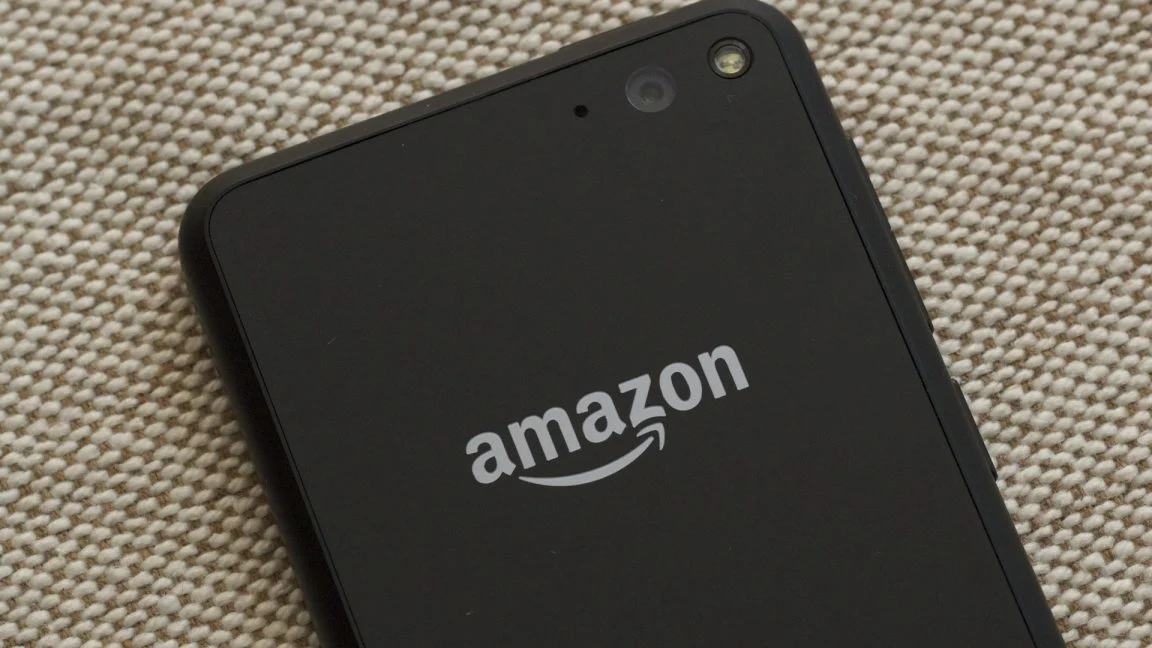
To understand the weight of Panay’s current statements, it is essential to revisit Amazon’s previous foray into the smartphone industry. In June 2014, Amazon launched the Fire Phone, a device that was intended to challenge the dominance of Apple’s iPhone and Samsung’s Galaxy series. Spearheaded by then-CEO Jeff Bezos, the Fire Phone featured several innovative but ultimately polarizing technologies, including "Dynamic Perspective," which used four front-facing cameras to create a glasses-free 3D effect, and "Firefly," a tool that allowed users to identify and purchase products by scanning them with the phone’s camera.
Despite an aggressive marketing campaign and a deep integration with the Amazon Prime ecosystem, the Fire Phone was met with critical and commercial disappointment. Critics pointed to its high price point—initially $199 on a two-year contract, matching the flagship prices of established competitors—and a significant "app gap" caused by the device’s reliance on the Fire OS, a forked version of Android that lacked access to the Google Play Store. By October 2014, Amazon was forced to take a $170 million write-down related to the device, and by September 2015, the product was discontinued entirely. The failure of the Fire Phone remains one of the most significant setbacks in Amazon’s hardware history, serving as a cautionary tale about the difficulties of entering a mature and highly competitive market.
The Panos Panay Era and the Transformer Rumors
The appointment of Panos Panay as the head of Amazon’s devices unit in late 2023 was seen by many industry analysts as a strategic move to revitalize the company’s hardware portfolio. Panay, who previously served as the Chief Product Officer at Microsoft, was the driving force behind the Surface line of tablets and computers. His tenure at Microsoft also included the development of the Surface Duo, a dual-screen Android device that, while praised for its industrial design, struggled to find a broad audience and was eventually sidelined.
Panay’s experience with both successful and unsuccessful hardware launches provides him with a unique perspective on the risks associated with the smartphone market. When asked by the Financial Times about the rumored "Transformer" project, Panay was characteristically diplomatic but firm. "Here’s what I’d say: it’s just not the goal," he stated. He acknowledged the prevalence of rumors but emphasized that the company is currently focused on different priorities.
However, Panay’s response contained a level of ambiguity that has intrigued analysts. "It’s a tricky question," he told the publication. "If I black-and-white say no, I would say that was accurate. But I also think it’s misleading." This suggests that while a standard smartphone may not be in production, Amazon is likely experimenting with mobile-adjacent technologies or software-driven experiences that could eventually manifest in a portable form factor.
The Strategic Pivot Toward Ambient Intelligence and AI
Amazon’s current hardware strategy appears to be shifting away from the concept of a singular, central device—like a smartphone—toward a concept known as "ambient intelligence." This vision involves a network of interconnected devices, such as Echo smart speakers, Kindle e-readers, Ring security systems, and Echo Frames (smart glasses), that work seamlessly in the background to assist users.
The emergence of generative artificial intelligence and Large Language Models (LLMs) has accelerated this shift. Amazon has been working to overhaul Alexa, moving it from a command-based assistant to a more sophisticated AI agent capable of complex reasoning and proactive assistance. In this context, the need for a proprietary smartphone becomes less certain. If Amazon can successfully integrate its AI services into existing mobile platforms (iOS and Android) or via wearable technology, the capital-intensive process of manufacturing and distributing a smartphone may be unnecessary.
Panay emphasized the importance of timing and necessity in product development. He noted that a company should make a "big bet when you need to," implying that Amazon does not currently see a strategic necessity to compete directly with Apple or Google in the smartphone space. The cost of entry into the modern smartphone market is staggering, requiring billions in research and development, a robust global supply chain, and the cooperation of telecommunications carriers—factors that weighed heavily on the Fire Phone’s demise.
Market Analysis and the Competitive Landscape
The global smartphone market is currently characterized by high saturation and lengthening upgrade cycles. In 2024 and 2025, growth has been largely driven by the integration of AI features, with Google’s Pixel series and Apple’s "Apple Intelligence" leading the narrative. For Amazon to enter this space, it would need a "killer feature" that transcends what is currently offered by the incumbents.
Data from market research firms suggests that consumers are increasingly loyal to their respective ecosystems. Apple’s "walled garden" and Google’s deep integration with Android services make it difficult for a third party to gain a foothold. Furthermore, the "app gap" remains a formidable barrier. Without native support for the millions of apps available on the Google Play Store or Apple App Store, any Amazon-branded phone would face the same hurdles that doomed the Fire Phone and Microsoft’s Windows Phone.
Instead of a phone, Amazon’s "big bets" appear to be focused on form factors that allow for more natural AI interaction. This includes the development of smart glasses and improved hearables. These devices allow Amazon to maintain a presence with the user throughout the day without requiring them to switch away from their primary smartphone. By positioning Alexa as the "brain" that lives across multiple devices, Amazon can capture user data and drive engagement with its retail and subscription services without owning the handset.
Internal Restructuring and Financial Discipline
Panay’s leadership also coincides with a period of increased financial scrutiny within Amazon’s Devices and Services division. Under CEO Andy Jassy, Amazon has sought to streamline its operations, leading to significant layoffs within the Alexa and hardware teams in late 2023 and 2024. The company is now prioritizing profitability and "meaningful innovation" over experimental projects that do not have a clear path to market dominance.
In his interview, Panay noted that there are "so many new form factors that are important that need to be focused on." This aligns with the broader corporate strategy of placing disciplined bets on emerging technologies like spatial computing and specialized AI hardware. By avoiding the "red ocean" of the smartphone market, Amazon can allocate its resources toward "blue ocean" opportunities where it can establish a first-mover advantage.
Broader Implications for the Tech Industry
Panos Panay’s comments signal a broader trend in the technology industry where the definition of "mobile" is being rewritten. For the past fifteen years, the smartphone has been the undisputed center of the digital universe. However, as AI becomes more conversational and ambient, the hardware that delivers that AI is becoming more diverse.
If Amazon successfully navigates this transition without a smartphone, it will prove that a services-and-AI-first company can maintain relevance on mobile devices through software and specialized hardware rather than a general-purpose handset. This would stand in contrast to companies like Google and Apple, who view the hardware, the operating system, and the AI as an inseparable vertical stack.
For now, the "Transformer" phone remains a subject of speculation and internal exploration rather than a confirmed product roadmap. Panay’s admission that a flat "no" would be "misleading" suggests that Amazon’s laboratory, Lab126, is still churning with ideas. Whether those ideas result in a foldable device, a wearable AI pin, or a radical new take on the mobile interface remains to be seen. What is clear is that Amazon is no longer interested in playing by the old rules of the smartphone war; it is waiting for the rules of the next war to be written.
In conclusion, while the rumors of an Amazon smartphone revival persist, the company’s leadership is prioritizing a broader vision of AI integration. By learning from the failures of the Fire Phone and observing the current market dynamics, Amazon is positioning itself to be a leader in the post-smartphone era, focusing on how intelligence can be woven into the fabric of daily life through a variety of form factors rather than a single pocket-sized screen.
