
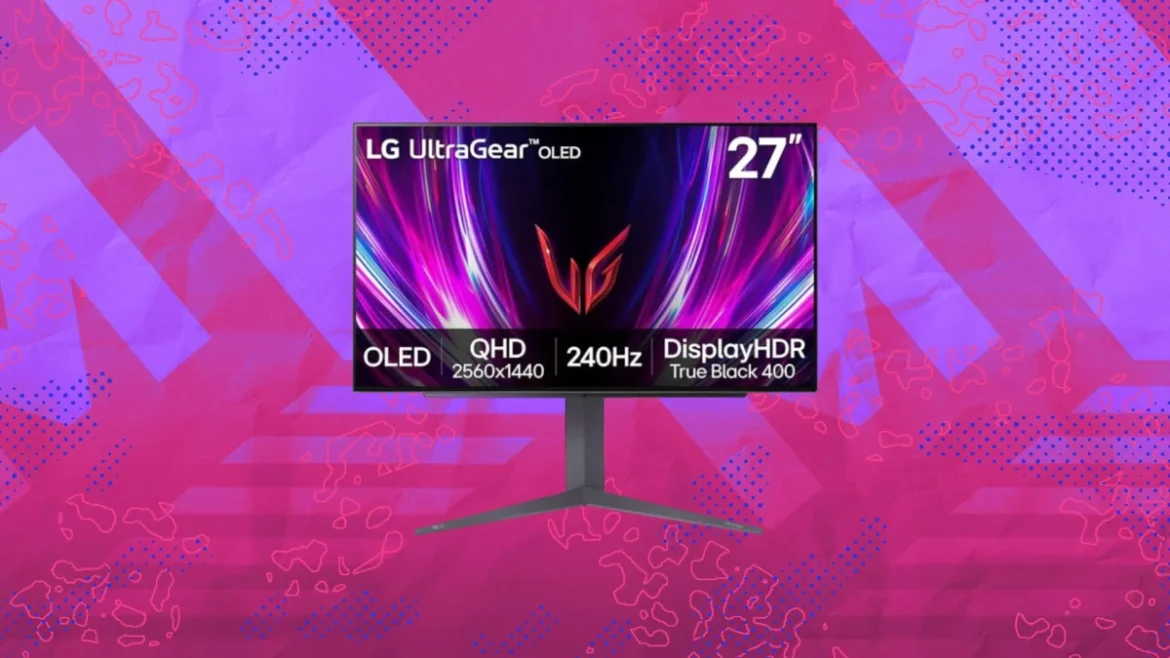
The consumer technology landscape has reached a significant pricing milestone for high-performance PC peripherals, as Amazon introduces a record-breaking discount on one of the market’s leading visual displays. As of late October, the 27-inch LG UltraGear OLED QHD Gaming Monitor (model 27GS93QE) has experienced a dramatic price reduction, plummeting from its standard manufacturer’s suggested retail price of $899.99 down to $499.99. This unprecedented 44% markdown slashes $400 off the original cost, matching the absolute lowest tracking price recorded for this specific hardware since its market debut. For enthusiasts, competitive esports players, and multimedia professionals monitoring the maturation of organic light-emitting diode (OLED) technology, this retail event represents a watershed moment in display affordability.
Main Facts and Current Retail Landscape
The centerpiece of this retail development is LG’s aggressive push to make premium display technology more accessible to a broader demographic of consumers. Historically, desktop monitors utilizing OLED panels carried a prohibitive financial barrier to entry, frequently commanding premium prices upwards of $900 or more due to the intricate manufacturing processes required to produce self-lit pixels at high refresh rates.
The current promotion at Amazon changes this dynamic significantly. By bringing the price point below the $500 threshold, LG and its retail partners are effectively positioning high-tier gaming monitors in direct competition with traditional mid-range LCD and IPS panels. Industry analysts note that such steep discounts on flagship-tier hardware usually signal shifting inventory cycles, heightened competition from rival manufacturers like Dell, ASUS, and Samsung, or strategic retail positioning ahead of the peak holiday shopping season.
Technical Specifications and Performance Metrics
To fully understand the implications of this $400 discount, one must examine the engineering specifications that elevate the LG UltraGear 27GS93QE above standard desktop displays. At the core of the monitor’s architecture is a QHD resolution panel operating at 2560 x 1440 pixels. This resolution has widely been adopted as the "sweet spot" for modern PC gaming, offering a substantial fidelity upgrade over standard 1080p without imposing the massive GPU processing overhead demanded by native 4K displays.
Speed and responsiveness remain the primary design objectives for the UltraGear lineup. The monitor features a blazing-fast 240Hz refresh rate, allowing the screen to update visual information 240 times per second. This is paired with an astonishingly low 0.03-millisecond gray-to-gray (GtG) response time. In fast-paced competitive environments—such as first-person shooters, racing sims, and fighting games—this metric virtually eliminates motion blur, ghosting, and visual trailing, providing users with a distinct competitive advantage.
Furthermore, the hardware integrates robust variable refresh rate (VRR) technologies, featuring official NVIDIA G-SYNC Compatibility and AMD FreeSync Premium Pro certification. These protocols synchronize the display’s refresh rate directly with the output of the host graphics card, completely eradicating screen tearing and input stuttering during sudden frame rate fluctuations.
The OLED Advantage: Color Accuracy and Contrast
Beyond raw speed, the inclusion of an OLED panel transforms the visual fidelity of the viewing experience. Unlike conventional LED-backlit LCD monitors that rely on a global or zonal backlight, OLED technology utilizes self-lit pixels that can turn completely off. This fundamental architectural difference yields a theoretical infinite contrast ratio, certified here by VESA DisplayHDR True Black 400. The result is exceptionally deep, inky blacks, bright highlights, and immaculate shadow detail in dark, atmospheric scenes without the dreaded "blooming" or washed-out gray tones common in inferior display types.
Color reproduction is equally formidable. The LG 27GS93QE covers up to 98.5% of the DCI-P3 color spectrum, ensuring that games, cinematic video content, and digital art production software render with vibrant, lifelike accuracy. To mitigate the environmental challenges of desktop placement, LG has incorporated an advanced anti-glare and low-reflection coating, which diffuses ambient room lighting without sacrificing panel clarity or color depth.
Ergonomic Design and Connectivity
Hardware flexibility is another critical component of the UltraGear ecosystem. The monitor is housed within an ultra-thin, slim-bezel chassis that maximizes screen real estate while minimizing the physical footprint on a crowded desktop. The included ergonomic stand provides extensive mechanical adjustments, allowing users to alter the height, tilt, swivel, and pivot the display smoothly between standard landscape orientation and a vertical portrait layout.
Connectivity options cater to both high-end PC builders and console gamers. The unit is equipped with HDMI 2.1 and DisplayPort 1.4 ports, ensuring that users can harness the full 240Hz refresh rate and maximum resolution whether they are connected to a high-end desktop rig powered by modern graphics cards, or current-generation home consoles like the Sony PlayStation 5 and Microsoft Xbox Series X. Dedicated on-screen display (OSD) presets allow users to instantly optimize visual profiles for specific genres, such as First-Person Shooter (FPS) or Real-Time Strategy (RTS) titles.
Chronology and Market Evolution of Desktop OLEDs
The trajectory of OLED technology in the desktop monitor space has evolved at a breathtaking pace over recent years. When large-format OLED televisions gained widespread adoption in the late 2010s, consumers immediately demanded similar panel technology scaled down to desktop monitor dimensions. However, early iterations faced severe technical hurdles, including high production costs, concerns regarding burn-in under static desktop operating system UI elements, and difficulties achieving high refresh rates at lower resolutions.
By 2022 and 2023, major display manufacturers—led heavily by LG Display and Samsung Display—began mass-producing 27-inch and 32-inch OLED panels specifically tailored for the PC gaming market. Initial launches routinely commanded prices between $900 and $1,200, restricting purchases primarily to affluent enthusiasts and professional content creators.
Throughout 2024, increased manufacturing yields and aggressive market competition initiated a gradual downward trend in pricing. The current Amazon promotion reducing the LG 27GS93QE to $499.99 represents a critical inflection point in this timeline. By crossing the psychological $500 threshold, high-performance OLED monitors are transitioning from an ultra-luxury niche item into a mainstream viable option for a significantly larger segment of the PC gaming community.
Broader Impact and Industry Implications
The ripple effects of this pricing strategy extend well beyond a single retail sale on Amazon. As benchmark OLED prices drop, competing brands are forced to reassess their own product pricing and promotional calendars. Consumers who were previously priced out of the OLED market are now reevaluating their upgrade paths, potentially accelerating the retirement of older IPS and VA panel monitors across the global market.
Furthermore, this discount highlights an ongoing trend where hardware manufacturers utilize major retail periods to clear existing stock and introduce next-generation refinements. While the 27GS93QE remains a powerhouse of visual performance, the broader availability of sub-$500 OLED displays sets a new consumer expectation for the holiday shopping season and into the future.
For prospective buyers navigating the current market, the convergence of peak technical specifications, top-tier build quality, and an all-time low price point makes this Amazon offering one of the most compelling tech deals of the year. As supplies at this discounted rate remain subject to inventory availability, consumers seeking an elite visual upgrade continue to monitor the listing closely before standard pricing resumes.
