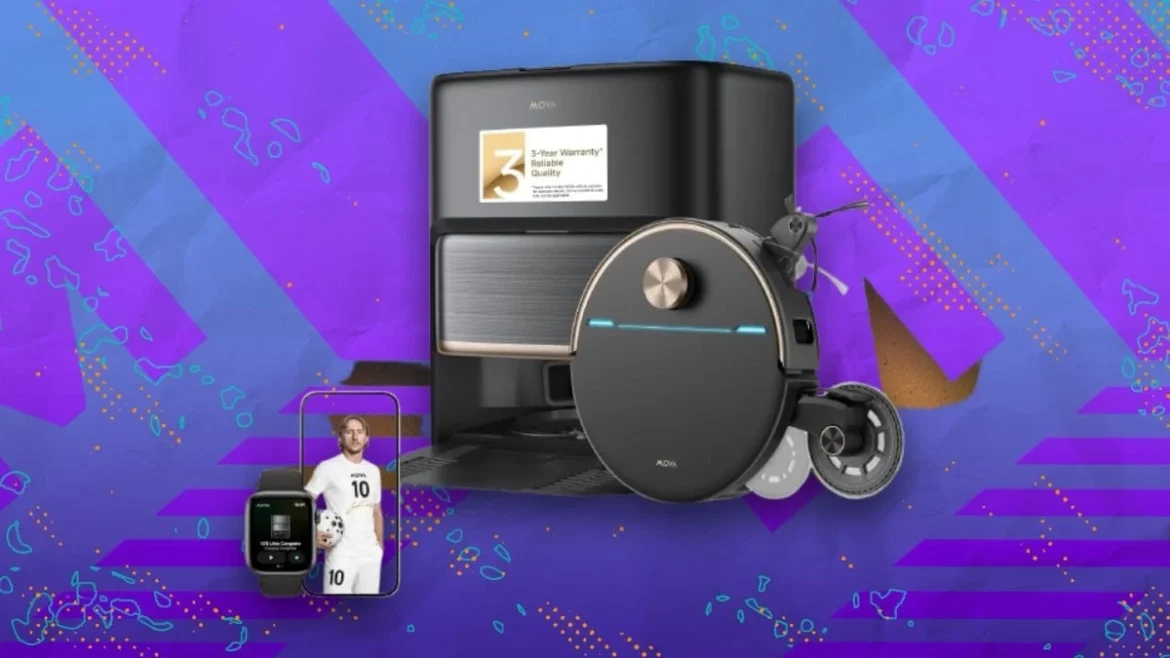
The landscape of smart home automation is shifting rapidly, driven by consumer demand for more autonomous, highly efficient cleaning appliances that require minimal human intervention. As retailers prepare for the official launch of the heavily anticipated October Prime Day shopping event, early bird discounts are beginning to surface across major e-commerce platforms. Among the most notable price reductions is a significant $300 discount on the high-end Mova V70 robot vacuum and mop.
As of late September, Amazon has slashed the price of the advanced cleaning device from its standard retail price of $1,299 down to $999. This marks a 23% savings for consumers looking to invest in premium household technology. According to historical price tracking data from platforms such as camelcamelcamel, this reduction represents the absolute lowest price the Mova V70 has ever been offered on Amazon since its market introduction. Furthermore, industry analysts note that this is the first time the high-performance model has received any form of direct price cut, making the early October promotion a milestone for prospective buyers who have previously been deterred by the steep initial cost of top-tier robotic cleaners.
The official two-day October Prime Day event is scheduled to launch on October 6, giving consumers a full week of anticipation. However, Amazon and other major retailers have increasingly adopted a strategy of rolling out early deals well in advance of the official kickoff. This phased approach allows companies to distribute logistics and shipping volume, capture consumer attention before competitors launch their own sales, and test demand for flagship products. The early markdown of the Mova V70 serves as a prime example of this retail trend, signaling to shoppers that they do not necessarily need to wait until the official event begins to secure substantial savings on luxury electronics.
Engineering and Technological Innovations of the Mova V70
To understand why a $999 price tag still represents a major investment—and why the $300 discount is significant—it is necessary to examine the engineering and feature set that position the Mova V70 at the premium end of the robot vacuum market. Unlike entry-level robotic cleaners that primarily focus on basic debris collection on hard floors, the Mova V70 incorporates several industry-first innovations designed to tackle complex domestic cleaning challenges.
At the core of the device’s marketing and performance capability is the MaxiReachX system. This proprietary technology features a mechanically extended side brush and a dynamic mopping mechanism designed to extend outward, allowing the machine to reach deep into corners, along baseboards, and underneath low-profile furniture where traditional round robot vacuums typically fail. Cleaning coverage is a perennial challenge for automated vacuums, which often leave blind spots in the corners of rooms. By introducing extendable cleaning components, Mova aims to bridge the performance gap between automated cleaning and manual sweeping and mopping.
In addition to its extended reach, the Mova V70 is equipped with high-powered suction capabilities often marketed by manufacturers as "hurricane" suction. This high-static-pressure airflow system is engineered to extract deeply embedded dirt, pet hair, and fine dust from dense carpets while efficiently pulling larger debris from hard flooring surfaces.
Navigational intelligence and mobility have also received substantial upgrades in this model. The V70 integrates advanced artificial intelligence-powered obstacle avoidance systems, utilizing optical sensors and machine learning algorithms to identify and maneuver around common household items such as charging cables, stray shoes, toys, and pet waste. This reduces the likelihood of the vacuum becoming stuck or damaging itself on unexpected floor clutter.
Perhaps one of the most distinctive mechanical features of the Mova V70 is its StepMaster technology. Traditional robot vacuums frequently struggle with high room thresholds, thick area rugs, or sliding door tracks, often requiring manual intervention to move from room to room. The StepMaster system allows the V70 to independently climb architectural thresholds and obstacles measuring up to 3.54 inches in height. This mobility enhancement enables the machine to navigate multi-room environments with varying floor heights and architectural transitions without getting stranded.
Complementing these hardware innovations is comprehensive smart home integration. Users can manage cleaning schedules, designate no-go zones, adjust suction and water flow levels, and monitor cleaning progress remotely via a dedicated mobile application. Voice control compatibility with major smart home ecosystems further streamlines the user experience, allowing homeowners to initiate cleaning cycles through simple voice commands.
The Evolution of October Prime Day and Early Discount Trends
The timing of the Mova V70 discount aligns with a broader transformation in the retail calendar. Originally anchored by the flagship Prime Day event held annually in July, Amazon expanded its promotional calendar in recent years by introducing a second major shopping event in the autumn, initially launched as the Prime Early Access Sale before evolving into various iterations of October sales events.
This autumn shopping window serves multiple strategic purposes. From a consumer perspective, it acts as an early kickoff for the holiday shopping season, allowing shoppers to purchase high-value gifts and household upgrades weeks before the Black Friday and Cyber Monday rush. For manufacturers and retailers, the October event helps clear inventory ahead of end-of-year product refreshes while capturing discretionary spending during the autumn transition.
Industry observers have noted that as the market for smart home devices becomes increasingly saturated, brands must offer aggressive incentives to stand out. While budget-friendly robot vacuums priced under $300 dominate sales volume, the high-end sector—comprising fully autonomous dock stations, advanced mopping systems, and complex navigation suites—relies heavily on seasonal promotions to convert hesitant buyers. By dropping the price of the Mova V70 below the psychological $1,000 threshold, Amazon and Mova have effectively lowered the barrier to entry for consumers seeking premium-tier automation.
Economic Implications and Market Impact
The introduction of substantial discounts on flagship smart home appliances reflects broader economic conditions and pricing strategies within the consumer electronics sector. Manufacturers of robotic cleaning appliances face continuous pressure to justify the four-figure price tags associated with their most advanced models.
When devices like the Mova V70 retail for $1,299, their addressable market is largely restricted to tech enthusiasts, affluent households, and consumers who view automated cleaning as an essential time-saving investment rather than a luxury. Price reductions of 23%, such as the current $300 Amazon markdown, serve to expand the consumer base by appealing to value-conscious shoppers who demand high-end specifications but refuse to pay full MSRP.
Furthermore, retail analysts suggest that aggressive early pricing during major promotional cycles alters consumer shopping behavior. Rather than waiting for the actual day of the sales event—where high demand can sometimes lead to stock shortages or shipping delays—consumers are increasingly encouraged by price-tracking tools and early announcements to make purchases immediately. This spreads out the operational strain on warehouse fulfillment and delivery networks while locking in sales before consumers have an opportunity to evaluate competing offers from rival retailers.
Looking Ahead: What Consumers Should Consider
As the October 6 launch date for the official Prime Day event approaches, consumers evaluating the Mova V70 deal must weigh several factors. Historical price data confirms that $999 is the lowest price recorded for this specific model, indicating that even during the peak of the October sales event, the price is unlikely to drop significantly further.
However, prospective buyers should also consider ancillary factors such as return policies, warranty coverage, and the potential need for proprietary replacement parts, such as mop pads, side brushes, and filter elements, which are standard maintenance requirements for high-end robot vacuum and mop combinations.
For households seeking a comprehensive, feature-rich cleaning solution capable of handling complex floor plans, high thresholds, and demanding debris extraction, the early Amazon discount provides a timely opportunity to acquire premium hardware at a historic low. As the smart home market continues to evolve, innovations like the Mova V70’s MaxiReachX and StepMaster technologies demonstrate that the industry is moving steadily toward true whole-home autonomy—a transition made slightly more accessible through strategic seasonal promotions.