
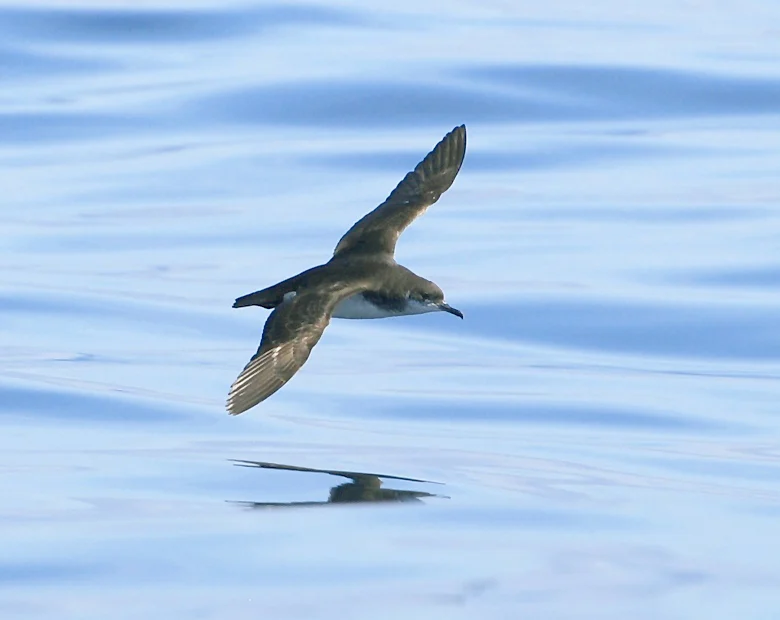
Human travelers crossing multiple time zones are intimately familiar with the physiological toll of jet lag: the persistent fatigue, cognitive fog, and the stubborn misalignment between a internal clock and the local environment. While often dismissed as a modern inconvenience of the air-travel age, this phenomenon is rooted in the fundamental biology of circadian rhythms. New research published in the journal Science reveals that this struggle is not a uniquely human experience. Manx shearwaters, resilient seabirds that traverse the vast expanses of the North Atlantic, experience their own form of jet lag—a biological consequence of their reliance on the sun for navigation.
The Mechanism of Biological Navigation
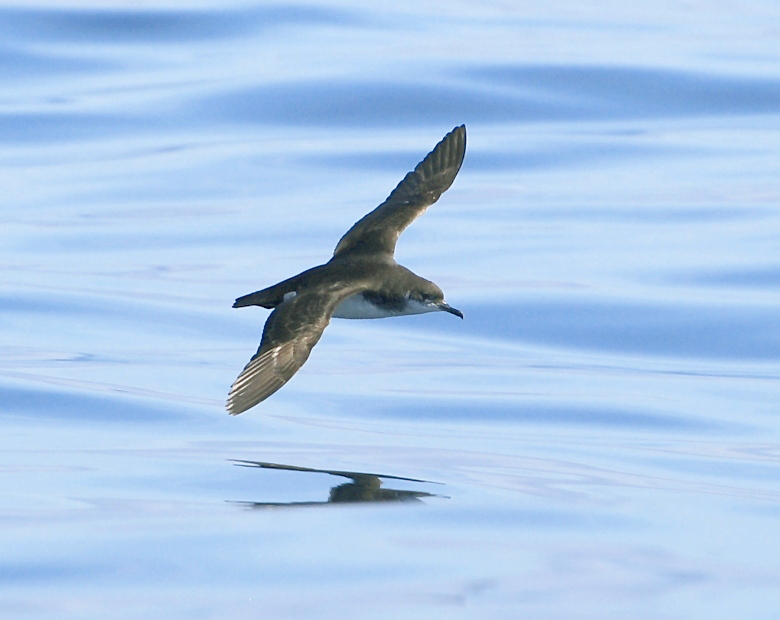
The Manx shearwater is a medium-sized, long-winged seabird with a distinctive monochromatic plumage. Despite their modest size, they are masters of endurance, capable of flying hundreds of kilometers in a single day to reach foraging grounds. To return to their nesting burrows—typically located on coastal islands in Wales, the UK, or Ireland—the birds employ a sophisticated, albeit imperfect, dual-navigation strategy.
Behavioral and sensory ecologists have long posited that these birds utilize a "map-and-compass" system. The "map" component likely relies on olfactory cues to identify their general vicinity, while the "compass" component relies on the position of the sun. However, the sun is a dynamic reference point; it shifts its position across the sky throughout the day. To use the sun as a reliable compass, a bird must possess an internal, high-precision clock to account for the sun’s movement. If the bird’s internal timekeeper is even slightly out of sync with its actual longitudinal position, its navigation will inevitably falter.
The Chronology of the Discovery
The revelation regarding shearwater jet lag is the culmination of two decades of intensive field research. The project, led by behavioral and sensory ecologist Patrick Lewin of the University of Oxford, alongside colleagues Tim Guilford and Chris Perrins, relied on a massive longitudinal dataset.
In 2004, when GPS technology became sufficiently miniaturized to be fitted onto birds the size of a pigeon, the Oxford team began deploying tags on the shearwater populations nesting along the western coasts of the UK. Over the next twenty years, the researchers successfully tracked 3,688 individual foraging excursions performed by 1,045 birds. These trips ranged from brief, single-day sorties to two-week-long expeditions.
By isolating the homeward-bound legs of these journeys, the researchers observed a distinct behavior: once a bird transitions from foraging to the homing phase, it shifts into a high-efficiency mode, flying in a nearly continuous, straight line. This uniformity allowed the scientists to calculate the expected path based on a perfectly calibrated solar compass versus the actual, observed trajectory of the birds.
Quantitative Evidence of Deviation
The study’s data confirms that as a bird moves across degrees of longitude, its internal clock—which is calibrated primarily at dawn and dusk—begins to drift. For every degree of longitude covered between sunrise and sunset, the bird’s internal clock falls approximately four minutes out of sync with local time.
This misalignment leads to predictable, measurable errors in navigation. When flying east, the birds veer clockwise; when flying west, they veer anticlockwise. The researchers observed that these time shifts were subtle—usually between 10 and 15 minutes, with a maximum deviation of roughly one hour. While these intervals might seem negligible to a human observer, they were sufficient to create a statistically significant bias in the birds’ orientation.
Across 335 homing flights conducted entirely over open water, the birds exhibited the exact directional errors predicted by the sun-compass model. To ensure the results were not skewed by external variables, the team performed a rigorous analysis of alternative factors, including crosswinds, the Coriolis effect, and the potential influence of magnetic navigation. None of these factors provided a consistent explanation for the observed drift, leaving the sun-compass error as the most robust explanation.
Navigational Correction and Behavioral Adaptations
The navigational errors caused by this "avian jet lag" are surprisingly manageable. The research indicates that the average bias reached up to 15 degrees, resulting in a flight path deviation of approximately seven degrees for a 1,000-kilometer journey.
This error adds only about five kilometers to the total flight distance—a minor penalty for a bird capable of covering such vast distances. The study suggests that the birds likely possess a self-correcting mechanism. Because they maintain a constant check on their position, they can identify when they have drifted and adjust their course accordingly. Furthermore, observations of shearwaters following coastlines indicate that they may utilize familiar landmarks as a secondary navigational system. This suggests a hybrid strategy where the compass provides the heading, but environmental cues act as a failsafe, preventing the bird from becoming completely lost.
Broader Implications for Ornithology and Technology
The implications of this study extend beyond the immediate understanding of shearwater behavior. First, it offers a glimpse into the limitations of biological sensors. If one of the most proficient navigators in the avian world is prone to systematic error, it implies that other migratory species may face similar challenges.
Second, the study provides a potential roadmap for the development of bio-inspired autonomous navigation systems. Engineers designing drones or other autonomous vehicles often look to nature for efficiency; understanding how shearwaters mitigate their own navigational errors could lead to more robust, fault-tolerant guidance systems.

Furthermore, the research prompts new questions about the physiological experience of these birds. While the study could not directly measure "jet lag" in the clinical sense—such as metabolic disruption, sleep deprivation, or hormonal shifts—the existence of the navigational error proves that the birds are indeed experiencing a misalignment of their internal time. Future studies are expected to investigate whether this consistent, repeat-exposure to time-zone shifts has an impact on foraging efficiency, reproductive success, or overall health.
Future Research Directions
The scientific community is now looking at whether this phenomenon is universal among long-distance fliers. Species that migrate across longitudinal lines are theoretically the most susceptible, as are those living near the poles, where the distance between lines of longitude is significantly compressed.
Patrick Lewin notes that for humans, chronic jet lag is associated with significant long-term health risks. It remains an open question whether animals that are "constantly" experiencing this phenomenon have evolved biological mitigations to protect themselves from those same negative outcomes. If such mechanisms exist, they could potentially offer new insights into human chronobiology and the treatment of circadian rhythm disorders.
As researchers continue to analyze the massive database compiled over the last two decades, the focus will likely shift to the fitness costs of these navigational errors. Does a bird that experiences more severe "jet lag" bring back less food for its chicks? Does it return to the burrow later, potentially impacting its status in the colony? By treating these birds as biological systems subject to the same time-keeping constraints as humans, scientists are uncovering a new, fascinating layer of the challenges faced by life in a spinning world.
The study, titled "Sun compass-based navigation in a wild seabird," serves as a testament to the power of long-term ecological data. By observing the minute deviations of a bird’s flight path over 20 years, researchers have not only mapped the mechanics of avian navigation but also provided a unique, natural mirror for our own biological struggles with time. As we look toward the future of autonomous technology and environmental conservation, the Manx shearwater stands as a vital, if unexpected, teacher in the complexities of global navigation.
