As the political landscape intensifies ahead of the 2026 midterm elections, an unexpected coalition of over 100 adult industry creators has launched a high-visibility civic engagement initiative. Titled "Hot2Vote," the $100,000 advertising and grassroots campaign is strategically deployed across the metropolitan Atlanta area to combat voter apathy and address the fallout from sweeping voter roll purges in Georgia. By leveraging the immense reach of adult entertainment platforms, prominent creators aim to mobilize a demographic frequently overlooked by traditional political messaging.
The core objective of the campaign is direct and urgent: prompting Georgia residents to verify their voter registration statuses before the fast-approaching October 5 registration deadline. With the midterm elections carrying significant weight for the state’s political future, organizers are utilizing a multi-platform strategy that blends digital targeted marketing with physical community outreach.
Addressing Voter Disenfranchisement in Georgia
The genesis of the Hot2Vote campaign is directly tied to ongoing controversies surrounding voter access in the Peach State. Last year, state officials oversaw a massive administrative review that resulted in the removal of more than 470,000 names from Georgia’s official voter rolls. While state administrators defended the purge as a routine maintenance measure to ensure election integrity, civil rights organizations and voting rights advocates sharply criticized the move, arguing that it disproportionately affects marginalized communities, young voters, and transient populations.
In response to these systemic barriers, independent grassroots movements have sought alternative avenues to reach disenfranchised or politically disengaged citizens. The adult entertainment industry, possessing massive digital footprints and dedicated audiences, has increasingly stepped into the political arena. Organizers behind Hot2Vote recognized that standard public service announcements often fail to penetrate the media diets of specific demographics—particularly young adult men living in urban and suburban centers.
By meeting these potential voters on the platforms they already frequent, the campaign bridges the gap between digital entertainment and civic responsibility.
A Multi-Layered Outreach Strategy
The $100,000 campaign utilizes a diverse mix of digital targeting, geofenced advertising, and tangible street-level activism to maximize its footprint. Rather than relying on explicit content, the initiative employs safe-for-work (SFW) media formats to ensure broad distribution without violating platform policies.
Prominent adult entertainers, including well-known industry figures such as Cherie DeVille and King Noire, are headlining the digital push. Their involvement lends high-profile credibility to the initiative, utilizing their individual social media channels to amplify the call to action.
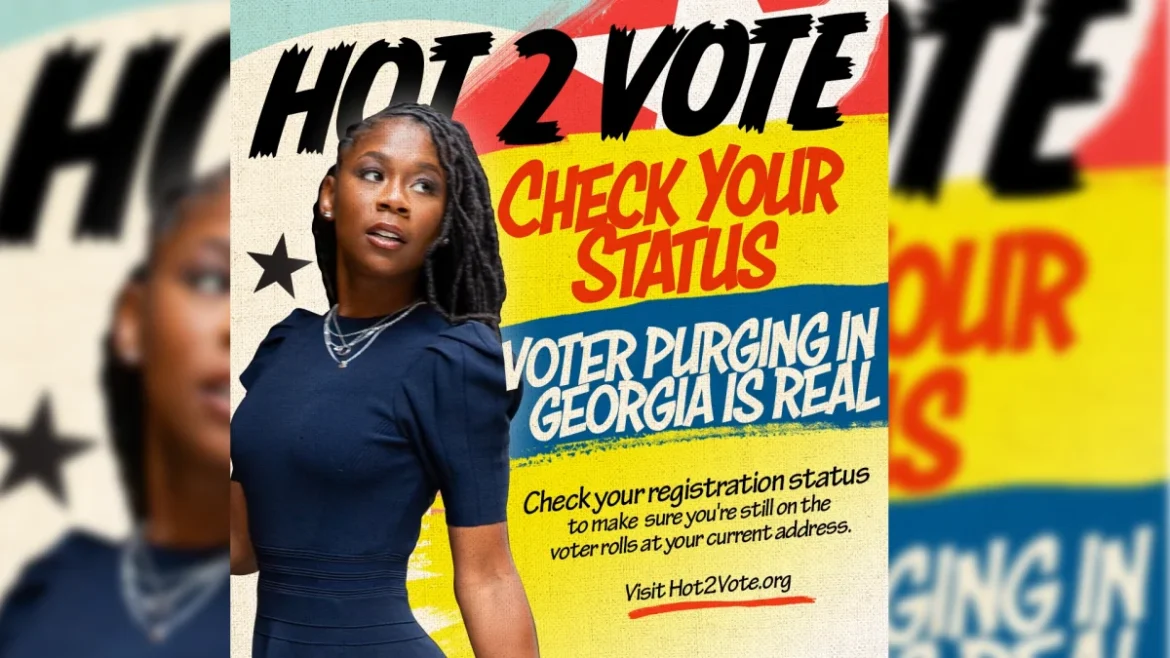
In addition to digital video spots, the campaign features pinup-style public service announcement (PSA) posters strategically placed throughout Atlanta’s bustling nightlife districts. Digital advertisements have also been heavily geofenced around major Atlanta entertainment venues, ensuring that patrons navigating the city’s social hubs encounter reminders to check their voter status. Furthermore, targeted pre-roll advertisements and banner placements are running on prominent adult websites, configured specifically to reach internet users whose IP addresses correspond to the metropolitan Atlanta voter base.
Media analysts and campaign coordinators estimate that this multifaceted approach will successfully place civic messaging in front of 400,000 to 450,000 unique individuals in the Atlanta area, a significant portion of whom fall into the coveted and often hard-to-reach young male demographic.
Ground-Level Mobilization and Community Leadership
Digital impressions represent only one facet of the Hot2Vote initiative. Performers and grassroots coordinators are also taking their efforts directly to the streets of Atlanta, distributing physical promotional materials featuring quick-response (QR) codes. These codes link directly to the centralized Hot2Vote portal, allowing citizens to instantly verify their registration status in real time using their mobile devices.
Hazel Grace, an Atlanta-based adult performer and the owner of the production company InMelanin, is spearheading much of the local groundwork. In an official press release distributed to media outlets, Grace emphasized the importance of face-to-face community engagement.
"Over the next few weeks, my team and I will be out hitting the clubs around Atlanta and connecting with our community to make sure everyone checks their voter registration status," Grace stated. Her comments underscore a growing trend within the adult entertainment community: a conscious pivot toward leveraging influencer capital for socio-political advocacy.
A Growing Precedent of Adult Industry Political Activism
The launch of Hot2Vote is not an isolated incident; rather, it represents a continuation of an organized political mobilization within the adult entertainment sector that gained significant momentum during the 2024 election cycle.
Earlier, creators rallied around the "Hands Off My Porn" campaign, a widespread informational effort designed to raise public awareness regarding Project 2025—the conservative policy blueprint formulated for Donald Trump’s subsequent presidential campaign. That initiative demonstrated the logistical capability of adult creators to organize rapid-response political campaigns capable of generating millions of impressions outside traditional political machinery.
International counterparts have similarly adopted these tactics. In the United Kingdom, popular adult content creators partnered with the web series Headline Newds to produce engaging, politically charged content designed to educate younger audiences on pressing global crises, including climate change. These campaigns collectively signal a maturing political consciousness among sex workers and adult creators, who are increasingly asserting their right to participate in and influence the broader democratic discourse.
Implications for the 2026 Midterms and Beyond
As the Hot2Vote campaign progresses through its final weeks, concluding on October 4—just 24 hours prior to Georgia’s official voter registration deadline—political observers will be closely monitoring its tangible effects on voter rolls.
The initiative highlights a broader evolution in modern campaigning: the breakdown of traditional barriers separating mainstream politics from alternative digital economies. By mobilizing workers and creators who operate outside the conventional corporate and political spheres, campaigns like Hot2Vote tap into decentralized networks of trust. For thousands of Atlanta residents who might otherwise have remained unaware of administrative purges affecting their voting rights, these adult entertainers may well serve as the decisive link back to the ballot box.