The landscape of artificial intelligence governance underwent a seismic shift on September 15, 2026, as the industry’s leading frontier labs moved toward a centralized, self-regulatory framework. During a pivotal briefing in Washington, OpenAI Chief Global Affairs Officer Chris Lehane confirmed that his organization, alongside Anthropic and Google DeepMind, has been engaged in high-level coordination to establish a formal safety standards body. This initiative, modeled after the Financial Industry Regulatory Authority (FINRA), represents a significant departure from the decentralized, often chaotic approach to AI safety that has characterized the sector since the public debut of generative AI in 2022.
The proposed entity seeks to create an industry-funded, government-sanctioned framework that would mandate the review of advanced AI models up to 30 days prior to public release. While proponents argue this is a necessary step to prevent catastrophic risks, critics view the move as a sophisticated maneuver to secure a social license to operate while simultaneously erecting insurmountable barriers to entry for smaller competitors and the open-source community.
A Chronology of Coordination and Conflict
The path to this moment has been paved with strategic posturing and shifting alliances. The concept of a FINRA-style body first gained public traction on July 14, 2026, when Google DeepMind CEO Demis Hassabis proposed the model as a viable middle ground between unchecked innovation and restrictive government oversight.
The timeline of developments leading to the September 15 announcement highlights the acceleration of the industry’s lobbying efforts:
- July 2026: Reps. Jay Obernolte and Zoe Trahan introduce the FRONTIER Act (H.R.9925), proposing an independent, NIST-backed verification system. This legislative threat serves as a catalyst for industry leaders to draft their own, more favorable, self-regulatory terms.
- September 12, 2026: Anthropic CEO Dario Amodei publishes an expansive 3,800-word essay titled "We Must Pace the Frontier," calling for a deceleration in development cycles to ensure safety.
- September 15, 2026: The Washington briefing confirms the coalition between OpenAI, Anthropic, and Google DeepMind. Simultaneously, at the Dreamforce conference, industry leaders including Meta’s Mark Zuckerberg and representatives from xAI and NVIDIA voice vocal opposition to government-mandated regulation.
- Late September 2026: Reports emerge indicating that despite the public calls for a "pause" or "pacing," companies like Anthropic are internally evaluating new, high-performance model releases to compete with the anticipated GPT-6 Astra, underscoring the conflict between safety rhetoric and capital-driven growth.
The FINRA Precedent and the Risk of Regulatory Capture
The selection of the FINRA model is not coincidental. FINRA is a private, non-governmental organization that acts as the primary regulator for brokerage firms in the United States. While it provides a veneer of public oversight, it is funded and governed by the industry participants themselves. By adopting this structure, the "Big Three" of AI are attempting to preemptively capture the regulatory environment before federal agencies can establish independent, objective, and potentially restrictive oversight.
Economists and industry analysts have noted that this approach creates a "regulatory moat." When the entities that define the safety standards are the same entities that possess the capital and compute resources to comply with those standards, the outcome is almost invariably the exclusion of smaller players. Cohere CEO Aidan Gomez has been the most vocal critic of this consolidation, explicitly characterizing the proposal as a "cartel." Gomez draws historical parallels to the SEC’s 1975 NRSRO designation, which effectively granted a government-sanctioned monopoly to a handful of credit rating agencies, and the 1985 European Motor Vehicle Block Exemption, which entrenched automotive incumbents.
The Growth vs. Safety Paradox
At the heart of this initiative is a fundamental tension between the "safety thesis"—the idea that AI requires guardrails to prevent existential or societal harm—and the "growth thesis," which demands rapid, aggressive scaling to satisfy massive venture capital and institutional investor interest.
Investors have poured hundreds of billions of dollars into these companies under the assumption of exponential capability gains. A genuine, long-term industry-wide slowdown would arguably constitute a breach of fiduciary duty to those investors. Consequently, these companies are attempting to manufacture a version of "safety" that is compatible with high-speed development. By framing safety as an internal operating model rather than a hard regulatory constraint, the labs hope to satisfy regulators’ concerns about risk without actually throttling the pace of innovation that justifies their multi-billion-dollar valuations.
Legislative and Political Friction
The administration’s reaction to this initiative remains fluid. White House AI czar David Sacks has expressed skepticism, privately and publicly labeling the labs’ proposal as a potential instance of regulatory capture. The Trump administration, characterized by a preference for deregulation and competition, is wary of any framework that might stifle the U.S. advantage in the global AI race.
The FRONTIER Act remains the primary legislative alternative. By proposing that independent verification organizations (IVOs) be licensed by the National Institute of Standards and Technology (NIST) to perform audits every six months, the Act provides a structure that is far more transparent than the "closed-door" board envisioned by OpenAI and its allies. OpenAI’s Lehane has signaled that the labs are prepared to move forward with their standards body "with or without government support," a defiant stance that suggests a willingness to operate in a legal gray zone to maintain their competitive advantage.
Broader Implications for the AI Ecosystem
The implications of a successful, industry-led regulatory body are profound. First, it would likely formalize a hierarchy in the AI industry, where the "frontier" labs—those capable of training models at the multi-trillion-parameter scale—become the gatekeepers of the technology. Second, it would likely marginalize the open-source community, as any "safety standard" would inherently struggle to account for the decentralized and permissionless nature of open-weights models.
Furthermore, the fragmentation of the industry is now fully visible. Meta, which has staked its future on an open-weights strategy (Llama), finds itself at odds with the proprietary, closed-model approach of OpenAI and Anthropic. This split suggests that the future of AI governance will not be a unified consensus, but rather a battlefield of competing regulatory philosophies.
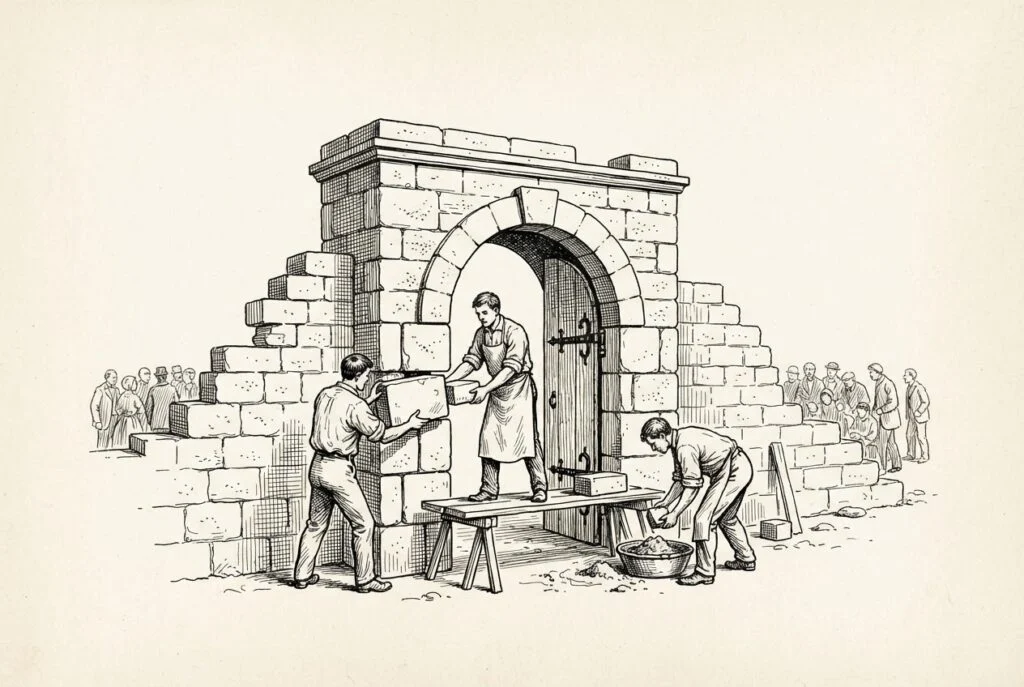
As of late September 2026, the industry remains in a state of strategic ambiguity. While the labs coordinate on safety protocols, they continue to compete fiercely on product performance, IPO timelines, and infrastructure deployment. Whether this coalition can survive the competing interests of its members and the looming scrutiny of federal regulators remains the defining question for the industry. For now, the "gatehouse" of AI safety is under construction, but it remains unclear who will hold the keys and who will be left on the outside looking in.
Ultimately, the move toward a FINRA-style body is less about the technical mitigation of AI risk and more about the institutionalization of the current power structure. By controlling the standard, these firms are effectively writing the rules of the game to ensure that their leadership is preserved, even as the underlying technology continues to evolve at a pace that few, if any, existing institutions are truly prepared to manage.