
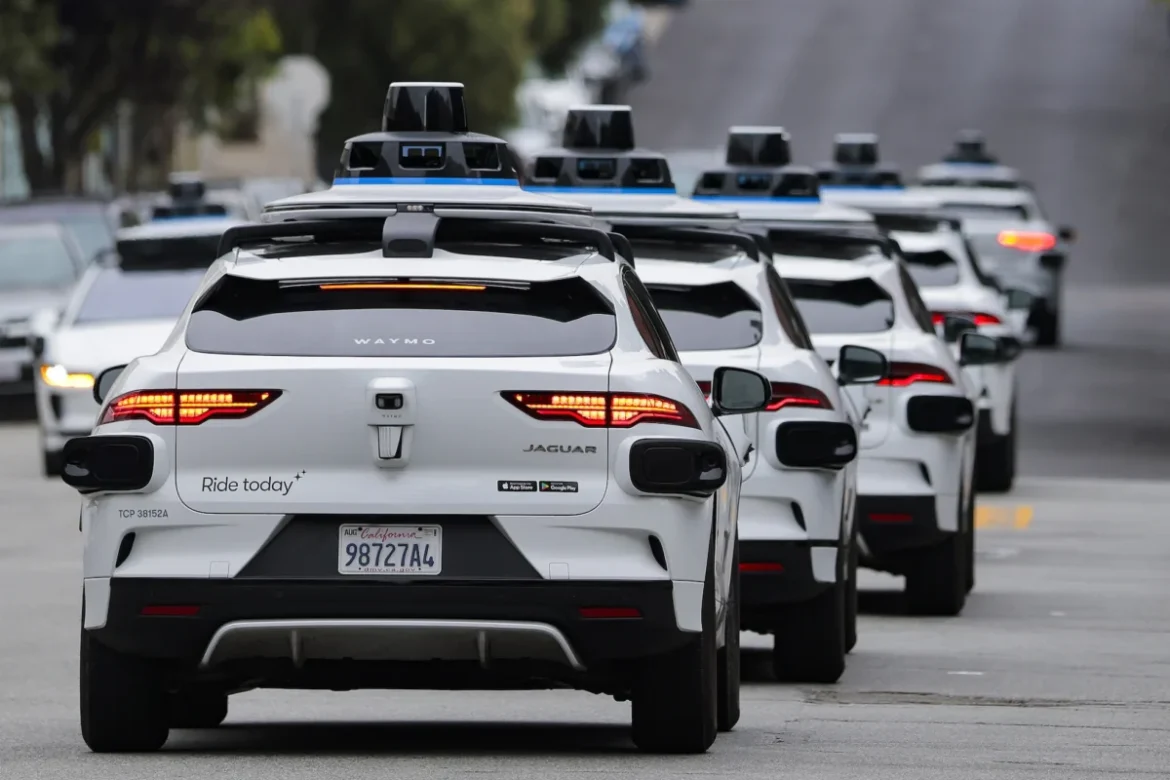
Waymo, the autonomous driving subsidiary of Alphabet Inc., has officially resumed its robotaxi operations in San Francisco following a temporary service suspension triggered by a significant power outage that disrupted the city’s infrastructure on July 18, 2026. The outage, which reportedly affected approximately 7,000 Pacific Gas and Electric (PG&E) customers, created a cascade of technical challenges for the autonomous fleet, leading the company to halt operations for roughly one hour to ensure passenger safety and fleet integrity. While surface street operations have returned to a state of relative normalcy, the company confirmed that freeway routes remain unavailable as technicians and local officials continue to monitor the stability of the local power grid and traffic signaling systems.
The disruption began in the midday hours when a localized failure in the PG&E grid plunged several high-traffic neighborhoods into darkness. For an autonomous vehicle (AV) fleet that relies heavily on synchronized infrastructure, including smart traffic signals and high-speed data connectivity, the loss of power represents a critical "edge case" scenario. Waymo’s decision to pause service was communicated to users via the Waymo One mobile application, with screenshots circulating on social media showing a notification that cited "temporary adjustments" due to local conditions.
A Waymo spokesperson clarified the company’s proactive stance in a statement issued shortly after service resumed. The company explained that the one-hour pause was a deliberate measure intended to allow for a comprehensive assessment of the scale of the outage. During this window, Waymo’s operations team coordinated with San Francisco municipal authorities to identify which sectors of the city were experiencing signal failures. The spokesperson emphasized that while the vehicles are equipped with sophisticated onboard sensors—including Lidar, radar, and cameras—that allow them to navigate without constant infrastructure feedback, the broader safety protocol dictates a conservative approach when citywide systems become unpredictable.
Chronology of the Incident and Immediate Response
The timeline of the July 18 incident highlights the rapid decision-making process required to manage a fleet of hundreds of driverless vehicles in a dense urban environment. At approximately 12:00 PM PDT, reports of flickering lights and immediate power loss began surfacing in neighborhoods including the Mission District and parts of SoMa. By 12:15 PM, PG&E’s outage map confirmed that 7,000 customers were without power, a figure that included numerous commercial corridors and signalized intersections.
By 12:30 PM, Waymo issued its first "temporary pause" alert to customers currently using the app or inside vehicles. Riders already in transit were completed to their destinations, but no new ride requests were accepted. This cooling-off period allowed Waymo’s remote assistance operators to verify the status of every vehicle in the fleet. By 1:30 PM, the company began a phased resumption of service, though it maintained a restriction on freeway travel, citing the need for maximum caution on high-speed routes where emergency response and lighting are paramount.
This incident is not the first time Waymo has had to contend with the vulnerabilities of San Francisco’s infrastructure. In December 2025, a similar blackout led to several Waymo vehicles stalling on city streets, creating significant traffic congestion. Furthermore, during the Fourth of July celebrations earlier this month, a surge in pedestrian activity and localized traffic mismanagement during a fireworks show at the Golden Gate Bridge resulted in a virtual paralysis of several autonomous units. These recurring themes have placed Waymo and its competitors under an intense regulatory microscope.
Supporting Data and Infrastructure Vulnerabilities
The intersection of autonomous technology and aging urban infrastructure is a growing point of contention for urban planners. Data from the California Public Utilities Commission (CPUC) suggests that as the density of AVs increases, the reliance on stable 5G connectivity and "Smart City" sensors becomes a double-edged sword. While these technologies allow for smoother traffic flow under ideal conditions, they create a single point of failure during power disruptions.
In San Francisco, there are currently an estimated 800 to 1,000 autonomous vehicles operating at any given time across various providers. When 7,000 PG&E customers lose power, it often implies that dozens of traffic lights are either dark or flashing red. Under California law, a dark intersection must be treated as a four-way stop. While Waymo’s AI is programmed to recognize these conditions, the unpredictable behavior of human drivers during outages often leads to "gridlock" scenarios where the AVs, programmed to be hyper-cautious, refuse to move until they are 100% certain of a safe path.
Analysis of the December 2025 blackout showed that AVs contributed to a 15% increase in emergency response times in affected areas because stalled units blocked narrow San Francisco streets. Today’s one-hour pause was likely a direct result of lessons learned from that incident, reflecting a shift in strategy toward "preemptive grounding" rather than "active navigation" during crises.

Official Reactions and Regulatory Pressure
The recurring nature of these disruptions has drawn the ire of local leadership. San Francisco Mayor Daniel Lurie has been a vocal critic of the current state-level oversight of autonomous vehicles. Following the July 18 outage, the Mayor’s office reiterated its call for the California Department of Motor Vehicles (DMV) and the CPUC to grant the city more direct authority over AV operations.
"We cannot have a situation where a routine power outage or a planned public event leads to the total collapse of our transit flow because of autonomous vehicle behavior," Mayor Lurie stated in a press briefing. "We are pushing for tougher state regulations that adequately address how autonomous vehicles operate during major incidents, planned or not. The safety of our residents and the efficiency of our emergency services cannot be secondary to a tech company’s beta-testing or operational adjustments."
Lurie’s proposed framework includes a "city-controlled kill switch" or a mandatory "emergency mode" that would force AVs to pull over to the nearest safe curb and vacate the roadway during a declared municipal emergency. Currently, the authority to regulate these vehicles rests almost entirely with state agencies, leaving city officials with limited recourse when robotaxis block ambulances or fire trucks.
Technical Analysis: Why Freeways Remain Offline
The decision to keep freeway routes unavailable while resuming surface street service points to a specific technical risk assessment. Waymo’s "Driver" (the AI system) utilizes a high-definition map that is constantly updated. However, freeway driving involves higher speeds and longer braking distances. During a power outage, overhead lighting on highways can fail, and electronic signage—which provides critical information about lane closures or accidents—may go dark.
Furthermore, the "remote assistance" feature, where human operators can provide a "path of intent" for the vehicle when it is confused, relies on low-latency video streaming from the car’s cameras to Waymo’s operations center. If the power outage affects cell towers or data hubs, the reliability of this human-in-the-loop backup is compromised. By restricting vehicles to surface streets, Waymo limits the kinetic energy involved in any potential mishap and ensures that vehicles are operating in environments where they can more easily pull over if they lose their data link.
Broader Implications for the AV Industry
The July 18 incident serves as a stark reminder of the "fragility of autonomy." As Alphabet and its competitors move toward wide-scale commercialization, the focus is shifting from "can the car drive?" to "can the car handle a failing environment?"
Industry analysts suggest that for robotaxis to become a true replacement for car ownership or traditional public transit, they must demonstrate a level of resilience comparable to human drivers. A human driver can navigate a dark intersection, follow hand signals from a police officer, or take a detour based on visual cues even when GPS and cellular networks are down. For Waymo, the challenge is to prove that its "temporary adjustments" are a sign of a robust safety culture rather than a fundamental limitation of the technology.
Looking ahead, the integration of V2X (Vehicle-to-Everything) technology is often cited as the solution. If vehicles could communicate directly with traffic lights via short-range radio frequencies that have battery backups, the impact of a PG&E outage would be mitigated. However, the rollout of such infrastructure is years, if not decades, away. In the interim, San Francisco remains the primary laboratory for these real-world stress tests.
As of late Saturday afternoon, PG&E reported that power had been restored to the majority of the 7,000 affected customers. Waymo has not yet provided a specific timeline for when freeway routes will be reinstated, stating only that they continue to monitor the situation. For now, the "Waymo One" service remains a surface-street-only option in the city, as the tech giant and the "City by the Bay" continue their complex, often friction-filled dance toward an autonomous future.
