Cambodia is rapidly transforming its financial landscape through a dual-track strategy of aggressive digital payment integration and high-level international cooperation to combat transnational cybercrime. This week, the nation made significant strides on both fronts, securing a landmark security partnership with the United Kingdom to dismantle illicit scam networks while simultaneously launching a major cross-border payment initiative with India’s Unified Payments Interface (UPI). These developments underscore Cambodia’s evolving role within the global digital economy and its commitment to regulatory alignment with international standards.
The UK-Cambodia Security Pact: A New Front in Cybercrime
In a significant geopolitical shift, the United Kingdom and Cambodia have formalized a Memorandum of Understanding (MoU) aimed at neutralizing the growing threat of illegal online scam centers. This agreement represents the first structured, bilateral framework dedicated to dismantling criminal gangs that have utilized Southeast Asia as a base for large-scale financial fraud.
The prevalence of scam centers—which often employ human trafficking victims under the threat of violence—has become a major concern for global law enforcement. These operations frequently leverage sophisticated technological infrastructure to orchestrate romance scams, investment fraud, and pig-butchering schemes that target victims across the globe, including thousands of citizens in the UK.
UK Minister for Fraud, Lord Hanson, emphasized the borderless nature of these crimes during the signing. "Over two-thirds of fraud affecting the UK originates overseas," Hanson stated, noting that the agreement is essential for reducing the domestic threat to British citizens. The partnership is not merely a diplomatic gesture but a tactical alignment involving the Global Fraud Taskforce, established by the UK and INTERPOL.
Tactical Implementation and Capacity Building
The collaboration focuses on three core pillars: intelligence sharing, investigative capacity building, and financial disruption. By facilitating the exchange of data between the UK’s National Crime Agency and Cambodian law enforcement, both nations aim to map the networks that connect regional scam hubs to global financial systems.
Furthermore, the UK has committed to providing specialized training to Cambodian authorities in the realms of digital forensics, cybercrime investigative procedures, and the tracing of illicit digital assets. This capacity building is critical, as the financial flows supporting these scam centers often involve complex money laundering techniques that require advanced technical expertise to intercept. By disrupting the underlying financial architecture of these gangs, the joint task force intends to make the operations less profitable and more vulnerable to detection.

UPI Acceptance: Bridging Southeast Asian and Indian Markets
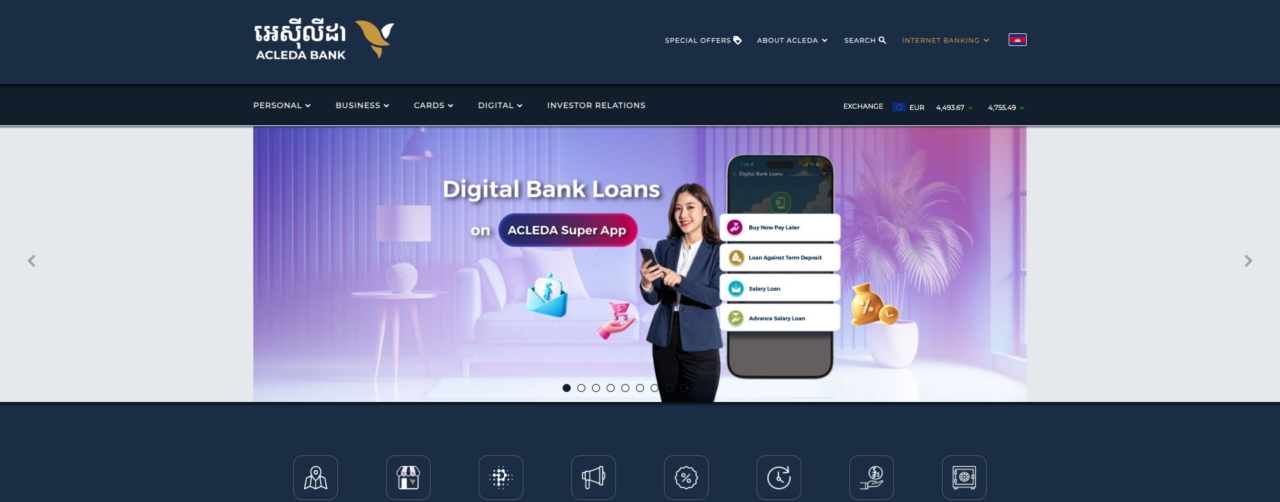
Parallel to its efforts in cyber-security, Cambodia is deepening its financial connectivity through a strategic partnership between NPCI International Payments Limited (NIPL) and ACLEDA Bank. This collaboration has successfully integrated India’s Unified Payments Interface (UPI) with Cambodia’s national QR code system, KHQR.
The integration, which went live this week, allows Indian travelers to make seamless, secure payments across more than 4.5 million merchant outlets in Cambodia. This initiative is part of a broader "Phase 1" rollout that prioritizes high-traffic retail, hospitality, and tourist sectors.
The technical architecture behind this launch relies on the interoperability of KHQR, which was launched by the National Bank of Cambodia in July 2022. By leveraging the existing Bakong payment system—Cambodia’s national mobile payment backbone—the new UPI integration allows for real-time settlement and reduced foreign exchange volatility for travelers.
A History of Digital Transformation
To understand the significance of the UPI launch, one must look at Cambodia’s rapid digital trajectory over the last decade. Founded in 1993 as a microfinance NGO, ACLEDA Bank has mirrored the nation’s growth, evolving into a commercial banking giant with assets exceeding $10 billion by 2025.
The timeline of Cambodia’s digital payment evolution is marked by several milestones:
- 2020: The National Bank of Cambodia launches "Bakong," a blockchain-based payment system that serves as the foundation for the nation’s digital infrastructure.
- 2022: The official launch of KHQR, a standardized QR code protocol designed to unify the fragmented payment landscape across the country.
- 2024: National merchant adoption of KHQR reaches 4.5 million accounts, creating a robust, high-velocity digital economy.
- 2026: Implementation of the NIPL-ACLEDA cross-border corridor, marking the first major international interoperability project for the KHQR network.
In Channy, President and Group Managing Director of ACLEDA Bank, highlighted the economic implications of this development. "By integrating the payment gateways of Cambodia and India, we are removing transactional friction," he noted. The move is expected to boost tourism revenue and provide local small-to-medium enterprises (SMEs) with direct access to one of the world’s fastest-growing digital consumer bases.
ABA Bank and the Resilience of the Cambodian Banking Sector
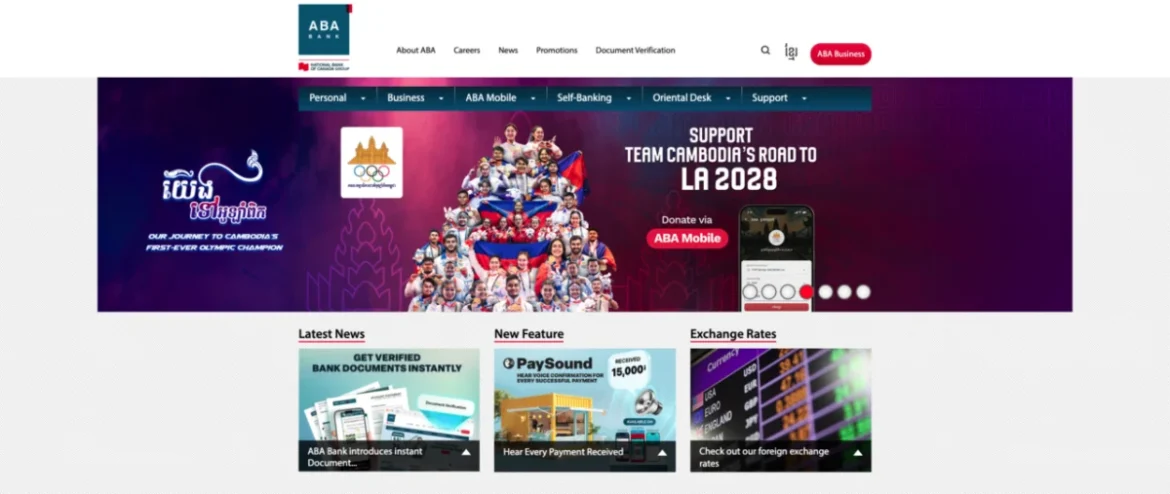
The modernization of Cambodia’s financial sector is further evidenced by the international recognition of its largest institutions. ABA Bank, a member of the nation’s "Big Four" alongside ACLEDA, Canadia Bank, and KB Prasac, was recently ranked as Cambodia’s top-performing bank in Forbes’ World’s Top Performing Banks 2026 report.
Ranking 31st globally among lower mid-size banks, ABA Bank has achieved this status through a massive scaling of its digital operations. Currently, the bank boasts assets of over $16 billion and serves more than five million mobile banking customers. Its strategy has centered on aggressive investment in self-service banking machines and a sprawling digital ecosystem that reaches deep into rural communities that were previously underbanked.
Askhat Azhikhanov, CEO of ABA Bank, attributed the ranking to a combination of institutional trust and technological foresight. "It is the result of the trust of millions of customers and our continued focus on building a strong, resilient, and forward-looking bank," Azhikhanov said. This success story reflects the broader trend in Cambodia, where banks are moving away from traditional branch-heavy models toward digital-first, high-tech financial services.
Implications for the Regional Financial Landscape
The convergence of these events suggests that Cambodia is positioning itself as a reliable and modernized financial hub within the ASEAN region. The security agreement with the UK signals that the country is shedding its past reputation as a haven for offshore criminal activity, choosing instead to align with international regulatory frameworks to protect its growing digital economy.
Simultaneously, the interoperability between KHQR and UPI signals a shift toward a more integrated regional payment architecture. By removing the need for cash and intermediary conversion, Cambodia is fostering a "frictionless" economic environment that is highly attractive to foreign investment and international tourism.
Future Outlook: Challenges and Opportunities
Despite the progress, the road ahead involves significant challenges. The technical integration of different national payment systems requires constant vigilance against cyber-threats, a point that is not lost on the government. The collaboration with the UK is a proactive measure to ensure that as Cambodia’s digital infrastructure grows, its defensive capabilities keep pace.
Furthermore, the success of the KHQR-UPI corridor will likely serve as a blueprint for future integrations with other nations. If successful, this could transform Cambodia into a central node for regional trade, utilizing its digital payment efficiency to facilitate easier commerce between South Asia and Southeast Asia.
As the country moves into the latter half of 2026, the focus will likely shift to "Phase 2" of the UPI-KHQR partnership: enabling Cambodian travelers to use their domestic apps in India. This move would complete the bilateral corridor, creating a seamless, two-way flow of capital and consumption. For global observers, Cambodia’s current trajectory offers a compelling case study on how emerging economies can leverage strategic international partnerships and aggressive digital adoption to leapfrog traditional development hurdles and emerge as robust, globally integrated financial players.