• Home
  • About Us
  • Contact Us
  • Cookies Policy
  • Disclaimer
  • DMCA
  • Privacy Policy
  • Terms and Conditions
Dr Crypton
Secure Your Future in Crypto
Blockchain Technology

CryptoPunks Reclaim Top NFT Sales Spot as Digital Asset Market Shows Renewed Vitality

by admin March 23, 2026
written by admin

The pioneering CryptoPunks collection surged back to the forefront of the non-fungible token (NFT) market on Monday, registering over US$1.6 million in daily sales, marking a significant moment for one of the industry’s most iconic digital assets. This resurgence positions CryptoPunks, a collection synonymous with the early days of NFTs, at the pinnacle of daily trading volumes, underscoring its enduring appeal and status as a blue-chip digital collectible. The collection’s impressive performance was achieved through 17 distinct transactions involving 14 unique buyers and 15 sellers, with an average sale price per CryptoPunk approximating US$94,825. This robust activity highlights a renewed confidence in established digital art assets amidst a broader, fluctuating cryptocurrency landscape.

The Enduring Legacy of CryptoPunks: A Deep Dive into Their Market Comeback

CryptoPunks, originally launched in 2017 by Larva Labs, are widely credited with popularizing the concept of NFTs and digital ownership. Comprising 10,000 unique 24×24 pixel art images, they were initially given away for free, predating the mainstream understanding of blockchain-based digital art. Their historical significance and scarcity have cemented their position as a cornerstone of the NFT market, often serving as a bellwether for the health and sentiment of the wider ecosystem. The recent US$1.6 million daily sales volume is not merely a single-day achievement; it reflects a broader trend of capital returning to foundational NFT projects, particularly those with a proven track record and cultural resonance. For context, individual CryptoPunks have previously commanded astronomical prices, with records such as CryptoPunk #7523 (the "Covid Alien") selling for $11.75 million at Sotheby’s in June 2021, and CryptoPunk #5822 selling for a staggering $23.7 million in February 2022, demonstrating the profound investment potential and collector demand for these digital artifacts. The collection’s acquisition by Yuga Labs, the creators of the Bored Ape Yacht Club, in March 2022, further solidified its institutional backing and promised future integration into a broader Web3 ecosystem, potentially contributing to its sustained value and market interest. Analysts often point to such blue-chip NFTs as a form of digital art investment, analogous to traditional art markets where works by established masters retain and often increase in value over time.

The Diversifying NFT Landscape: Challengers and Innovators Emerge

While CryptoPunks reclaimed the top spot, the competitive landscape of the NFT market showcased a diverse array of collections and blockchain ecosystems demonstrating significant activity. The second-ranking collection for the day was Solana Monkey Business (SMB), a prominent collection native to the Solana blockchain, which recorded substantial daily sales of US$953,143. This figure represents a notable increase from the previous day’s sales of US$371,874, indicating growing momentum for Solana-based NFTs. SMB’s performance was driven by 216 transactions involving 91 unique buyers and 89 sellers, illustrating a vibrant and active community. Solana’s appeal lies in its high transaction speeds and significantly lower gas fees compared to Ethereum, making it an attractive platform for a broader range of collectors and developers, particularly those seeking more accessible entry points into the NFT market. The collection, known for its distinct 2D pixelated monkey avatars, has established itself as a flagship project on Solana, often viewed as the "blue-chip" equivalent within its own ecosystem, mirroring CryptoPunks’ status on Ethereum.

Following closely in third place was DMarket, operating on the Mythos Chain, which generated US$663,200 in sales from a remarkable 29,613 transactions. DMarket specializes in virtual items and skins for video games, showcasing the burgeoning niche of in-game NFTs. The Mythos Chain itself is a gaming-focused blockchain, designed to facilitate digital asset trading within gaming ecosystems efficiently and securely. The high transaction count for DMarket underscores the growing consumer interest and utility in digital assets tied directly to gaming experiences, hinting at the future convergence of gaming and blockchain technology. This sector of the NFT market often appeals to a different demographic, valuing functionality and in-game utility alongside collectibility.

Other notable collections further underscored the market’s breadth. Guild of Guardians Heroes, an NFT project built on the Immutable blockchain, secured the fourth position with a daily sales total of US$508,068. Immutable X is a Layer 2 scaling solution for Ethereum, specifically optimized for NFTs, offering gas-free minting and trading, which greatly enhances user experience and accessibility for gaming-related NFTs. This platform’s focus on scalability and developer tools has attracted numerous blockchain gaming projects, positioning Guild of Guardians Heroes as a significant player in the play-to-earn and digital collectibles space. Rounding out the top five was DogeZuki Collection, also hosted on the Solana blockchain, with sales amounting to US$318,012. DogeZuki represents a newer wave of meme-inspired NFTs, demonstrating the diverse range of digital assets finding traction on Solana and the broader market’s openness to various forms of digital culture.

The Blockchain Battle: Ethereum vs. Solana in the NFT Arena

The performance of these collections is intrinsically linked to the underlying blockchain infrastructure supporting them. The Ethereum blockchain, which hosts CryptoPunks and many other high-value "blue-chip" NFTs, reported a total daily sales volume of US$4.55 million. This figure represents a substantial 15.5% rise from the previous day’s US$3.94 million, indicating a healthy increase in activity on the network. Ethereum’s long-standing dominance in the NFT space is attributed to its robust security, vast developer ecosystem, and established network effects. However, its high gas fees and occasional network congestion have paved the way for alternative blockchains to carve out their own niches.

Solana’s blockchain, home to Solana Monkey Business and DogeZuki, also witnessed a significant surge in daily sales volume, jumping to US$3.52 million from the previous day’s US$2.19 million. This impressive growth highlights Solana’s increasing traction as a formidable competitor in the NFT market. Its architectural design, which prioritizes speed and low transaction costs, has made it a favorite for projects aiming for mass adoption and frequent, low-cost interactions, particularly in gaming and profile picture (PFP) collections. The rivalry between Ethereum and Solana is a critical narrative in the Web3 space, with each chain offering distinct advantages that appeal to different segments of the NFT community. While Ethereum retains its crown for high-value, foundational projects, Solana is rapidly expanding its market share by attracting new users and innovative projects with its cost-effective and scalable solutions. The concurrent rise in sales volumes on both major chains suggests a broader market recovery rather than a zero-sum game, indicating a potential for multiple thriving ecosystems within the NFT space.

Market Dynamics, Investor Sentiment, and Broader Implications

The renewed vitality observed across the NFT market, spearheaded by CryptoPunks’ strong performance, suggests a cautious but evident return of investor confidence. Following a significant downturn in 2022, which saw NFT prices plummet and trading volumes contract sharply from their 2021 highs, the current activity signals a potential stabilization and even a nascent recovery phase. This trend is often influenced by broader cryptocurrency market movements, with Bitcoin and Ethereum’s performance typically acting as leading indicators. As the wider crypto market shows signs of resilience, investor appetite for digital assets, including NFTs, tends to follow suit.

The focus on established "blue-chip" NFTs like CryptoPunks during periods of market uncertainty reflects a flight to quality. Investors tend to favor assets with proven historical value, strong communities, and perceived long-term holding potential, viewing them as safer havens within the volatile digital asset landscape. This behavior is reminiscent of traditional art markets, where iconic works maintain their value even during economic downturns. The consistent interest in gaming-related NFTs, as evidenced by DMarket and Guild of Guardians Heroes, also points to a growing understanding of NFTs as more than just speculative art; their utility within digital ecosystems is becoming increasingly valued. The high transaction count for DMarket, in particular, illustrates that a significant portion of market activity is driven by utility-based assets rather than solely speculative art.

Looking ahead, the implications of this market activity are multifaceted. For the NFT ecosystem, the sustained interest in diverse collections across different blockchains signifies maturation and diversification. It suggests that the market is moving beyond singular hype cycles, evolving into a more complex landscape where various types of digital assets—from historical collectibles to in-game items—find their respective audiences. For investors, it underscores the importance of fundamental analysis, distinguishing between projects with genuine utility and cultural significance versus those driven purely by fleeting trends. The ongoing competition and innovation between blockchains like Ethereum, Solana, and Immutable also promise continued advancements in scalability, user experience, and accessibility, which are crucial for the long-term sustainability and mainstream adoption of NFTs. As regulatory frameworks around digital assets continue to develop globally, the increased volume and more defined market segments could also provide clearer data for policymakers, potentially leading to more tailored and effective regulations that foster innovation while protecting consumers. The consistent engagement, particularly from unique buyers and sellers, indicates that the concept of digital ownership is becoming more entrenched, suggesting a fundamental shift in how value is perceived and exchanged in the digital realm. The current market dynamics, therefore, are not just about trading volumes but also about the ongoing evolution of digital culture, technology, and economy.


March 23, 2026 0 comment
0 FacebookTwitterPinterestEmail
Blockchain Technology

Egypt and Uzbekistan Accelerate Ambitious Digital Transformation Initiatives to Foster Economic Growth and Global Competitiveness

by admin March 22, 2026
written by admin

Egypt and Uzbekistan are strategically intensifying their digital transformation agendas, signaling a profound commitment to modernizing governance, enhancing economic resilience, and securing their positions in the global digital economy. Egypt is establishing a high-level executive committee to streamline bureaucratic processes and improve investor services, while Uzbekistan is forging a strategic alliance with telecommunications giant ZTE Corporation to overhaul its digital infrastructure and introduce advanced technological solutions. These parallel but distinct national efforts underscore a regional drive towards digital integration, aiming to unlock new avenues for development and address contemporary economic challenges.

Egypt’s Digital Leap: A Strategic Overhaul for Investment and Governance

Egypt is embarking on a comprehensive digital transformation journey, spearheaded by the formation of a dedicated executive committee. This initiative, articulated by Mohamed Farid Saleh, the country’s Minister of Investment and Foreign Trade, aims to significantly accelerate the adoption of digital processes across all ministry bodies. The primary objectives are multifaceted: to streamline administrative procedures, substantially reduce service times for investors, and foster a more agile and transparent business environment. This move is a critical component of Egypt’s broader economic reform agenda, particularly its "Egypt Vision 2030," which seeks to position the nation as a leading economy in the Middle East and North Africa through sustainable and inclusive growth.

The newly established executive committee is planned to comprise representatives from all affiliated government entities, ensuring a coordinated and integrated approach to digital plan implementation. Its mandate extends beyond mere digitalization to a fundamental re-engineering of government operations. Minister Farid Saleh has directed a thorough audit and cleanup of existing databases, with the ultimate goal of constructing a unified management framework. This framework is designed to provide robust, real-time data to support informed decision-making, enhance operational efficiency, and significantly improve the user experience for citizens and businesses interacting with government services. For instance, the streamlining of business registration processes, permits, and licensing through digital platforms is expected to cut approval times from weeks to days, thereby directly improving Egypt’s standing in global ease-of-doing-business indices and attracting greater foreign direct investment (FDI).

A key emphasis of the minister’s directive is the constant monitoring and analysis of global and regional developments impacting trading and supply chains. In an increasingly interconnected world, disruptions can have far-reaching economic repercussions. By leveraging digital tools for real-time data analysis, Egypt aims to proactively identify potential vulnerabilities and adapt its economic strategies to maintain stability. "The primary goal is to maintain the stability of the investment environment and ensure the efficient flow of services to investors and exporters, while limiting any negative repercussions that external variables may impose on economic activity," Farid Saleh affirmed. This strategic foresight is crucial for safeguarding Egypt’s economic interests, particularly given its pivotal role in regional trade and global logistics, highlighted by the Suez Canal.

Beyond direct economic benefits, the initiative also champions resource conservation and operational efficiency through the adoption of remote work for eligible sectors. This shift is not merely a response to contemporary work trends but a strategic move intended to bolster institutional sustainability and operational resilience without compromising the quality or speed of public services. The COVID-19 pandemic underscored the critical need for flexible work arrangements and digital government capabilities, and Egypt’s proactive embrace of remote work strategies positions it favorably for future challenges and opportunities. This transition is expected to optimize infrastructure usage, reduce operational costs, and potentially enhance employee productivity and satisfaction.

The foundational meeting for this transformative initiative brought together key figures from Egypt’s economic and trade sectors, including heads of the General Authority for Investment (GAFI), the Egypt Expo & Convention Authority, the Egyptian Trade Representation Office, and the Cotton Arbitration and Testing General Organisation. Representatives from the Trade Agreements sector and the Foreign Trade Training Center were also in attendance, signifying the broad scope and integrated nature of the digital transformation effort. Industry analysts suggest that a successful implementation could significantly boost Egypt’s digital economy, potentially contributing an additional 2-3% to its GDP over the next five years and creating thousands of new jobs in the technology and related sectors. The initial phase of committee formation and framework development is expected to be completed within the next six to twelve months, with tangible service improvements rolling out progressively thereafter.

Uzbekistan Forges Ahead: A Regional Digital Hub Ambition

Concurrently, in Central Asia, the Republic of Uzbekistan is making significant strides in its digital transformation, underpinned by a landmark partnership with ZTE Corporation, a global leader in information and communication technology solutions. This strategic collaboration, announced at the Mobile World Congress (MWC) 2026, marks a pivotal moment in Uzbekistan’s ambition to modernize its telecommunication infrastructure and integrate cutting-edge technologies across the nation. The MWC 2026 announcement was attended by high-level dignitaries, including H.E. Sherzod Shermatov, Minister of Digital Technologies of the Republic of Uzbekistan, and Mr. Xie Junshi, Executive Vice President and Chief Operating Officer of ZTE, along with other key leaders from both entities.

The Memorandum of Understanding (MoU) signed between Uzbekistan and ZTE outlines several critical areas of cooperation. These include the substantial development of the country’s data center infrastructure, a fundamental pillar for any modern digital economy. Enhanced data center capabilities will support cloud computing services, big data analytics, and secure data storage, crucial for both government and private sector operations. Furthermore, the partnership aims to significantly enhance high-speed broadband connectivity across Uzbekistan, addressing the digital divide and ensuring wider access to the internet for its citizens and businesses. This expansion of broadband is vital for supporting e-commerce, remote education, telemedicine, and the burgeoning startup ecosystem. The MoU also paves the way for the potential launch of a wide array of new digital services, ranging from e-government platforms to innovative fintech solutions and smart city applications.

Minister Shermatov articulated Uzbekistan’s bold vision, stating, "Our meeting with ZTE’s leadership at MWC is a testament to the dynamic development of our bilateral cooperation. Uzbekistan is committed to becoming a regional digital hub, and partnerships with global technology leaders like ZTE are crucial for this transformation." He further emphasized that the memorandum lays a solid foundation for modernizing telecom infrastructure and introducing innovative services that will directly benefit citizens and the economy. This aspiration aligns with Uzbekistan’s "Digital Uzbekistan 2030" strategy, which aims to increase the digital economy’s share of the national GDP and improve digital literacy among the population.

Uzbekistan has already demonstrated remarkable progress in certain aspects of digital adoption. In 2024, the nation emerged as a surprising leader in Central Asia for digital currency adoption, climbing an impressive 54 places in global rankings to secure the thirty-third position, according to a report by RISE Research. This dramatic shift represents a significant turnaround, as Uzbekistan had previously lagged behind regional leaders in Web3 adoption. This rapid ascent indicates a growing appetite for digital financial instruments and a potentially favorable regulatory environment, or at least a high degree of public engagement with emerging financial technologies. However, the path to full digital integration is not without its challenges. In 2025, Uzbekistan faced several roadblocks in its digital payments sector, including limitations in cybersecurity infrastructure and relatively low financial literacy rates among parts of the population. These issues pose risks for early adopters and leave a significant portion of rural residents unaware of or unable to access the benefits of digital payments.

The partnership with ZTE is expected to directly address some of these challenges. By modernizing telecommunication infrastructure, the country can build a more secure and robust foundation for digital payments and other online services. Investments in data centers and high-speed broadband will provide the necessary backbone for advanced cybersecurity measures. Furthermore, the introduction of new digital services, coupled with targeted digital literacy programs, can help overcome the existing gaps in financial understanding and ensure broader digital inclusion. The implementation timeline for these projects is anticipated to span three to five years, with initial phases focusing on core network upgrades and data center expansion in key urban centers, followed by a phased rollout to rural and underserved areas. Economic analysts predict that this partnership could significantly enhance Uzbekistan’s digital competitiveness, attract further technology investments, and diversify its economy beyond traditional sectors, positioning it as a key digital gateway in Central Asia.

Broader Regional Implications and the Global Digital Race

The accelerated digital transformation efforts in Egypt and Uzbekistan reflect a broader global trend where emerging economies are leveraging technology to drive economic growth, improve governance, and enhance citizen services. Both nations recognize that digital infrastructure is no longer a luxury but a fundamental necessity for sustained development and global competitiveness. While Egypt focuses on governmental efficiency, investor facilitation, and data-driven policy through an internal committee, Uzbekistan prioritizes foundational telecommunications infrastructure and regional hub aspirations through a major international partnership. These different approaches highlight the varied strategies nations adopt based on their unique contexts and priorities.

For Egypt, the emphasis on streamlining investor services and integrating government operations is crucial for attracting foreign capital and improving its ease-of-doing-business metrics. A more efficient, transparent, and digitally-enabled government can reduce bureaucratic hurdles that historically deter investment, making Egypt a more attractive destination for global businesses. The focus on supply chain monitoring also positions Egypt to better navigate global economic volatilities, strengthening its economic resilience.

Uzbekistan’s strategy, centered on becoming a "regional digital hub" through robust infrastructure development, has profound implications for Central Asia. By upgrading its data centers and broadband networks, Uzbekistan can serve as a conduit for digital services and data flows across the region, potentially fostering greater economic integration and collaboration among neighboring countries. Its leading position in digital currency adoption, despite challenges in broader digital payments, indicates a dynamic and forward-looking approach to financial innovation. Addressing cybersecurity and financial literacy will be critical for ensuring equitable access and trust in these burgeoning digital ecosystems.

Both nations face common challenges inherent in such large-scale transformations, including securing adequate funding, developing a skilled workforce, ensuring robust cybersecurity, and navigating regulatory complexities. The success of these initiatives will depend not only on technological implementation but also on sustained political will, effective public-private partnerships, and continuous investment in human capital. The experience of other developing nations shows that digital transformation is an ongoing journey, requiring adaptability and a willingness to evolve.

In conclusion, Egypt and Uzbekistan are not merely adopting technology but are strategically reimagining their national operating frameworks to thrive in the digital age. Their ambitious plans, whether through internal governmental restructuring or through large-scale international partnerships, underscore a proactive stance in leveraging digital innovation for national prosperity. As these initiatives unfold, they will serve as important case studies for other developing economies navigating their own paths towards a digitally empowered future, ultimately contributing to a more interconnected and resilient global economy.

March 22, 2026 0 comment
0 FacebookTwitterPinterestEmail
Cryptocurrency News

Bitcoin Poised for Significant Upside as Technicals, On-Chain, and Macro Indicators Align Above Critical $71,500 Threshold

by admin March 21, 2026
written by admin

Bitcoin is currently exhibiting strong signals that suggest a potential move towards a more substantial upside, contingent on the persistence of prevailing technical and on-chain trends, according to Charles Edwards, founder of Capriole. In a recent market analysis, Edwards highlighted a confluence of macro, sentiment, and blockchain indicators that have decisively shifted into a more constructive posture, even amidst a highly volatile and unpredictable global geopolitical landscape. This analysis comes at a pivotal moment for the cryptocurrency, as it navigates complex market dynamics and evolving investor sentiment.

The present market environment, as framed by Edwards, is uniquely challenging, characterized by rapid shifts influenced by escalating war fears, volatile oil prices, and the burgeoning, yet uncertain, landscape of artificial intelligence threats. Despite these multifarious headwinds, Edwards asserts that the underlying data from Bitcoin itself, coupled with broader macroeconomic indicators, presents an increasingly compelling bullish signal. A crucial determinant for this bullish outlook is Bitcoin’s ability to sustain a monthly and weekly close above the $71,500 mark, a price point he identifies as a critical psychological and technical threshold. This level is not merely arbitrary; it represents a significant resistance-turned-support zone that, if held, could validate a new phase of price discovery.

Bitcoin’s Technical Landscape: A Resilient Ascent

From a purely technical standpoint, the significance of a sustained close above $71,500 cannot be overstated. Edwards notes that such a move would represent Bitcoin’s most robust technical monthly finish in the past year, underscoring a powerful resurgence in buying momentum. Examining the daily chart, the recent price action appears even more encouraging. Edwards specifically points to an "engulfing advance," a bullish candlestick pattern where a large white candlestick completely engulfs the previous day’s black candlestick, signaling strong buying pressure overpowering selling pressure. This pattern, particularly after a period of consolidation or decline, often presages further upward movement.

Moreover, Bitcoin has demonstrated notable relative strength against other traditional markets since the onset of the Iran conflict. Historically, Bitcoin has often traded in correlation with risk-on assets like tech stocks, frequently experiencing sell-offs during periods of global uncertainty. However, its recent outperformance, especially in the face of geopolitical tensions, suggests a potential decoupling or a re-evaluation of its role in diversified portfolios. For an asset that spent a significant portion of the preceding nine months mirroring the broader downtrend of risk assets, this shift in character is profoundly meaningful. The ability of Bitcoin to not only hold its ground but to appreciate while other markets grapple with instability lends credence to the narrative of its growing maturity and potential as a hedge against conventional market volatility, or at least its unique resilience.

The $71,500 level itself carries significant weight. It has historically acted as a pivotal point, representing either strong resistance preventing further gains or robust support preventing deeper corrections. Breaking and holding above such a level often clears the path for subsequent price targets, as previous sellers at that price point become potential buyers, and new capital is attracted by the demonstrated strength. Analysts often look to Fibonacci retracement and extension levels around such thresholds to project potential future price movements, with a sustained break suggesting targets well into the higher echelons of its all-time highs and beyond.

On-Chain Metrics Paint a Bullish Picture

Complementing the strong technical outlook, a series of on-chain signals further bolster Edwards’s bullish thesis, resembling patterns observed during previous accumulation phases that preceded significant price rallies. These metrics provide a unique, transparent view into the behavior of market participants directly on the blockchain, offering insights often unavailable in traditional markets.

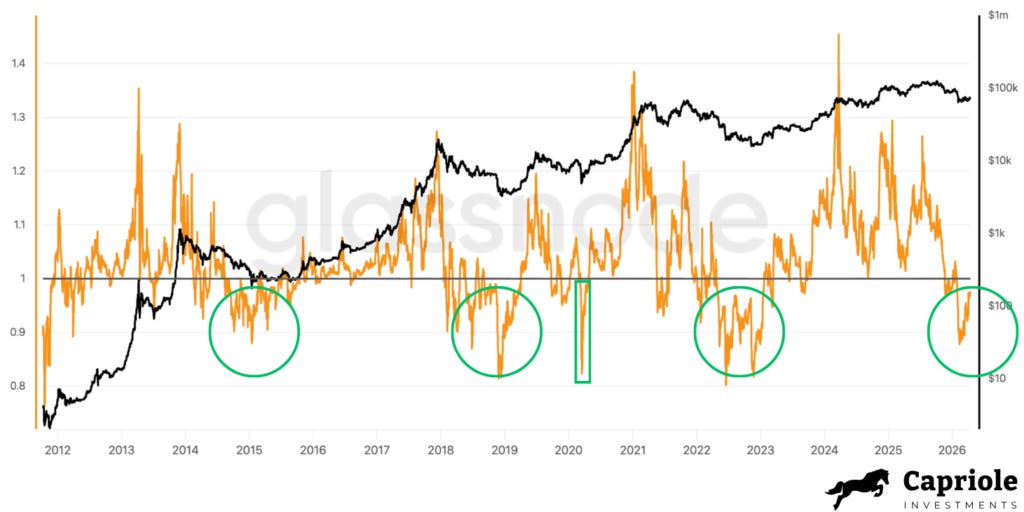
Bitcoin Could Be Near A Bigger Breakout As Key Metrics Turn, Capriole Founder Says

One key indicator is Normalized Dormancy, which is currently low. Normalized dormancy measures the average age of spent transaction outputs (UTXOs), essentially indicating how long coins that are being moved have been dormant. A low dormancy suggests that older, long-term holders are not actively distributing their Bitcoin into weakness, implying conviction in future price appreciation rather than panic selling. This behavior is typical of accumulation phases, where patient investors are either holding or adding to their positions.

Furthermore, Edwards highlights a renewed "restacking" by longer-dated holders, particularly within the 2-year-plus cohort. This refers to Bitcoin that has been held for two years or longer moving back into accumulation. When these long-term holders, often referred to as "HODLers," increase their holdings or reduce their selling activity, it signals strong confidence in Bitcoin’s long-term value proposition. Their sustained holding removes supply from the active market, which can exert upward pressure on price when demand remains constant or increases.

The analysis also points to deeply depressed SOPR (Spent Output Profit Ratio) readings. SOPR is an on-chain indicator that provides insight into whether Bitcoin holders are selling at a profit or a loss. A SOPR value above 1 indicates that, on average, coins are being sold at a profit, while a value below 1 indicates coins are being sold at a loss. Deeply depressed SOPR readings, meaning values significantly below 1, historically coincide with periods of capitulation, where sellers are exiting at a loss, often marking a market bottom or a strong accumulation zone for savvy investors. For instance, in previous market cycles, periods of sustained low SOPR have frequently preceded major bull runs, as the market purges weak hands and prepares for a new cycle of growth.

Even Bitcoin miners, who are critical participants in the network and often face unique financial pressures, are sending a similar message. Edwards argues that the market remains in a deep miner capitulation phase, referencing Hash Ribbons. Hash Ribbons are an indicator that signals miner capitulation when the 30-day moving average of hash rate crosses below the 60-day moving average, implying that less efficient miners are shutting down due to unprofitability. Historically, the recovery from such capitulation phases, often marked by a crossover back, has been a strong buy signal for Bitcoin. Despite this capitulation, miner sell pressure is unusually subdued, suggesting that even those miners who remain active are holding onto their newly minted Bitcoin rather than immediately selling it to cover operational costs. This behavior further constrains available supply in the market.

Finally, one of the most compelling on-chain insights from Edwards’s analysis is that institutions are once again emerging as net buyers. He notes that this backdrop – where institutional demand consistently outstrips the newly mined supply of Bitcoin – has been a hallmark of every major Bitcoin appreciation phase over the past five years. The entry and sustained buying pressure from institutional players, particularly amplified by the recent approval of spot Bitcoin Exchange Traded Funds (ETFs) in major markets, provides a significant and continuous demand sink for Bitcoin. These institutional flows represent substantial capital allocations that can dramatically influence market dynamics, absorbing available supply and driving price upwards.

Taken collectively, these diverse on-chain metrics present a clear and coherent message: the fundamental underpinnings of the Bitcoin market are shifting towards a bullish posture, especially if the $71,500 threshold is decisively overcome. "Amongst this swathe of data (and more) it’s hard not to be bullish on Bitcoin above $71.5K," Edwards concludes.

Fading Macro Fear, Yet Lingering Risks

Edwards’s analysis also meticulously ties Bitcoin’s improving outlook to a broader recalibration of traditional market gauges, indicating a waning of macro-level fear. He highlights several key traditional finance indicators that have turned positive:

The VIX (Volatility Index), often referred to as the market’s "fear gauge," has flashed a macro buy signal. This occurred as volatility dropped significantly from above 30, a level indicative of extreme fear and uncertainty, towards the more stable 20 area. A decline in VIX typically suggests that investors are becoming less apprehensive about future market swings, leading to increased risk appetite and a willingness to invest in growth assets.

Bitcoin Could Be Near A Bigger Breakout As Key Metrics Turn, Capriole Founder Says

The CNN Fear & Greed Index has also moved back into "buy territory." This composite index measures various market factors (stock price momentum, stock price strength, put/call options, junk bond demand, market volatility, safe haven demand, and breadth) to gauge overall market sentiment. A shift to "greed" or "buy" zones often precedes or accompanies market rallies, as investor confidence grows.

Crucially, Edwards points to the biggest weekly jump in US liquidity since May 2025. Increased liquidity, often driven by central bank policies or market participants returning capital to circulation, typically translates to more available funds for investment. A surge in liquidity can fuel asset price appreciation across the board, particularly for assets like Bitcoin that are sensitive to capital flows. This suggests that the intense phase of geopolitical panic, which often causes capital to flee to safer, less volatile assets, is beginning to recede.

This shift in macro sentiment is further corroborated by how traditional markets are increasingly interpreting the Iran conflict. Initially, geopolitical tensions, particularly those involving major oil-producing regions, tend to trigger significant market volatility and a flight to safety. However, Edwards observes that markets now appear to be treating the Iran conflict as a "contained risk" rather than a lasting, systemic macro shock. Evidence supporting this includes crude oil prices moving back below the $100 mark, an indicator that supply fears are easing, and reports of a US-Iran ceasefire being established. In this context, Bitcoin’s outperformance, showing an 11% gain against equities since the war’s commencement, is particularly telling. For an asset that was previously correlated with risk-off sentiment during crises, this performance marks a significant change in its market character, potentially signaling its evolving role as a mature asset capable of independent price action.

Edwards posits that markets may be entering a phase of "volatility fatigue." This psychological state occurs when investors become desensitized to daily headline reversals and persistent uncertainty. Instead of reacting impulsively to every new geopolitical tremor or economic data point, they begin to re-focus on fundamental drivers such as liquidity, economic growth prospects, and intrinsic value. This shift in investor psychology can create a more stable environment for assets to appreciate based on their underlying merits.

The Shadow of AI: A New Threat to DeFi Infrastructure

While the overall outlook for Bitcoin appears robust, Edwards’s note is not without its caveats. He dedicates a substantial portion of his analysis to what he perceives as a rapidly escalating, AI-driven security threat to the broader crypto infrastructure, particularly decentralized finance (DeFi) protocols and complex smart contract systems.

Edwards warns that the exponential advancements in artificial intelligence models will dramatically compress the timeline required to discover and exploit vulnerabilities within these systems. What once took months of meticulous human effort to uncover potential exploits could soon be identified and leveraged by sophisticated AI in mere minutes. This acceleration poses an existential threat to the security models underpinning many DeFi applications, which often involve intricate interlocking smart contracts and significant sums of locked capital.

Past DeFi hacks, such as the Poly Network exploit or various flash loan attacks, have demonstrated the fragility of these systems when vulnerabilities are discovered. With AI, the speed and scale of potential attacks could increase exponentially, making it exceedingly difficult for developers to patch vulnerabilities before they are exploited. AI could quickly analyze vast amounts of code, identify obscure logical flaws, and even generate exploit payloads autonomously.

Edwards’s advice to investors and users is unequivocally blunt: "If you don’t have a really good reason to use complex DeFi protocols and smart contracts, you probably shouldn’t be as we enter this new AI realm. Think about it. Is it really worth the complexity of juicing out that extra few basis points to lend/borrow/bridge/stake/restake?" He cautions against the pursuit of marginal gains in highly complex and potentially insecure DeFi ecosystems, suggesting that the heightened risk due to AI-driven exploitation may outweigh the incremental returns. This implies a need for extreme prudence and a re-evaluation of risk-reward ratios for DeFi participation.

Bitcoin Could Be Near A Bigger Breakout As Key Metrics Turn, Capriole Founder Says

This cautionary perspective, however, does not contradict the bullish case for Bitcoin itself. Instead, it sits alongside it as a critical risk management consideration. Edwards’s broader argument is that the market is beginning to reward opportunity over fear, but only for investors who maintain rigorous discipline in managing their risks. Bitcoin, as the most decentralized and battle-tested cryptocurrency, with a relatively simpler smart contract footprint compared to many DeFi protocols, may be comparatively more resilient to these emerging AI-driven threats.

Strategic Positioning and Future Implications

Edwards’s holistic view underscores the importance of a balanced approach: recognizing emerging opportunities while diligently preparing for potential pitfalls. "Let’s not overweight the problems in our head, but be prepared accordingly," he wrote. He emphasizes that historically, long-term performance in dynamic markets has favored those who strategically position themselves for optimistic outcomes, provided they concurrently manage risks, meticulously monitor data, and act with strong conviction.

This systematic approach is central to his firm’s philosophy: "In short, if the current move breaks down next week, and risk metrics start flashing, our systematic portfolio will pivot accordingly. Until then, things look great for Bitcoin and equities today." This statement highlights the dynamic nature of market analysis and the necessity for adaptable investment strategies, particularly in volatile asset classes like cryptocurrency.

The implications of Bitcoin sustaining above the $71,500 threshold are significant. It could cement its status as a robust asset class attracting mainstream institutional capital, further validating its long-term investment thesis. A continued upward trajectory would likely draw more retail investors back into the market, creating a positive feedback loop. Furthermore, Bitcoin’s resilience in the face of geopolitical instability could reinforce its narrative as "digital gold," a reliable store of value independent of traditional financial systems. However, the omnipresent threat of AI-driven vulnerabilities in the broader crypto ecosystem means that while Bitcoin itself may thrive, investors must exercise extreme caution in their interactions with more complex, less secure decentralized applications.

At press time, Bitcoin was trading at $74,117, signaling that it had indeed surpassed and was holding above the critical $71,500 level, at least momentarily. The coming weeks will be crucial in determining whether this newfound strength can be sustained, transforming a promising outlook into a confirmed consequential upside move for the world’s leading cryptocurrency. Investors will be closely watching technical closes, on-chain flows, and the broader macro environment for confirmation of this pivotal shift.

March 21, 2026 0 comment
0 FacebookTwitterPinterestEmail
Artificial Intelligence & Tech

Microsoft Open Sources Project FarmVibes to Accelerate Data-Driven Agriculture and Sustainable Farming Solutions

by admin March 21, 2026
written by admin

In the rolling Palouse hills of Farmington, Washington, fifth-generation farmer Andrew Nelson is harvesting more than just the wheat, barley, and lentils that have defined his family’s legacy for over a century. On his 7,500-acre operation, Nelson is cultivating a new kind of asset: high-resolution data. Through a sophisticated network of soil sensors, aerial drones, and orbital satellites, Nelson monitors temperature fluctuations, soil moisture, nutrient levels, and plant health with surgical precision. This data is no longer just a collection of metrics; it is the fuel for Project FarmVibes, a newly open-sourced suite of technologies from Microsoft Research designed to bring the power of artificial intelligence to the global agricultural sector.

Microsoft open sources its ‘farm of the future’ toolkit - Source

The initiative, spearheaded by Microsoft’s Research for Industry division, marks a significant shift in the accessibility of ag-tech. By making these tools open source, Microsoft is inviting researchers, data scientists, and the global agricultural community to build upon a foundation of AI-powered algorithms. The goal is to transform raw environmental data into actionable insights that can simultaneously increase crop yields, reduce operational costs, and promote environmental sustainability. For Nelson, who balances his time between a combine harvester and a software terminal, the integration of Project FarmVibes represents the dawn of the "farm of the future."

The Architecture of Project FarmVibes

At the heart of this release is FarmVibes.AI, a toolkit of algorithms currently hosted on Microsoft Azure. These algorithms are designed to handle the complex variables of modern farming, offering predictive capabilities that were previously reserved for high-budget corporate entities. Nelson utilizes these tools to guide his decisions across the entire agricultural lifecycle. Before a single seed is planted, FarmVibes.AI analyzes soil moisture to determine the optimal planting depth. During the growing season, it forecasts hyper-local weather patterns, including wind speeds and temperature shifts, to dictate the safest and most effective times to apply fertilizers and herbicides.

Microsoft open sources its ‘farm of the future’ toolkit - Source

One of the most impactful components of the suite is its ability to optimize chemical usage. By identifying exactly where weeds are located through multispectral drone imagery, the AI can prescribe precise "variable-rate" applications. This means instead of spraying an entire field, Nelson can target only the areas that need treatment. The financial implications are staggering. In his first year of data-guided spraying, Nelson reported that the savings in chemical costs were equivalent to the salary of a full-time employee. On one-third of his acreage alone, he reduced chemical use by 35%, with projections suggesting a 40% reduction following the fall harvest.

Beyond the AI toolkit, the project addresses one of the most persistent hurdles in rural technology: connectivity. FarmVibes.Connect utilizes "TV white spaces"—the unused spectrum between broadcast television channels—to deliver broadband-quality internet to remote fields. In many rural areas, including Farmington, cellular signals often vanish outside the farmhouse. By using a solar-powered TV white space antenna that acts as a long-range Wi-Fi router, Nelson has turned his 7,500-acre "dead zone" into a fully connected laboratory. This connectivity allows for real-time data transmission from the field to the cloud, enabling the use of FarmVibes.Edge, a tool that compresses large drone images by identifying and prioritizing critical data—such as weed patches—while ignoring irrelevant details like roads or fences.

Microsoft open sources its ‘farm of the future’ toolkit - Source

Historical Context and the Evolution of Precision Agriculture

The transition to data-driven agriculture is the latest chapter in a long history of agricultural innovation. From the mechanization of the early 20th century to the "Green Revolution" of the 1960s, farmers have always sought ways to produce more with less. However, the current shift is driven by a different set of pressures: a rapidly growing global population and a shrinking pool of natural resources.

According to the United Nations Food and Agriculture Organization (FAO), global food production must increase by roughly 70% to 100% by the year 2050 to feed an estimated population of 9.7 billion. This challenge is compounded by climate change, which has made weather patterns more volatile, and the degradation of arable land. Microsoft’s move to open source Project FarmVibes is a direct response to these global pressures. Ranveer Chandra, Managing Director of Research for Industry at Microsoft, emphasizes that data-driven agriculture is not just a luxury for wealthy nations but a necessity for global survival.

Microsoft open sources its ‘farm of the future’ toolkit - Source

Microsoft’s journey into this space began years ago with Project FarmBeats, which focused on the Internet of Things (IoT) in farming. The evolution into FarmVibes reflects deeper research into sustainability and precision. The project has been refined through collaborations with industry giants like Land O’ Lakes and Bayer, who have used Microsoft’s infrastructure to analyze vast datasets. By moving these tools into the open-source domain via GitHub, Microsoft aims to democratize the technology, allowing it to reach smallholder farms in developing regions where the impact on food security could be most profound.

Environmental Implications and Carbon Management

Agriculture is uniquely positioned in the climate change narrative: it is a significant contributor to greenhouse gas emissions, one of the sectors most vulnerable to climate shifts, and potentially one of the greatest tools for carbon sequestration. Project FarmVibes includes tools specifically designed to help farmers manage their carbon footprint.

Microsoft open sources its ‘farm of the future’ toolkit - Source

The suite’s "what if" analytics allow farmers to simulate how different practices—such as no-till farming or cover cropping—affect the amount of carbon sequestered in the soil. Healthy soil acts as a massive carbon sink, and by providing data that proves sequestration, Microsoft is helping farmers prepare for future carbon credit markets. Furthermore, the reduction in chemical and water usage facilitated by FarmVibes.AI directly lowers the environmental impact of farming operations.

In addition to soil health, Microsoft is testing traceability sensors that follow crops from the field to the storage bin. In Nelson’s grain silos, these sensors monitor carbon dioxide levels. An uptick in CO2 can indicate excess moisture or the presence of pests, allowing the farmer to intervene before the crop is spoiled. This level of granular monitoring ensures that food waste is minimized and that the final product meets the specific quality standards required by international buyers.

Microsoft open sources its ‘farm of the future’ toolkit - Source

Chronology of the Digital Harvest

The implementation of Project FarmVibes on the Nelson farm followed a strategic timeline of integration:

  1. Phase I: Infrastructure (The Connection): The installation of TV white space antennas provided the necessary broadband backbone across the 7,500-acre property, solving the "last mile" connectivity issue.
  2. Phase II: Data Acquisition (The Sensors): Deployment of soil sensors and drone flights began, creating a baseline of multispectral imagery and moisture data.
  3. Phase III: Algorithmic Analysis (The AI): The raw data was fed into FarmVibes.AI to generate prescriptive maps for planting and spraying.
  4. Phase IV: Optimization (The Edge): Implementation of FarmVibes.Edge allowed for the efficient processing of high-resolution imagery even with limited upload speeds.
  5. Phase V: Monitoring and Traceability: The introduction of storage sensors and tracking technology to ensure crop quality from harvest to the Snake River barges for export.

Analysis of Global Impact and Future Prospects

The decision to open source Project FarmVibes represents a strategic move toward "Ag-Tech democratization." While large-scale commercial farms have had access to proprietary precision agriculture tools for years, these systems are often expensive, closed-loop, and difficult to customize. By providing the source code, Microsoft is enabling academic institutions and local startups to tailor the technology to specific regional needs—whether that is managing rice paddies in Southeast Asia or maize fields in Sub-Saharan Africa.

Microsoft open sources its ‘farm of the future’ toolkit - Source

Industry analysts suggest that this move could accelerate the standardisation of agricultural data. Currently, the sector suffers from fragmentation, with different sensors and machines using incompatible formats. A common, open-source framework could act as a "lingua franca" for the industry, encouraging more rapid innovation.

However, challenges remain. The "digital divide" is not just about technology but also about digital literacy. While Andrew Nelson is a software engineer, most of the world’s 570 million farmers are not. The success of Project FarmVibes will likely depend on the "intermediary layer"—the consultants, cooperatives, and government agencies that can take Microsoft’s research and turn it into user-friendly applications for the average grower.

Microsoft open sources its ‘farm of the future’ toolkit - Source

As climate change continues to redraw the maps of global agriculture, the ability to farm "acre by acre" rather than "field by field" will become the standard. For Andrew Nelson, the transition is a natural evolution. He views his laptop and his combine harvester as two parts of the same machine. Through Project FarmVibes, Microsoft is betting that this integrated approach is the only way to ensure that the harvests of the future remain as rich as those of the past.

March 21, 2026 0 comment
0 FacebookTwitterPinterestEmail
Artificial Intelligence & Tech

Google Vids Integrates Veo 3.1 and Lyria 3 to Democratize Professional AI Video Creation for All Users

by admin March 20, 2026
written by admin

Google has announced a major expansion of its AI-driven video creation platform, Google Vids, introducing a suite of high-performance tools powered by its latest proprietary models, Veo 3.1 and Lyria 3. This update marks a significant shift in the company’s strategy, moving advanced generative video and audio capabilities from experimental environments into the daily workflows of millions of users. By offering high-quality video generation at no cost to all Google account holders and specialized features for premium subscribers, Google is positioning Vids as a central hub for corporate communication, educational content, and personal storytelling. The rollout includes not only visual generation but also custom music composition and directable AI avatars, signaling a comprehensive approach to the "video-first" workplace.

The Evolution of Google Vids: From Spreadsheet to Storyboard

Google Vids was first introduced as a new addition to the Google Workspace productivity suite, designed to sit alongside established tools like Docs, Sheets, and Slides. However, unlike traditional video editors that require a high degree of technical proficiency, Vids was built on the premise that anyone who can create a slide deck can create a professional-grade video. The latest update leverages Veo 3.1, Google’s most capable video generation model to date, which has been optimized for cinematic quality and consistency.

According to David Nachum, Group Product Manager for Google Vids, the integration of Veo 3.1 allows users to transform simple text prompts or static images into dynamic video clips. For the general public, this means access to a level of production value previously reserved for professional studios. Personal account holders will now receive 10 free video generations per month, a move intended to seed the market and encourage casual users to explore the platform’s potential for projects ranging from neighborhood event flyers to digital greeting cards.

Technical Milestones: Veo 3.1 and the Power of Generative Video

The core of this update lies in the technical capabilities of the Veo 3.1 model. Developed by Google DeepMind, Veo represents the pinnacle of the company’s research into temporal consistency and visual fidelity. In the context of Google Vids, Veo 3.1 is tasked with understanding complex prompts and translating them into high-definition video that maintains logical flow. This is particularly crucial for business users who need to maintain brand consistency across different segments of a presentation.

For power users, specifically those subscribed to Google AI Ultra and Workspace AI Ultra, the limits are significantly higher. These users can now generate up to 1,000 Veo-powered videos per month. This high-volume allowance is aimed at enterprise environments where rapid prototyping of marketing materials or internal training modules is required. The model’s ability to interpret photographic inputs also means that users can "animate" their existing assets, providing a bridge between traditional photography and modern video content.

Sonic Innovation: Custom Soundtracks via Lyria 3

A video is only as effective as its audio, a reality Google is addressing through the integration of Lyria 3 and Lyria 3 Pro. These models are designed specifically for music generation, allowing users to "score" their videos with original compositions that match the intended mood and pacing. Unlike stock music libraries, which can often feel generic or present licensing hurdles, Lyria allows for the creation of bespoke tracks ranging from 30-second stings to full three-minute compositions.

Subscribers to Google AI Pro and Ultra can now generate soundtracks by describing the vibe—such as "uplifting acoustic for a travel vlog" or "minimalist corporate ambient for a product demo." This feature eliminates one of the most significant friction points in video production: finding the right music. By generating royalty-free, tailored audio within the Vids environment, Google is streamlining the legal and creative complexities of content creation.

The Rise of the AI Avatar: Directable Digital Presenters

Perhaps the most forward-looking feature of the new update is the introduction of customizable and directable AI avatars. Powered by the same Veo 3.1 architecture, these avatars provide a consistent face and voice for videos, which is especially useful for tutorials, onboarding videos, and "explainer" content.

Create, edit and share videos at no cost in Google Vids

The "directable" aspect of these avatars is a key differentiator. Google AI Pro and Ultra subscribers have control over how these characters look, speak, and act. This level of granularity allows for a cohesive narrative voice without the need for a human presenter to record multiple takes in a physical studio. In a corporate setting, this could mean an HR department creating a series of training videos where the same digital "instructor" guides employees through various modules, ensuring a familiar and professional experience across all materials.

Strategic Integration: Chrome Extensions and YouTube Publishing

Google is also focusing on the "last mile" of video production—distribution and capture. A new Chrome extension has been launched to facilitate easy screen recording, allowing users to pull live demonstrations directly into the Vids editor. This integration is designed to cater to the growing demand for "how-to" content in the workplace, where screen-sharing is the primary method of knowledge transfer.

Furthermore, Google Vids now supports direct publishing to YouTube. This feature bridges the gap between a productivity tool and a social media platform, allowing creators to move from ideation to public broadcast within a single ecosystem. By removing the need to export, download, and re-upload large video files, Google is optimizing the workflow for the "prosumer" market.

Chronology of Development and Market Context

The journey of Google Vids reflects the broader acceleration of AI within the tech industry.

  • April 2024: Google first unveils Vids at the Google Cloud Next conference, positioning it as a "video-first" app for work.
  • June 2024: Limited beta testing begins for select Workspace Enterprise customers.
  • November 2024: General availability is announced for most Workspace tiers, focusing on the "Help me create" feature which generates scripts and storyboards.
  • March 2025: The current update introduces Veo 3.1 and Lyria 3, marking the transition from AI-assisted editing to AI-generated content.

This timeline shows a rapid progression from structural AI (organizing content) to generative AI (creating the content itself). Google’s move comes at a time of intense competition in the generative video space. Rivals like OpenAI with its Sora model, and startups like Runway and Pika Labs, have set high bars for visual quality. Google’s advantage, however, lies in its integration with the existing Workspace ecosystem. While Sora is currently a standalone capability for many, Veo is being woven into the fabric of tools that people already use for their daily work.

Industry Analysis: Implications for the Future of Work

The enrichment of Google Vids with these advanced models has profound implications for several sectors:

  1. Corporate Communications: Internal comms teams can now produce high-quality video updates at a fraction of the previous cost and time. The ability to use AI avatars means that executive messages can be "filmed" without requiring the executive to spend hours in front of a camera.
  2. Education and Training: Teachers and corporate trainers can convert static lesson plans into engaging video content. The 1,000-video limit for Ultra users suggests that Google expects high-volume usage in this sector.
  3. Small Businesses: For entrepreneurs, the ability to generate 10 high-quality clips a month for free provides a professional marketing edge that was previously unaffordable.
  4. The Creator Economy: By simplifying the editing process and providing built-in music and avatar tools, Google is lowering the barrier to entry for aspiring YouTubers and social media influencers.

Ethical Considerations and Responsible AI

As with all generative AI releases, Google has emphasized its commitment to responsible deployment. While not explicitly detailed in every promotional snippet, Google’s standard AI principles include the use of digital watermarking—likely through its SynthID technology—to identify AI-generated content. This is a critical step in maintaining transparency, especially as AI avatars become more realistic and harder to distinguish from human presenters.

Conclusion and Future Outlook

The update to Google Vids represents more than just a software patch; it is a declaration of intent. By making Veo 3.1 and Lyria 3 accessible to the general public, Google is betting that video will become as fundamental to digital literacy as writing or basic data analysis. As the distinction between "making a video" and "writing a document" continues to blur, the tools provided in this update will likely become the new standard for how information is shared in the 21st century.

With the ability to generate up to 1,000 videos a month for high-tier users and a suite of tools that handle everything from the initial prompt to the final YouTube upload, Google Vids is no longer just a "video editor." It is an automated production studio. As users begin to experiment with these new capabilities at vids.new, the real-world impact on content saturation and creative standards will become increasingly clear in the months to follow.

March 20, 2026 0 comment
0 FacebookTwitterPinterestEmail
Artificial Intelligence & Tech

The Strategic Blueprint: Mastering Data Modeling Principles for Modern Analytics Engineering

by admin March 19, 2026
written by admin

Data modeling serves as the essential architectural blueprint for an organization’s entire analytics infrastructure, dictating how information is structured, stored, and ultimately transformed into actionable business intelligence. In the contemporary landscape of big data and cloud computing, the discipline has shifted from a niche technical requirement to a foundational business strategy. When the underlying data model is chaotic, the resulting analytics—dashboards, reports, and predictive models—inevitably fail to provide accurate insights. Conversely, a structured and organized model enables analytics teams to navigate complex datasets with speed and precision, ensuring that critical business questions receive consistent and reliable answers.

The necessity of robust data modeling is underscored by the common frustrations faced by modern enterprises: slow-loading dashboards, conflicting revenue figures across departments, and the inability to track historical changes. These issues are rarely the result of poor visualization tools or insufficient processing power; rather, they are the symptoms of a "data model in crisis." To address these challenges, analytics engineers must move beyond technical specifications and adopt a mindset focused on business logic and structural integrity.

Data Modeling for Analytics Engineers: The Complete Primer

The Three-Tier Hierarchy of Data Model Design

The development of a data model is not a singular event but a progressive journey through three distinct levels of detail. This hierarchy—comprised of conceptual, logical, and physical models—ensures that the final database implementation aligns perfectly with the strategic needs of the business.

The Conceptual Model: Aligning Business and Data

The conceptual model represents the highest level of abstraction, often described as the "napkin sketch" of the data world. It is entirely non-technical and focuses on defining the core entities a business cares about and the high-level relationships between them. At this stage, the goal is to establish a common vocabulary between technical teams and business stakeholders.

For instance, in a professional sports stadium context, a conceptual model identifies entities such as "Stadium," "Event," "Attendee," and "Ticket." It establishes fundamental rules: a stadium hosts multiple events, and an event requires a stadium to exist. By mapping these relationships early, organizations can resolve critical questions—such as whether a "Customer" is the same entity as an "Attendee"—before a single line of code is written. Industry analysts suggest that resolving these conceptual gaps during the design phase is significantly more cost-effective than attempting to restructure a live production environment.

Data Modeling for Analytics Engineers: The Complete Primer

The Logical Model: Defining the Blueprint

Once the conceptual framework is agreed upon, the process moves to the logical data model. This stage introduces specific attributes and detailed relationship cardinalities, such as one-to-one (1:1), one-to-many (1:M), or many-to-many (M:M). The logical model identifies candidate keys—attributes that uniquely identify a record—and establishes primary keys.

Crucially, the logical model remains platform-agnostic. Whether the data will eventually reside in a Microsoft Fabric environment, a Snowflake warehouse, or a traditional SQL Server, the logical structure remains the same. This phase serves as a rigorous quality assurance test, identifying potential logic flaws in the business workflow. By iterating on the logical model based on stakeholder feedback, analytics engineers can build a future-proof design that scales with the organization’s growth.

The Physical Model: The Construction Plan

The physical data model is the final, technical implementation plan. It is at this stage that the model becomes platform-specific, accounting for the unique requirements of the chosen database provider. Engineers must define data types (e.g., integers, decimals, strings), establish foreign key constraints to ensure data integrity, and implement performance-enhancing structures such as indexes and partitions.

Data Modeling for Analytics Engineers: The Complete Primer

In a physical model, the decision between normalization and denormalization becomes critical. For systems handling daily operations, normalization is used to reduce redundancy. For analytical systems, denormalization is often preferred to minimize complex "joins" and accelerate query speeds. The physical model is where theoretical design meets the realities of hardware performance and storage costs, directly impacting the "time-to-insight" for end-users.

From Operations to Analytics: The Shift from OLTP to OLAP

Understanding the origin of data is vital for any analytics engineer. Most business data is generated by Online Transaction Processing (OLTP) systems—the applications that run daily operations, such as e-commerce platforms, Point-of-Sale (POS) systems, and Customer Relationship Management (CRM) tools.

OLTP systems are optimized for "writing" data. They must handle a high volume of transactions quickly and reliably. To achieve this, they utilize a highly normalized relational model. Normalization, the process of organizing data to minimize redundancy, ensures that a customer’s address is stored in exactly one place. If that customer moves, only one row in one table needs to be updated.

Data Modeling for Analytics Engineers: The Complete Primer

However, while normalization is ideal for operational efficiency, it is often detrimental to analytical performance. Answering a complex question like "What was the total revenue for pepperoni pizza in the New York region during the third quarter?" would require an OLTP system to join dozens of small tables, leading to sluggish performance.

This leads to the core responsibility of the analytics engineer: transforming data from write-optimized OLTP structures into read-optimized Online Analytical Processing (OLAP) systems. OLAP systems are designed to aggregate and analyze vast quantities of data, often employing "denormalization" to flatten tables and improve the speed of complex analytical queries.

The Science of Normalization: 1NF, 2NF, and 3NF

To master the transition between systems, engineers must understand the formal rules of normalization, known as "Normal Forms." While seven normal forms exist, the first three are the most critical for standard business applications.

Data Modeling for Analytics Engineers: The Complete Primer
  1. First Normal Form (1NF): Requires that each table cell contains a single, atomic value and that each record is unique. This eliminates "repeating groups" and ensures the data is structured as a basic table.
  2. Second Normal Form (2NF): Builds on 1NF by ensuring that all non-key attributes are fully dependent on the primary key. This is particularly relevant for tables using composite keys (keys made of multiple columns).
  3. Third Normal Form (3NF): The gold standard for OLTP systems. It dictates that no attribute should depend on another non-key attribute. For example, an "Author Nationality" should not be in a "Books" table; it belongs in an "Authors" table.

By adhering to 3NF in operational databases, organizations prevent data anomalies and maintain a "single version of truth." The analytics engineer then takes this clean, normalized data and re-architects it for the warehouse.

Dimensional Modeling: The Kimball Methodology

In the realm of OLAP and data warehousing, dimensional modeling is the prevailing standard. Popularized by Ralph Kimball in his 1996 seminal work, The Data Warehouse Toolkit, this "bottom-up" approach focuses on modeling specific business processes rather than entire enterprise schemas at once.

The Kimball methodology follows a four-step process:

Data Modeling for Analytics Engineers: The Complete Primer
  1. Select the Business Process: Identify the specific activity to be modeled, such as a retail sale or a flight booking.
  2. Declare the Grain: Determine the lowest level of detail for the data. In a retail context, the grain might be a single line item on a transaction receipt.
  3. Identify the Dimensions: Dimensions are the "lookup tables" that provide context (Who, What, Where, When, Why). Examples include Date, Product, Store, and Customer.
  4. Identify the Facts: Facts are the quantitative measurements resulting from the process (How Much, How Many). Examples include Sales Amount, Quantity Sold, and Tax Paid.

The Star Schema vs. The Snowflake Schema

The most recognizable output of dimensional modeling is the Star Schema. In this design, a central "Fact Table" containing quantitative data is surrounded by "Dimension Tables" containing descriptive data. The simplicity of this design—resembling a star—makes it highly intuitive for business users and extremely fast for modern analytical engines.

The Snowflake Schema is a variation where dimension tables are normalized into further sub-dimensions. While this reduces storage space, it increases the complexity of the model and can degrade query performance due to the additional joins required. Consequently, the Star Schema remains the preferred choice for most modern analytics engineering workloads.

Managing Change: Slowly Changing Dimensions (SCD)

One of the most complex challenges in data modeling is managing attributes that change over time, such as a customer’s city or an employee’s job title. If an engineer simply overwrites old data with new data, the organization loses its historical context—a phenomenon known as "losing history."

Data Modeling for Analytics Engineers: The Complete Primer

To solve this, analytics engineers use Slowly Changing Dimensions (SCDs). The two most common strategies are:

  • SCD Type 1 (Overwrite): The old value is replaced by the new value. This is used when historical tracking is unnecessary, such as correcting a typo in a phone number.
  • SCD Type 2 (History Tracking): This is the gold standard for analytics. When a value changes, a new row is created in the dimension table. This row is assigned a "Surrogate Key" (a unique ID), a "Start Date," an "End Date," and a "Current Flag." This allows analysts to "time travel," accurately reporting on the state of the business at any specific point in history.

Specialized Fact Tables for Diverse Metrics

Not all business measurements are captured the same way. Analytics engineers must choose from four primary types of fact tables based on the nature of the data:

  1. Transactional Fact Tables: Record a single event at a point in time (e.g., a specific sale). These are the most common and are fully additive.
  2. Periodic Snapshot Fact Tables: Capture the status of a business process at regular intervals (e.g., monthly inventory levels or end-of-day bank balances). These are often semi-additive.
  3. Accumulating Snapshot Fact Tables: Track the progress of a process through multiple milestones (e.g., an order moving from "placed" to "shipped" to "delivered"). These are essential for measuring durations and bottlenecks.
  4. Factless Fact Tables: Capture the occurrence of a relationship or event without any numeric measures (e.g., recording student attendance in a class).

Strategic Implications and Broader Impact

The adoption of rigorous data modeling principles has profound implications for the modern enterprise. As organizations increasingly rely on Artificial Intelligence (AI) and Machine Learning (ML), the quality of the underlying data model becomes even more critical. AI models are only as effective as the data they are trained on; a flawed data model will inevitably lead to biased or inaccurate AI outputs.

Data Modeling for Analytics Engineers: The Complete Primer

Furthermore, efficient data modeling has direct financial consequences. In the era of cloud-based data warehousing, where organizations pay for compute and storage, a poorly designed, inefficient model can lead to spiraling costs. By optimizing joins and reducing redundant processing through proper modeling, analytics engineers can significantly reduce an organization’s cloud bill.

Ultimately, data modeling is the bridge between raw information and strategic wisdom. It requires a blend of technical proficiency, architectural vision, and a deep understanding of business operations. By mastering these core principles, analytics engineers ensure that their organizations are built on a solid foundation of data integrity, enabling faster insights, more accurate reporting, and a sustainable competitive advantage in an increasingly data-driven world.

March 19, 2026 0 comment
0 FacebookTwitterPinterestEmail
Artificial Intelligence & Tech

Top 7 Docker Compose Templates Every Developer Should Use

by admin March 19, 2026
written by admin

The evolution of software engineering has increasingly moved toward containerization as a standard for ensuring environment consistency and deployment reliability. Docker, since its inception in 2013, has fundamentally altered the landscape of DevOps by allowing developers to package applications and their dependencies into portable containers. However, as modern applications grew in complexity, often requiring multiple interconnected services such as databases, caches, and message brokers, the need for a simplified orchestration tool led to the rise of Docker Compose. By utilizing a single YAML file to define multi-container environments, Docker Compose has become an essential tool for local development and staging environments.

The Paradigm Shift in Development Environments

Historically, the "works on my machine" problem plagued software development teams. Differences in operating systems, library versions, and environmental configurations frequently led to bugs that only appeared in production. The introduction of Docker addressed this by isolating applications from the underlying infrastructure. Docker Compose further streamlined this by allowing developers to spin up entire stacks with a single command: docker-compose up.

According to the 2023 Stack Overflow Developer Survey, Docker remains the most used and desired tool among developers, with over 52% of professional developers utilizing it in their daily workflows. The growth of microservices architecture has only increased this dependency, as orchestrating five or ten separate services manually is no longer feasible.

A Chronology of Container Orchestration

The journey toward modern Docker Compose templates began in 2013 with the release of Docker as an open-source project. By 2014, Fig—a tool designed to manage isolated development environments—was acquired by Docker and rebranded as Docker Compose. Over the following decade, the tool evolved from a Python-based utility to a core feature of the Docker Desktop and CLI suite (Compose V2), now written in Go for better performance and integration.

In 2024, the focus of containerization has shifted from simple web hosting to complex data pipelines and local Artificial Intelligence (AI) deployment. The following seven templates represent the current state of the art in developer productivity, covering everything from traditional Content Management Systems (CMS) to cutting-edge AI automation.

1. WordPress Ecosystem: Streamlining CMS Development

WordPress remains a dominant force, powering approximately 43% of all websites globally. The template provided by the nezhar/wordpress-docker-compose repository offers a comprehensive environment that includes not just the WordPress core and a MySQL database, but also essential management tools like WP-CLI and phpMyAdmin.

For developers, this template eliminates the need for local Apache or Nginx installations. By containerizing the environment, developers can switch between different PHP versions or WordPress releases without affecting their host system. This is particularly critical for plugin and theme developers who must ensure compatibility across various environment configurations. The inclusion of WP-CLI allows for automated migrations and command-line management, mirroring professional production workflows.

2. Next.js and Modern Full-Stack Architectures

As the industry moves toward React-based frameworks, Next.js has emerged as a leader for server-side rendering and static site generation. The leerob/next-self-host template provides a blueprint for developers who wish to move away from managed hosting providers like Vercel and toward self-managed infrastructure.

This template is significant because it addresses production-level concerns. It integrates Next.js with a PostgreSQL database and uses Nginx as a reverse proxy. Furthermore, it provides configurations for Incremental Static Regeneration (ISR) and caching, which are often difficult to configure in a containerized environment. This setup serves as a bridge for developers transitioning from "hobbyist" deployments to robust, scalable enterprise architectures.

3. Data Management with PostgreSQL and pgAdmin

Database management is a cornerstone of backend development. The postgresql-pgadmin template from Docker’s official "Awesome Compose" collection provides a streamlined way to deploy a relational database alongside a graphical user interface (GUI).

In a microservices context, having a dedicated, reproducible database container is vital for integration testing. This template allows developers to define schemas, seed data, and perform complex queries through pgAdmin without installing heavy database engines directly on their machines. This isolation ensures that database configurations remain identical across the entire development team, reducing "configuration drift."

4. Django and the Python Backend Stack

For Python developers, the nickjj/docker-django-example repository represents one of the most complete boilerplate templates available. Django applications in production rarely run in isolation; they typically require a task queue, a cache, and a persistent database.

This template includes:

  • PostgreSQL: For robust data storage.
  • Redis: Serving as both a cache and a message broker.
  • Celery: For handling asynchronous background tasks.
  • Environment-based configuration: To manage secrets and settings securely.

By providing a pre-configured Celery and Redis setup, this template allows developers to focus on building features like email notifications or image processing without the overhead of manually wiring together these disparate services.

5. Event-Driven Systems with Apache Kafka

As applications move toward real-time data processing, Apache Kafka has become the industry standard for event streaming. However, Kafka is notoriously difficult to set up due to its dependency on Zookeeper and various management interfaces.

The conduktor/kafka-stack-docker-compose template simplifies this by offering various "flavors" of the Kafka stack. It includes Schema Registry for data consistency, Kafka Connect for integrating with other data sources, and the Conduktor Platform for visual monitoring. For developers working on financial systems or real-time analytics, this template provides a local "sandbox" that mimics the high-throughput environments found in large-scale enterprises.

6. Self-Hosted AI and Automation with n8n

The rise of low-code automation and generative AI has led to a demand for self-hosted integration platforms. The n8n-io/self-hosted-ai-starter-kit is a specialized Docker Compose stack that combines the n8n automation tool with AI-specific components like Ollama (for local LLMs) and Qdrant (a vector database).

This template is a response to the growing concern over data privacy in AI. By running these tools locally, companies can build AI agents and automated workflows that process sensitive data without sending it to third-party cloud providers. It represents a significant shift in the DevOps landscape, where "AI-Ops" is becoming a standard requirement for modern software stacks.

7. Local LLM Management: Ollama and Open WebUI

For developers focused purely on Large Language Models (LLMs), the ollama-litellm-openwebui template provides a user-friendly interface for interacting with local models like Llama 3 or Mistral. It uses LiteLLM as a proxy to provide an OpenAI-compatible API, allowing developers to swap out local models for cloud-based ones with minimal code changes.

This setup is particularly useful for testing how applications react to different model outputs. With the Open WebUI component, developers get a ChatGPT-like interface running entirely on their own hardware. This democratization of AI tools is a direct result of containerization making complex software installations accessible to the average developer.

Industry Implications and Expert Analysis

The proliferation of these templates indicates a broader trend toward "Infrastructure as Code" (IaC) at the local level. Industry analysts suggest that the use of standardized Docker Compose templates can reduce "onboarding time" for new developers by up to 70%. Instead of spending days configuring a local machine, a new hire can clone a repository and be productive within minutes.

Furthermore, the shift toward local AI stacks (Templates 6 and 7) suggests that the next frontier for Docker is the optimization of GPU resources within containers. As more developers run LLMs locally, the ability for Docker Compose to manage hardware acceleration (via NVIDIA Container Toolkit) will become a primary focus for the community.

Supporting Data: The Impact of Containerization

Recent data from Gartner predicts that by 2027, more than 90% of global organizations will be running containerized applications in production, up from less than 50% in 2020. This growth is mirrored in the development phase, where Docker Compose serves as the primary gateway to Kubernetes.

Metric Impact of Docker Compose Usage
Onboarding Time Reduced from 2-3 days to <1 hour
Environment Parity 95% reduction in "works on my machine" bugs
Resource Efficiency Up to 40% less overhead compared to Virtual Machines
Deployment Frequency 3x increase in teams using containerized CI/CD

Conclusion: Building on a Strong Foundation

The seven templates discussed—ranging from WordPress and Next.js to Kafka and AI-driven automation—provide more than just a shortcut; they offer a standardized methodology for modern software development. By leveraging these community-vetted configurations, developers can avoid the pitfalls of manual setup and focus on the core logic of their applications.

As the software landscape continues to evolve toward decentralized AI and complex event-driven architectures, the role of Docker Compose as an orchestrator for local development will only solidify. These templates serve as a critical foundation for any developer looking to build robust, scalable, and portable software in the modern era. Using these proven environments allows for a "fail-fast" approach to experimentation, where complex systems can be spun up, tested, and torn down with unparalleled ease.

March 19, 2026 0 comment
0 FacebookTwitterPinterestEmail
Tech & Startup News

Eufy E28 All-in-One Robot Vacuum and Mop Hits Record Low Price of $649.99 in Significant Spring Sale Event

by admin March 18, 2026
written by admin

The home automation market reached a significant milestone this week as the Eufy E28 robot vacuum and mop, a flagship multi-functional cleaning device, saw its price drop to a historic low of $649.99 on Amazon. This price adjustment, effective as of April 15, represents a substantial $350 reduction from its standard retail price of $999.99. The discount aligns with broader seasonal retail trends as consumers shift their focus toward spring cleaning solutions, prompting major manufacturers to compete aggressively for market share in the high-end smart home appliance sector.

The Eufy E28 distinguishes itself in a crowded marketplace by integrating three distinct cleaning functions into a single autonomous unit: vacuuming, mopping, and specialized carpet cleaning. While robot vacuums have become a staple of modern households over the last decade, the E28 represents the latest generation of "combo" models that aim to eliminate the need for secondary manual cleaning tools. The current price point is particularly notable as it brings professional-grade suction and mopping capabilities into a more accessible price bracket for the average homeowner.

Technological Specifications and Performance Benchmarks

At the core of the Eufy E28’s appeal is its industry-leading suction power. The device boasts a 20,000Pa suction rating, a figure that significantly exceeds the industry average for high-end robot vacuums, which typically ranges between 5,000Pa and 8,000Pa. This high level of atmospheric pressure allows the unit to extract deeply embedded debris from carpets and crevices that lower-powered models often bypass.

To manage this power effectively, the E28 utilizes an advanced carpet detection system. This sensor-based technology allows the robot to identify the transition from hard flooring to textiles instantaneously. Upon detection, the internal processor modulates the suction intensity, increasing it to maximum capacity for rugs and carpets while scaling back for hardwood or tile to conserve battery life and reduce noise.

The hardware design also addresses a long-standing grievance among robot vacuum owners: hair tangles. The E28 is equipped with DuoSpiral anti-tangle brushes. These counter-rotating components are engineered to shear or guide long hair and pet fur directly into the suction intake, preventing the mechanical blockages that frequently lead to motor strain or manual maintenance requirements.

Innovations in Automated Mopping and Fabric Care

Beyond its vacuuming capabilities, the Eufy E28 features the HydroJet Deep Cleaning System. Unlike early-generation robot mops that simply dragged a damp cloth across the floor, the HydroJet system employs pressurized water application and mechanical agitation to dissolve and remove stubborn stains. This system is designed to mimic the scrubbing motion of a manual mop, making it effective against dried spills and high-traffic grime on sealed hard surfaces.

Perhaps the most unique feature of the E28—and the one that justifies its premium original price tag—is the inclusion of a detachable deep carpet cleaner. While many hybrid robots can vacuum carpets, few possess the mechanical infrastructure to perform targeted spot cleaning on fabrics. The E28’s detachable component allows users to address specific stains on carpets or even upholstered furniture, bridging the gap between autonomous floor maintenance and specialized deep-cleaning appliances.

Market Context and the Evolution of the Smart Home

The steep discount on the Eufy E28 occurs amidst a period of rapid evolution in the domestic robotics industry. According to market research, the global robot vacuum cleaner market is projected to grow at a compound annual growth rate (CAGR) of over 10% through 2030. This growth is driven by advancements in artificial intelligence, longer battery life, and the increasing consumer demand for "set-and-forget" home maintenance.

Eufy, a brand under the Anker Innovations umbrella, has historically positioned itself as a value-driven competitor to established giants like iRobot (Roomba) and Roborock. However, with the release of the E28, the company has signaled its intent to compete in the ultra-premium tier. By offering a device that handles vacuuming, mopping, and fabric cleaning, Eufy is targeting the "all-in-one" consumer segment—those willing to invest more upfront to reduce the number of individual appliances cluttering their homes.

Retail analysts suggest that the $350 price drop on Amazon is a strategic move to capture the "Spring Cleaning" demographic. Data from previous years indicates a sharp uptick in searches for floor care products during the months of March and April. By lowering the price to $649.99—a "lowest-ever" price according to tracking data from CamelCamelCamel—Eufy effectively undercuts several flagship models from competitors that lack the detachable carpet cleaning functionality.

Chronology of Robot Vacuum Development

To understand the significance of the E28’s features, one must look at the timeline of the industry.

  • 2002–2010: The era of "random navigation." Robots like the early Roomba utilized basic bumper sensors to change direction, often missing spots and lacking the power for deep cleaning.
  • 2011–2018: The introduction of LiDAR and vSLAM (Visual Simultaneous Localization and Mapping). Robots began to map homes, allowing for methodical cleaning paths and "no-go" zones.
  • 2019–2023: The rise of the "Auto-Empty Station" and basic mopping. Manufacturers focused on reducing the frequency of manual bin emptying.
  • 2024–Present: The "Deep Clean" era. Devices like the Eufy E28 now incorporate high-pressure mopping, heated drying for pads, and, most recently, the integration of specialized carpet cleaning tools to handle liquid spills on soft surfaces.

The E28 represents the culmination of these two decades of research, moving the robot from a mere "maintenance" tool to a comprehensive cleaning solution.

Implications for Consumers and the Industry

The availability of the E28 at a $649.99 price point has several implications for the broader market. First, it places pressure on other manufacturers to justify their $1,000+ price tags. If a consumer can obtain 20,000Pa of suction and a three-in-one cleaning system for under $700, the value proposition of rival flagship models becomes harder to maintain without significant technological differentiation.

Secondly, the integration of specialized carpet cleaning suggests a new frontier for home robotics. As sensors become more sophisticated, we can expect future models to not only detect dirt but to analyze the type of stain—distinguishing between dust, mud, and organic spills—and adjusting their chemical or mechanical response accordingly.

For the consumer, the Eufy E28 deal represents a high-utility investment. The inclusion of the DuoSpiral brushes makes it a viable option for multi-pet households, where traditional vacuums often fail due to hair wrap. Furthermore, the ability to tackle both hard floors and carpets with a single device reduces the physical labor involved in home upkeep, a primary driver for the aging "Baby Boomer" demographic and busy "Millennial" professionals alike.

Environmental and Economic Considerations

From an economic perspective, the "lowest-ever price" designation is a powerful psychological trigger in e-commerce. As inflationary pressures have made consumers more discerning with their discretionary spending, "all-in-one" devices are seen as more economical than purchasing a separate high-end vacuum, a separate robot mop, and a handheld carpet cleaner.

Environmentally, the consolidation of three devices into one potentially reduces the electronic waste and carbon footprint associated with manufacturing and shipping multiple appliances. However, the complexity of these machines also raises questions regarding long-term repairability. As these units become more integrated, the importance of manufacturer support and the availability of replacement parts (such as the DuoSpiral brushes and HydroJet filters) becomes paramount for sustainable ownership.

Conclusion

The Eufy E28’s price drop to $649.99 is more than a simple retail promotion; it is a reflection of a maturing market where high-end technology is rapidly becoming more accessible. With its massive suction power, innovative anti-tangle hardware, and unique fabric-care capabilities, the E28 sets a high bar for what consumers should expect from a modern cleaning robot. As the spring cleaning season reaches its peak, this deal offers a glimpse into a future where autonomous home maintenance is not just a luxury, but a comprehensive and affordable reality for the modern household. Consumers interested in the offer are encouraged to act while the limited-time discount remains active on Amazon, as pricing in the smart home sector remains highly volatile based on inventory levels and seasonal demand.

March 18, 2026 0 comment
0 FacebookTwitterPinterestEmail
Tech & Startup News

Americans Ask AI for Health Care While Hospitals Roll Out Branded Chatbots Amid Accuracy Concerns.

by admin March 17, 2026
written by admin

The United States healthcare system is currently witnessing a significant paradigm shift as major medical providers begin integrating artificial intelligence chatbots directly into patient portals. This move comes at a time when a growing segment of the American population is already bypassing traditional medical consultations in favor of seeking advice from large language models (LLMs). While health executives frame these new digital tools as a necessary evolution to enhance patient convenience and bridge gaps in care access, the medical community remains deeply divided over the safety, accuracy, and long-term implications of substituting human clinical judgment with algorithmic responses.

The Rise of the Algorithmic Consultant

The adoption of AI in healthcare is no longer a futuristic concept but a present-day reality driven by consumer behavior. According to a recent poll conducted by KFF, approximately one in three American adults has utilized an AI chatbot to seek health information. This level of engagement now rivals the use of social media for medical advice, marking a transition from static search engine queries to interactive, conversational diagnostics.

The motivations behind this shift are rooted in the systemic failures of the U.S. healthcare infrastructure. The KFF data reveals that among those turning to AI, 19 percent cited an inability to afford professional medical care, while 18 percent reported not having a regular healthcare provider or being unable to secure a timely appointment. Furthermore, 65 percent of users sought AI assistance simply for the speed of obtaining an answer. Perhaps most concerning to public health officials is the finding that 41 percent of users have uploaded personal medical data, such as lab results or imaging reports, to these commercial tools, and a significant portion—58 percent of those asking about mental health and 42 percent asking about physical ailments—failed to follow up with a licensed physician after their AI consultation.

Strategic Responses from Health Systems

In an effort to regain control over the patient experience and provide a "safer" alternative to general-purpose bots like ChatGPT or Claude, several prominent U.S. health systems are launching their own branded AI interfaces. These tools are designed to be "clinical-grade," meaning they are integrated with electronic health records (EHR) and supervised by internal clinical teams.

One of the most ambitious rollouts involves Hartford HealthCare in Connecticut, which has partnered with the clinical AI firm K Health to launch "PatientGPT." Initially released as a beta version to a limited group, the system is now being expanded to tens of thousands of patients. Allon Bloch, CEO of K Health, characterizes this moment as an "inflection point," arguing that the integration of AI within a trusted health system allows for a safer, more transparent environment where the AI has access to a patient’s actual medical history and care team.

Similarly, Epic Systems, the dominant provider of electronic health record software in the U.S., has introduced "Emmie," an AI assistant currently being piloted by California-based Sutter Health and Indiana-based Reid Health. Unlike the more conversational PatientGPT, Emmie is currently positioned as a more conservative tool. Its primary functions include drafting visit agendas, summarizing information already present in a patient’s chart, and answering follow-up questions regarding test results.

Americans ask AI for health care. Hospitals think the answer is more chatbots.

Chronology of the AI Medical Integration

The path toward hospital-branded chatbots has developed rapidly over the last several years:

  • Late 2022: The public release of ChatGPT triggers a surge in self-diagnosis via LLMs, as patients discover the models can pass medical licensing exams.
  • Mid-2023: Epic Systems announces a partnership with Microsoft to integrate GPT-4 into its EHR platforms, beginning with physician-facing tools for drafting patient messages.
  • Early 2024: National surveys confirm that 33% of Americans are using AI for health advice, prompting health systems to accelerate patient-facing AI roadmaps.
  • February 2024: A landmark study in Nature Medicine highlights the "prompting gap," showing that while AI performs well on clinical benchmarks, it fails significantly when interacting with real-world patient queries.
  • March 2024: Researchers expose the vulnerability of medical AI by successfully "hallucinating" a fake skin condition called "bixonimania" into the AI’s knowledge base.
  • April 2024: Hartford HealthCare begins a mass rollout of PatientGPT, transitioning from human-monitored pilots to automated oversight.

The Accuracy Paradox: Benchmarks vs. Reality

The primary concern among medical researchers is the discrepancy between how AI performs in controlled testing and how it functions in the hands of a layperson. A study published in Nature Medicine involving 1,300 participants tested three major LLMs: GPT-4o, Llama 3, and Command R+.

The findings were stark. When the researchers provided the AI with structured, medically accurate text describing a scenario, the models were highly effective, identifying the correct condition 95 percent of the time. However, when actual participants used their own natural language to describe the same symptoms, the AI’s success rate plummeted to just 33 percent. This suggests a "knowledge gap" in how patients communicate their symptoms, which prevents the AI from eliciting the necessary information to form a safe recommendation. Furthermore, the AI directed patients to the correct level of care—such as an emergency department—only 43 percent of the time when faced with real-world user prompts.

Lead author Andrew Bean of Oxford University noted that the study serves as a "wake-up call," emphasizing that people often do not know what specific clinical details are relevant to share with a model. This creates a dangerous scenario where a patient might omit a critical symptom, leading the AI to provide a reassuring but incorrect assessment.

The Threat of "Hallucinated" Medicine

Beyond the risk of misinterpretation is the risk of outright misinformation. Researchers in Sweden recently demonstrated how easily medical AI can be "poisoned" by fake data. They created two fraudulent studies regarding a non-existent skin condition they named "bixonimania" and posted them online. Within a short period, LLMs began discussing the condition with users as if it were a legitimate medical diagnosis.

This phenomenon highlights a core weakness in the way AI models ingest information. Because they prioritize "probabilistic" patterns over verified truth, they can inadvertently elevate misinformation found on the open web. While branded hospital bots like PatientGPT and Emmie attempt to mitigate this by using Retrieval-Augmented Generation (RAG)—which limits the AI’s "search" to trusted medical databases—the risk of the model reverting to its general training data remains a point of contention for safety experts.

Institutional Safeguards and Red Teaming

To combat these risks, Hartford HealthCare has employed a process known as "red teaming," or iterative stress testing. In a pre-print study, the health system reported that intensive testing helped reduce the failure rate of PatientGPT in "high-risk" scenarios from 30 percent to 8.5 percent.

Americans ask AI for health care. Hospitals think the answer is more chatbots.

PatientGPT operates in two distinct modes to manage risk. In "medical intake" mode, the chatbot abandons its conversational tone and follows rigid clinical flowcharts to collect symptom data. If the system identifies a high-risk scenario, it is programmed to stop responding and direct the patient immediately to urgent or emergency care.

However, the transition from pilot to scale brings new challenges. During the pilot phase, every single AI interaction was reviewed by a human. In the mass rollout, human review will drop to just 20 interactions per day, with another AI agent tasked with monitoring the remaining thousands of conversations. This "AI-monitoring-AI" approach is efficient but unproven in a clinical setting over the long term.

The Broader Impact on U.S. Healthcare

The rush to adopt AI chatbots is occurring against the backdrop of a U.S. healthcare system that consistently ranks last among high-income nations in terms of access and outcomes. With over 100 million Americans lacking a primary care provider, chatbots are increasingly being viewed as a "digital front door" that can manage the overflow of a strained system.

Sutter Health and Reid Health executives argue that tools like Emmie provide a way to "meet people where they are." For rural communities served by Reid Health, the AI is seen as a vital tool for navigation, helping patients understand complex test results without waiting days for a return phone call from a nurse.

Yet, critics like Dr. Adam Rodman of Beth Israel Deaconess Medical Center warn that there is currently no evidence to show that these integrations improve patient outcomes. There are also looming questions regarding liability. If a hospital-branded chatbot fails to recognize the symptoms of a stroke or heart attack and advises a patient to wait until morning, the legal responsibility of the health system remains untested in the courts.

Conclusion and Future Outlook

The introduction of AI chatbots into patient portals represents a high-stakes experiment in the automation of medical triage. While the potential for increased efficiency and "digital equity" is significant, the current technology remains prone to errors that human clinicians are trained to avoid.

As health systems move forward, the focus will likely shift from whether AI should be used to how it can be governed. The success of these tools will depend not on their ability to sound "human," but on their ability to remain tethered to the medical record and the oversight of the clinical teams they are designed to assist. For now, the medical community’s message to patients remains one of cautious skepticism: AI can be a tool for information, but it is not yet a substitute for the complex, nuanced judgment of a physician.

March 17, 2026 0 comment
0 FacebookTwitterPinterestEmail
Tech & Startup News

JioHotstar and Warner Bros. Discovery Expand Partnership to Launch HBO Max in India at Competitive Price Point

by admin March 16, 2026
written by admin

In a move that signals a significant consolidation of the premium streaming market in South Asia, JioHotstar, the digital entertainment arm of the Indian conglomerate Reliance Industries, has announced a major expansion of its multi-year partnership with Warner Bros. Discovery. This strategic alliance will officially bring the HBO Max content hub to Indian subscribers, offering an extensive library of prestige television, blockbuster films, and original programming. The integration marks a pivotal moment for the Indian over-the-top (OTT) landscape, as the platform seeks to leverage high-value international content to solidify its dominant position in a highly competitive market.

The partnership ensures that Indian audiences will have access to the full spectrum of the Warner Bros. Discovery portfolio, including content from HBO, Max Originals, Warner Bros. Pictures, Warner Bros. Television, and the DC Studios universe. By integrating these global franchises into the JioHotstar ecosystem, the platform aims to create a "one-stop-shop" for both local and international entertainment, catering to a diverse demographic that ranges from mobile-first viewers in rural areas to urban audiences seeking premium 4K content.

Pricing Strategy and Subscription Tiers

One of the most striking aspects of the announcement is the aggressive pricing strategy adopted by JioHotstar. The HBO Max content hub will be available to existing subscribers as an add-on service starting at just ₹49 per month (approximately $0.50). This pricing is a fraction of the cost of a standalone HBO Max (now known simply as Max in many regions) subscription in the United States, where the Basic ad-supported tier retails for $10.99 per month.

JioHotstar has clarified that the user experience within the HBO Max hub will be dictated by the subscriber’s primary plan. Currently, JioHotstar offers a tiered structure designed to capture different segments of the Indian economy:

  • Mobile Plan: Priced at ₹79 (approx. $0.85) per month, this ad-supported tier is restricted to handheld devices.
  • Premium Plan: Priced at ₹299 (approx. $3.20) per month, this tier offers an ad-free experience across multiple devices, including smart TVs and laptops, with higher resolution options.

Industry analysts suggest that the ₹49 add-on is a tactical move to drive Average Revenue Per User (ARPU) without alienating price-sensitive consumers. By keeping the entry barrier low, JioHotstar is betting on volume, aiming to convert its massive base of free or low-tier users into paying "premium" subscribers.

A Chronology of Content Shifts in the Indian Market

The journey of HBO content in India has been a complex saga of shifting licenses and corporate mergers. For several years, HBO was the crown jewel of Disney+ Hotstar (then known simply as Hotstar). However, in early 2023, the licensing agreement between Disney and Warner Bros. Discovery expired as Disney pivoted toward its own first-party content and budget optimizations.

In April 2023, Reliance’s JioCinema (the precursor to the integrated JioHotstar entity) swooped in to sign a landmark deal with Warner Bros. Discovery, bringing HBO and Max content to the Reliance ecosystem. This latest announcement represents an evolution of that initial deal, moving beyond a simple licensing agreement to a more integrated "hub" experience within the newly rebranded JioHotstar platform. This rebranding follows the historic $8.5 billion merger between Reliance’s media assets and Disney’s Star India, creating a media behemoth that controls a vast majority of the country’s sporting rights and entertainment library.

HBO Max comes to India via exclusive JioHotstar deal

The Content Powerhouse: From Westeros to Hogwarts

The expanded partnership brings a formidable lineup of content to Indian screens. The HBO Max hub will serve as the exclusive home for several highly anticipated projects and established franchises. Key highlights of the upcoming slate include:

  • The World of Westeros: Following the global success of House of the Dragon, the platform will host future seasons and potential spin-offs from the Game of Thrones universe.
  • DC Studios: Under the new creative leadership of James Gunn and Peter Safran, the DC Universe is being rebooted. JioHotstar will be the destination for the upcoming Lanterns series and future cinematic installments.
  • The Harry Potter Series: Perhaps the most significant long-term asset in the deal is the upcoming multi-season television adaptation of J.K. Rowling’s Harry Potter books, which promises to be a decade-long project.
  • Prestige Drama: New seasons of critically acclaimed hits like Euphoria, The Last of Us, and The White Lotus will be available day-and-date with their global releases.

By securing these titles, JioHotstar effectively neutralizes the threat from rivals like Netflix and Amazon Prime Video in the "prestige TV" segment, a niche that, while smaller than the mass-market "masala" content, is crucial for attracting high-spending urban advertisers.

Analyzing the Indian Streaming Landscape

The Indian OTT market is characterized by massive scale but relatively low monetization per user. According to a recent report by the brokerage firm CLSA, India’s streaming market has expanded to a staggering 1.45 billion monthly active users (MAUs). This growth has been fueled by the world’s cheapest mobile data rates and the rapid proliferation of affordable smartphones.

YouTube remains the undisputed leader in the region with 772 million MAUs, serving as the primary entertainment source for the majority of the population. JioHotstar holds the second position with approximately 390 million MAUs. The gap between YouTube and subscription-based platforms highlights a significant challenge: while Indians consume vast amounts of digital video, the willingness to pay for a direct subscription remains limited.

Data from Third Bridge, a consultancy that gathers insights from industry executives, reveals a stark divide in streaming habits. While penetration is high in major metropolitan areas (Tier 1 cities), it drops significantly in Tier 2 markets (23% to 27%) and remains in the single digits in Tier 3 towns (7% to 8%). In these regions, most users access premium content through "bundled" offerings—where a streaming subscription is included for free with a mobile data plan or home broadband connection—rather than purchasing a standalone subscription.

Strategic Implications and Broader Impact

The expansion of the JioHotstar-Warner Bros. Discovery deal has several long-term implications for the global media industry:

  1. The Death of Standalone Apps: For Warner Bros. Discovery, launching a standalone Max app in India would have required massive investment in marketing, local payment infrastructure, and customer acquisition. By partnering with Reliance, they gain immediate access to nearly 400 million users. This suggests that in emerging markets, "super-aggregators" like JioHotstar may be the preferred vehicle for Western media companies.
  2. Reliance’s Ecosystem Lock-in: For Reliance Industries, adding HBO Max content is another layer in its "digital fortress." By providing high-quality content at an unbeatable price, they increase the "stickiness" of their Jio telecom services. A customer is less likely to switch mobile providers if their favorite shows are tied to their JioHotstar account.
  3. Pressure on Competitors: The ₹49 price point puts immense pressure on Netflix and Amazon Prime Video. While Netflix has introduced a mobile-only plan in India, it remains more expensive than the JioHotstar add-on. Competitors may be forced to further lower prices or seek their own local partnerships to remain relevant.
  4. Combating Piracy: India has historically been a high-piracy market for premium Western content. By offering HBO shows legally for the price of a cup of coffee, JioHotstar is making a direct play to convert pirates into legitimate subscribers.

Conclusion and Future Outlook

The arrival of the HBO Max hub on JioHotstar represents the maturation of the Indian streaming market. It is no longer enough to simply have a large library; platforms must now offer a combination of local language content, major sporting events (like the Indian Premier League, which JioHotstar also controls), and high-end international cinema.

As the 1.45 billion MAUs continue to evolve in their viewing habits, the battle for the Indian living room will intensify. With the backing of Reliance’s deep pockets and Warner Bros. Discovery’s creative pedigree, JioHotstar has positioned itself as the gatekeeper of premium entertainment in one of the world’s most vital growth markets. The success of this partnership will likely serve as a blueprint for how global media conglomerates navigate the complexities of the Global South in the years to come. For the Indian consumer, the result is clear: unprecedented access to the world’s most celebrated stories at a price point that was unthinkable only a few years ago.

March 16, 2026 0 comment
0 FacebookTwitterPinterestEmail
Newer Posts
Older Posts

Recent Posts

  • EF Protocol Cluster Releases Unified Tier List for Hegotäel Upgrade
  • Kraken Expands Its Digital Asset Offerings With the Official Launch of KOR Protocol Token Trading
  • Zcash Ecosystem Faces Pivotal Week with Network Upgrade 7 and Landmark Governance Restructuring
  • Navigating the Digital Identity Crisis: An Illustrated Primer on Anonymous Authentication in the Age of AI and Age-Verification Laws
  • Verifone Integrates Visa Featurespace Adaptive AI to Revolutionize Global Fraud Detection and Payment Security

Recent Comments

No comments to show.
  • Facebook
  • Twitter

@2021 - All Right Reserved. Designed and Developed by PenciDesign


Back To Top
Dr Crypton
  • Home
  • About Us
  • Contact Us
  • Cookies Policy
  • Disclaimer
  • DMCA
  • Privacy Policy
  • Terms and Conditions

We are using cookies to give you the best experience on our website.

You can find out more about which cookies we are using or switch them off in .

Dr Crypton
Powered by  GDPR Cookie Compliance
Privacy Overview

This website uses cookies so that we can provide you with the best user experience possible. Cookie information is stored in your browser and performs functions such as recognising you when you return to our website and helping our team to understand which sections of the website you find most interesting and useful.

Strictly Necessary Cookies

Strictly Necessary Cookie should be enabled at all times so that we can save your preferences for cookie settings.