
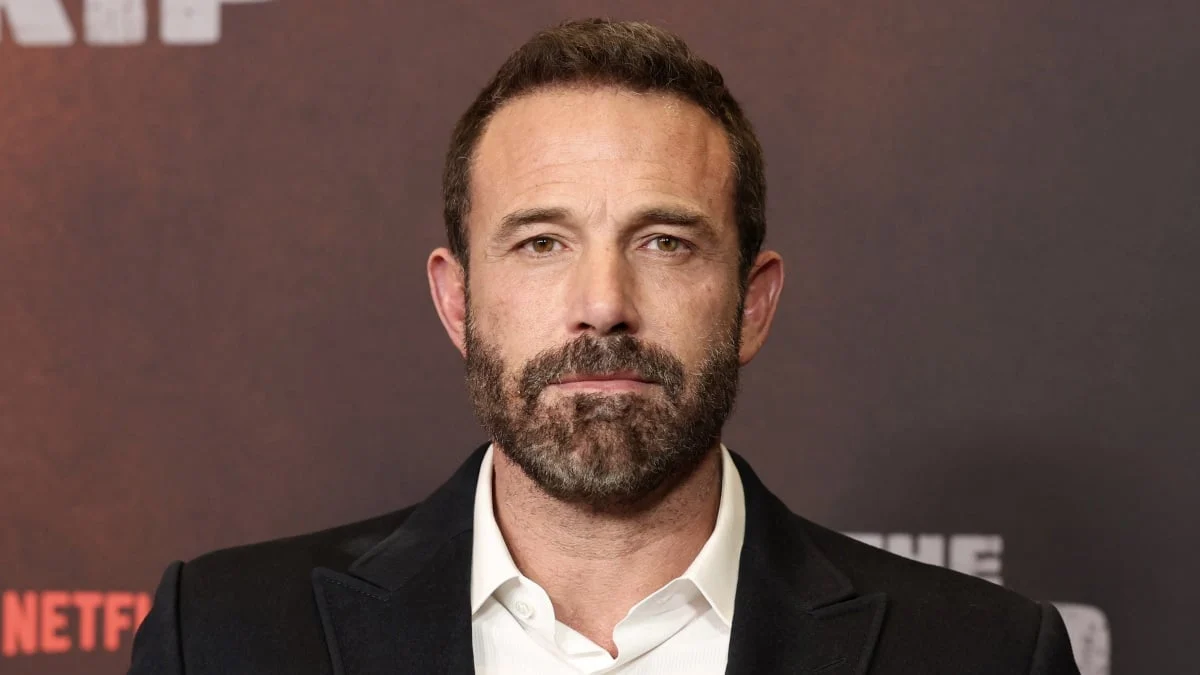
In a significant strategic move that signals a deeper integration of artificial intelligence within the entertainment industry, Netflix has officially disclosed the acquisition of InterPositive, an AI startup founded by Academy Award-winning filmmaker Ben Affleck. According to a Form 10-Q report recently filed with the Securities and Exchange Commission (SEC), the streaming giant paid $587 million in cash for the transaction, which was finalized in March. This acquisition underscores a burgeoning trend in Hollywood where major distributors are no longer merely licensing content or software but are actively purchasing the underlying technological infrastructure to redefine how films and television series are produced, edited, and financed.
While the SEC filing did not explicitly name InterPositive in the "Acquisitions" section of the financial statement, the timing and the specific cash amount align with the high-profile deal announced on March 5. Industry analysts and financial outlets, including Bloomberg, had previously estimated the deal’s value to be in the vicinity of $600 million. The official disclosure of $587 million confirms that Netflix has made one of its most substantial investments in production technology to date, placing Ben Affleck’s vision for "creator-led innovation" at the heart of its future content strategy.
The Genesis of InterPositive and the Vision of Ben Affleck
Ben Affleck founded InterPositive in 2022, during a period of rapid acceleration in the development of large language models and generative media. Unlike many tech entrepreneurs who approached AI from a purely computational or venture capital perspective, Affleck’s entry into the space was born out of his experiences as a director, writer, and actor. He observed that while early AI tools showed promise in generating imagery or text, they often lacked the nuance, emotional depth, and technical precision required for high-end cinematic storytelling.
In the official deal announcement released on March 5, Affleck articulated his motivation for launching the startup. He noted that by 2022, he had spent considerable time observing the rise of AI in production environments. His critique was that existing models often "came up short" because they were not built with the artist’s workflow in mind. Affleck argued that for AI to be a viable tool for filmmakers, it needed to be "purpose-built to represent and protect all the qualities that make a great story."
This philosophy of "protecting the craft" served as the foundational pillar for InterPositive. Rather than aiming to replace the human element of filmmaking, the company focused on creating specialized tools that assist directors and post-production teams in managing the complexities of modern filmmaking. The acquisition by Netflix is viewed by the streaming service as an investment in innovation that keeps filmmakers at the center of the creative process, rather than relegating them to the sidelines of an automated system.
A Technical Departure from Generative AI
One of the most distinctive aspects of InterPositive’s technology is its departure from the "text-to-video" or "prompt-based" generation that has dominated public discourse surrounding AI. In a video presentation released alongside the acquisition announcement, Affleck emphasized that InterPositive’s suite of tools is not about "generating something from nothing."
Instead, the technology functions by building a bespoke, high-fidelity model specific to the film currently in production. This "film-specific model" is trained on the actual footage, assets, and creative intent of the director. Once established, these tools are employed during the post-production phase to streamline labor-intensive processes such as sound mixing, color grading, and visual effects integration.
By automating the technical minutiae of these processes through a model that understands the specific aesthetic of a project, filmmakers are theoretically freed to focus on the "human" elements of the craft, such as fine-tuning performances and narrative pacing. This approach seeks to mitigate the "uncanny valley" and generic qualities often associated with broad-spectrum generative AI, ensuring that the final output remains tethered to the director’s original vision.
Financial and Operational Implications: The 2024 Patent Application
The true scale of the economic disruption promised by InterPositive was revealed in a 2024 patent application filed by Affleck prior to the Netflix acquisition. As reported by industry outlets such as Deadline, the patent outlines a framework where AI could lead to "substantial" savings across the entire production lifecycle.
The data presented in the patent application suggests that InterPositive’s technology could potentially lead to a 20% reduction in the overall production schedule and physical production costs. Even more striking is the claim that the technology could result in a 50% reduction in visual effects (VFX) costs. In an era where blockbuster budgets frequently exceed $200 million—with VFX accounting for a significant portion of that spend—a 50% reduction represents tens of millions of dollars in savings per project.
The patent further specifies that the technology could "replace" costs traditionally tied to:
- Background Artists: Using digital replication and sophisticated environmental modeling to fill scenes without the need for hundreds of physical extras.
- Splinter Units: Reducing the need for secondary film units to capture b-roll or pick-up shots by generating necessary assets from existing data.
- Reshoots: Correcting performance nuances or environmental factors in post-production through AI-driven manipulation, thereby avoiding the massive expense of re-assembling cast and crew.
For Netflix, which spends upwards of $17 billion annually on content, the ability to shave 20% off production timelines and 50% off VFX costs across its global slate represents a transformative financial advantage.
Timeline of the Acquisition and Key Milestones
The journey from InterPositive’s inception to its $587 million exit follows a rapid trajectory that mirrors the broader acceleration of the AI sector:
- Early 2022: Ben Affleck founds InterPositive, focusing on building a team of engineers and filmmakers to develop production-specific AI models.
- 2024: InterPositive files a comprehensive patent application detailing the cost-saving potential and operational mechanics of its technology.
- Late 2025: Rumors begin to circulate within the industry regarding Netflix’s interest in acquiring proprietary production technology to offset rising content costs.
- March 5, 2026: Netflix and Ben Affleck officially announce the acquisition of InterPositive. Netflix frames the move as an investment in "creator-led innovation."
- March 11, 2026: Financial analysts at Bloomberg estimate the deal value at approximately $600 million based on market signals.
- April 2026: Industry reports highlight the specifics of the 2024 patent, shedding light on the "substantial" savings Netflix expects to realize.
- May 2026: Netflix’s Form 10-Q filing with the SEC confirms the final cash purchase price of $587 million for the acquisition completed in March.
Industry Reactions and the Evolving Labor Landscape
The acquisition comes at a sensitive time for the entertainment industry, which is still navigating the aftermath of labor disputes between studios and guilds like SAG-AFTRA and the WGA. A central point of contention in those negotiations was the use of AI to replicate human likenesses and replace creative labor.
By positioning InterPositive as a "creator-led" tool and emphasizing its utility in post-production rather than "generating something from nothing," Netflix and Affleck appear to be attempting to navigate these labor concerns. However, the patent’s mention of replacing background artists and reducing the need for splinter units is likely to draw scrutiny from labor advocates.
Industry analysts suggest that the $587 million price tag reflects not just the value of the software, but the value of the "Affleck" brand as a bridge between the tech world and the creative community. Having a respected filmmaker at the helm of an AI initiative provides a level of creative legitimacy that a traditional Silicon Valley startup might lack.
Strategic Analysis: Netflix’s Move Toward a Vertical Tech Stack
The acquisition of InterPositive represents a shift in Netflix’s identity from a media-streaming company to a vertically integrated technology powerhouse. By owning the tools used to create its content, Netflix can achieve several strategic objectives:
- Margin Expansion: By significantly reducing the cost of VFX and physical production, Netflix can improve its margins on original content, a critical metric for investors as the streaming market reaches saturation.
- Proprietary Advantage: If InterPositive’s tools are as effective as the patent suggests, Netflix will possess a competitive advantage that other studios—who must still pay full price for traditional VFX and production—cannot easily replicate.
- Talent Retention: By offering A-list creators access to cutting-edge, efficiency-boosting tools that "protect the craft," Netflix may become a more attractive destination for directors who want to maximize their creative output with fewer logistical hurdles.
The $587 million investment is a clear signal that Netflix views AI not as a threat to be managed, but as a core competency to be owned. As the industry continues to digest the implications of this deal, the focus will shift to how quickly Netflix can integrate InterPositive’s models into its active production pipeline and whether the promised 50% reduction in VFX costs manifests in the company’s future financial reports.
In the broader context of Hollywood, the InterPositive deal may serve as a blueprint for future collaborations between high-profile talent and tech-heavy distributors. As the lines between production and computation continue to blur, the value of "purpose-built" AI—overseen by those who understand the art of storytelling—is set to become the new gold standard in the digital age of cinema.

