
TikTok has officially entered a new phase of its e-commerce evolution by quietly launching a standalone TikTok Shop application across four major international markets: Singapore, Malaysia, Thailand, and the Philippines. Available on both iOS and Android platforms, the dedicated shopping app represents a significant strategic shift for the social media giant. Rather than forcing users to navigate the main video-streaming feed when they are simply in the mood to purchase items like kitchen gadgets, beauty products, or apparel, TikTok is now carving out dedicated real estate on mobile device home screens exclusively for commerce.
The rollout marks a major milestone in the platform’s aggressive push into digital retail. By separating the shopping experience from the core entertainment feed, TikTok is positioning itself to compete more directly with established e-commerce heavyweights and cross-border shopping platforms such as Amazon, Temu, and Shein.
Core Features and User Experience of the Standalone App
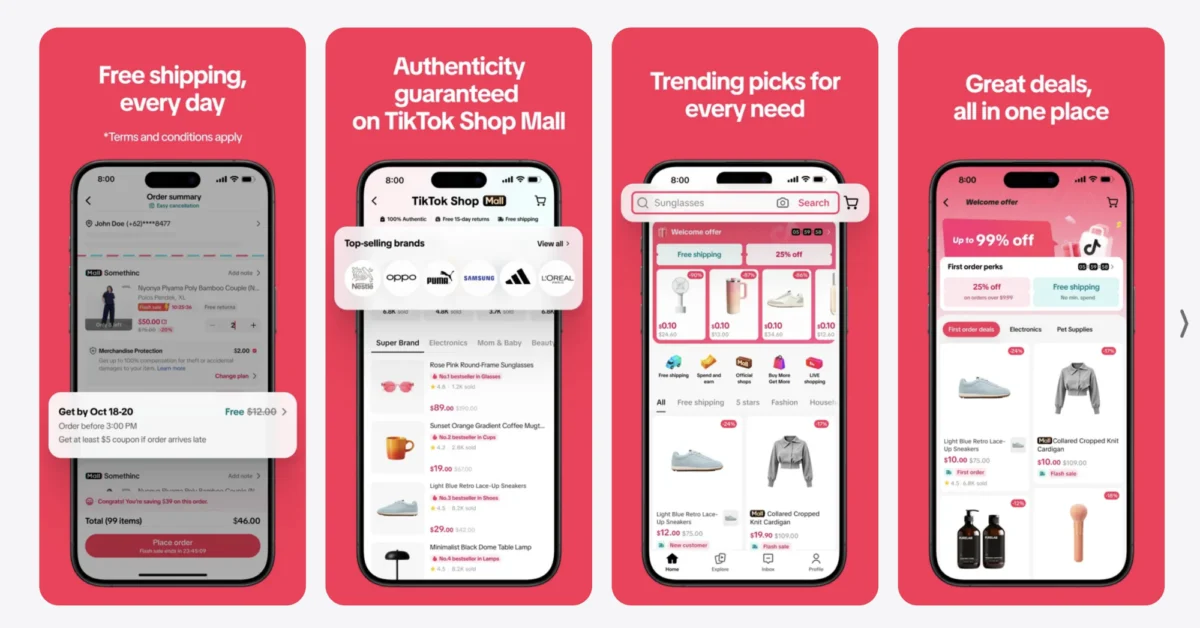
Initial app store listings and promotional materials indicate that the standalone TikTok Shop application replicates and optimizes the commerce features users have grown accustomed to within the primary social media app. According to the Apple App Store and Google Play listings, the dedicated platform offers personalized product recommendations, integrated livestream shopping, short video showcases demonstrating items in action, streamlined checkout processes, real-time order tracking, and 24/7 customer support.
To incentivize early adoption and drive downloads, the platform has rolled out aggressive introductory perks. Shoppers across the four launch markets are being greeted with app-exclusive deals, recurring free shipping promotions, and substantial first-order discounts. Screenshots from the app store showcase a broad inventory ranging from fast-fashion apparel and cosmetics to household goods, all backed by brand authenticity guarantees.

Market tracking metrics underscore an immediate, albeit quiet, entry into the regional app ecosystems. The Google Play Store listing already reflects more than 50,000 downloads, while the Singapore Apple App Store places the application at No. 71 within the competitive shopping category, backed by early five-star user feedback. The swift deployment of updates—such as iOS version 45.5.5 released recently—highlights TikTok’s commitment to maintaining a robust and stable infrastructure for its burgeoning retail arm.
Corporate Structure and Jurisdictional Distinctions
A notable element of this international rollout is its corporate governance. The application’s Singapore App Store listing explicitly designates TikTok Pte. Ltd. as the service provider. This corporate entity is separate and distinct from the TikTok USDS Joint Venture, which manages operations, data security, algorithms, and content moderation for the application within the United States.
While the U.S. joint venture is structured to address complex regulatory and national security oversight requirements domestically, TikTok’s global commercial operations continue to spearhead worldwide e-commerce expansions. Because of these distinct operational boundaries, questions remain regarding whether the standalone shopping app will eventually make its way to Western markets like the United States. As of publication, TikTok representatives have declined to issue formal comments regarding a broader global rollout timeline.
Strategic Context: From Content Discovery to Intentional Shopping
The introduction of a dedicated shopping app is not an isolated experiment; rather, it is the latest iteration of a systematic strategy designed to capture consumer intent across multiple verticals. Over the past several years, TikTok has systematically transformed itself from a platform of passive video consumption into a comprehensive transactional hub.
The journey began with basic shoppable links embedded within creator videos, eventually blossoming into TikTok Shop, which reportedly generated tens of billions of dollars in Gross Merchandise Value (GMV) within remarkably short timeframes globally. By streamlining the path from discovery to purchase, TikTok capitalized on the psychological impulse of "social commerce"—where seeing an influencer use a product instantly triggers the desire to buy it.

However, relying entirely on the main social feed for commerce presents certain limitations. When users open Amazon or Temu, they do so with a clear transactional intent: they want to browse, compare, and buy. Conversely, users open the primary TikTok application primarily for entertainment, socialization, and algorithmic discovery. By launching a standalone app, TikTok is attempting to capture those specific moments when a consumer’s primary mindset is retail therapy rather than content consumption.
Broader Ecosystem Expansion: Travel, Dining, and Entertainment
This strategic unbundling of features mirrors several other major product rollouts deployed by TikTok over the last year. The company has increasingly looked for ways to build entire standalone services around habits that originate organically within its viral video feed.
In May, the company introduced TikTok GO, a dedicated initiative featuring robust hotel-booking capabilities for adult users in the United States. Partnering with industry giants such as Booking.com, Expedia, and Viator, TikTok GO allows users to transition seamlessly from watching a travel vlogger’s recommendation of a resort to checking live availability and booking accommodations directly through the platform. Creators embedded within this ecosystem are eligible to earn commissions, thereby tying content creation directly to high-ticket reservations.
Following the travel sector, TikTok expanded into local hospitality with the launch of "Must Eat," a curated restaurant guide designed for major metropolitan areas including New York City, Los Angeles, and the San Francisco Bay Area. Synthesizing data from more than 40 million user posts, reviews, and comments, Must
Eat organizes dining recommendations into searchable lists with integrated OpenTable reservations. The underlying philosophy remains consistent: turn viral food reviews into immediate, actionable consumer behavior.

In the realm of entertainment, the company has similarly experimented with vertical-specific applications. Earlier this year, TikTok rolled out PineDrama, a dedicated service housing short-form dramatic series within a standalone app environment equipped with personalized recommendation engines and episode-browsing tools.
Market Implications and Future Outlook
The launch of the standalone TikTok Shop app in Singapore, Malaysia, Thailand, and Southeast Asian markets serves as a high-stakes litmus test. Southeast Asia has long served as a primary proving ground for social commerce innovations due to its high mobile penetration rates and digitally native consumer base.
If the standalone app successfully captures market share from traditional e-commerce giants and localized competitors in these initial regions, it could provide a blueprint for a wider global rollout, potentially bringing the dedicated shopping interface to North America and Europe. However, the platform will face formidable hurdles, including navigating complex international supply chains, handling localized consumer protection regulations, and convincing skeptical consumers to download yet another single-purpose shopping application.
Ultimately, the standalone TikTok Shop app represents the next logical step in the platform’s maturation. By testing whether users who discover products inside a social video feed are equally willing to open a dedicated marketplace app when they are ready to spend, TikTok is actively redefining the boundaries between social media, entertainment, and global retail.

