
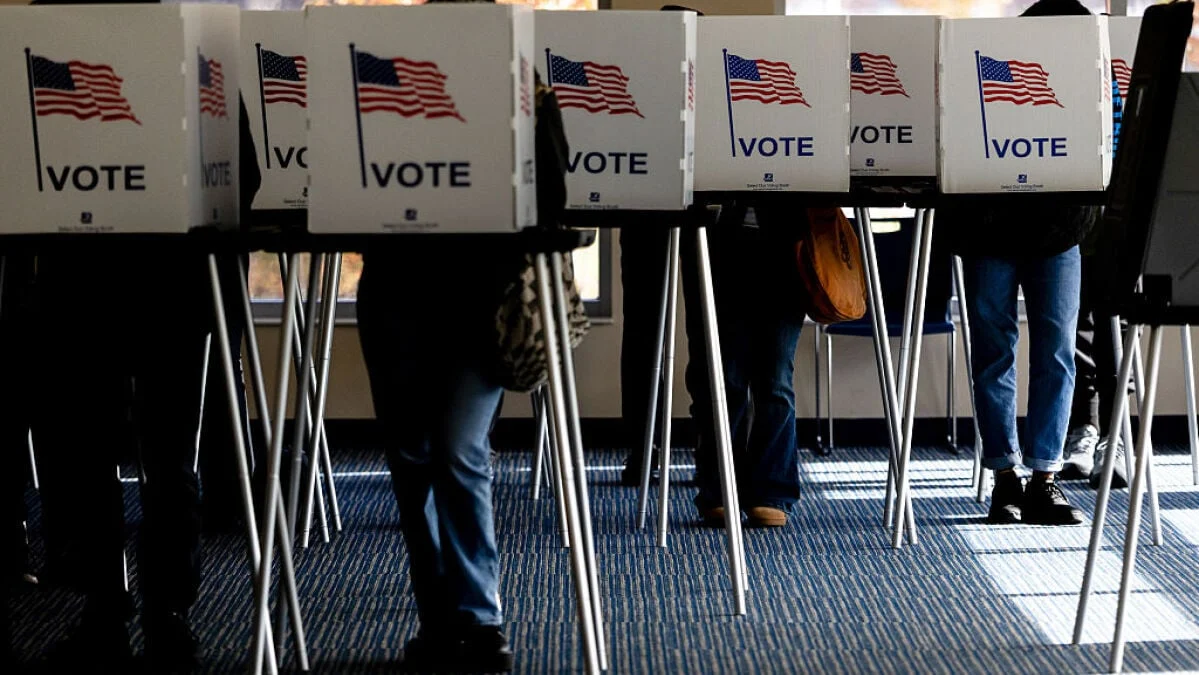
As the United States approaches the pivotal November 3 midterm elections, the political landscape stands at a critical juncture. With control of both chambers of Congress hanging in the balance, the outcome of these races will directly shape the legislative trajectory and executive oversight of President Donald Trump’s remaining years in office. Millions of Americans have already participated through early voting mechanisms, yet a significant portion of the electorate remains poised to cast their ballots on or before Election Day. Ensuring that every eligible citizen can successfully navigate the complexities of voting—whether by mail, at a secure drop box, or in person—requires a clear understanding of state-specific deadlines, identification requirements, and constitutional safeguards.
The Stakes and the Electorate: Background Context of the 2026 Midterms
Midterm elections historically serve as a referendum on the sitting administration, and the 2026 cycle is no exception. Voters across all 50 states are casting ballots to determine the composition of the 120th United States Congress, deciding all 435 seats in the House of Representatives and roughly one-third of the seats in the United States Senate. Beyond congressional power, numerous gubernatorial races, state legislative positions, and local ballot initiatives will shape policy on issues ranging from economic development to civil rights and environmental regulation.
In the lead-up to November 3, voter enthusiasm and mobilization efforts have driven turnout to notable levels. According to recent data compiled by election tracking organizations, more than 51 million Americans have already cast their ballots through early in-person voting or mail-in absentee ballots. This high early-vote volume continues a decade-long national trend toward expanded voting flexibility, a shift that accelerated dramatically during the 2020 election cycle and has since been permanently integrated into the electoral frameworks of numerous states.
Chronology of the Electoral Process and Key Deadlines
Understanding the timeline of an election is critical for every participant. The electoral cycle operates on a carefully orchestrated schedule governed by federal guidelines and state-administered laws:
- 30 to 45 Days Prior to Election Day: Most states close standard voter registration rolls, though several jurisdictions offer same-day voter registration during early voting periods and on Election Day itself.
- 30 to 7 Days Prior to Election Day: States begin dispatching mail-in and absentee ballots to verified applicants. Early in-person voting windows open, with timelines varying significantly by state—some jurisdictions commence early voting a full month before the official election date.
- The Final Week Before November 3: Election officials strongly advise voters utilizing mail-in ballots to hand-deliver them to designated secure drop boxes rather than relying on standard postal delivery, mitigating the risk of postal delays.
- November 3 (Election Day): In-person polling places open nationwide, typically operating from early morning until 7:00 PM or 8:00 PM local time. All mail-in ballots must be postmarked by this date or deposited into an official drop box by the close of polls to ensure legal validity.
Comprehensive Guide to Voting Methods
Voters across the United States utilize three primary avenues to make their voices heard: voting by mail, utilizing secure drop boxes, and casting ballots in person. Each method is governed by distinct regulatory frameworks that vary by jurisdiction.
Voting by Mail and Absentee Ballots
The utilization of mail-in ballots has expanded substantially over the past decade. Eight states now conduct all-mail elections or offer universal mail-in voting, automatically sending a ballot to every registered voter. In other states, voters must request an absentee ballot.
For those utilizing the postal service, election officials emphasize a strict adherence to postmark deadlines. In the vast majority of states, a ballot must be postmarked on or before Election Day to be counted; late postmarks can legally void the ballot. Voters who encounter delays or never receive their requested ballots are urged to contact their local county election office immediately to explore emergency voting options, such as casting a provisional ballot.
Secure Drop Boxes
To bypass potential postal delays, approximately 15 states mandate the availability of secure drop boxes. These receptacles, frequently located at municipal buildings, public libraries, and parks, offer a direct, tamper-evident method for returning mail-in ballots. Conversely, roughly 11 states explicitly prohibit the use of drop boxes, requiring voters in those jurisdictions to rely strictly on the postal service or in-person delivery methods. Voters can verify the legality and location of drop boxes through official state election websites or via comprehensive databases provided by nonpartisan organizations such as Vote.org and USA.gov.
In-Person Voting
Despite the convenience of mail-in options, tens of millions of voters continue to cast their ballots in person. Voters are assigned to specific polling places determined by their residential registration address. While polling times vary, many states provide early in-person voting opportunities, allowing citizens to bypass long queues on Election Day.
Voters casting ballots in person are permitted to bring personal notes, sample ballots, and voter guides into the voting booth to assist them in navigating complex multi-issue ballots. Furthermore, polling places are legally required to provide accessible equipment and accommodations for voters with disabilities, occasionally utilizing specialized polling locations to ensure compliance with the Americans with Disabilities Act (ADA).
Identification Requirements and Polling Place Protocols
Voter identification laws remain one of the most variable aspects of the American electoral system. Requirements differ drastically from state to state:
- Strict Photo ID States: Require a government-issued photo identification (such as a driver’s license, passport, or state ID) for a ballot to be cast without conditions.
- Non-Strict ID States: Accept alternative forms of verification, such as utility bills, bank statements, or paycheck stubs, or permit voters to sign an identity affidavit if they lack standard identification.
- Non-ID States: Rely on signature verification against voter registration rolls rather than presenting physical documentation at the polling place.
Voters are encouraged to consult their state election office or utilize online verification tools well in advance of November 3 to confirm their specific local requirements.
Frequently Asked Questions and Election Security Analysis
As the midterm elections unfold, voters frequently encounter questions regarding ballot tracking, legal challenges, electronic machine security, and federal oversight.
Can I track my ballot if I voted by mail?
Yes. Nearly all states provide online ballot-tracking tools through the secretary of state or county registrar website. These portals allow voters to monitor the status of their ballot in real time—from the moment it is mailed or dropped off, to when it is received, verified, and ultimately counted. Voters can also access assistance by calling the nonpartisan Election Protection hotline at 866-OUR-VOTE.
Are challenges to voter registrations and ballots legally permitted?
Under the National Voter Registration Act, mass or arbitrary ballot challenges without a legitimate legal basis are prohibited. Furthermore, federal law explicitly bans voter purges—the systematic removal of names from voter registration rolls—within 90 days of a federal election. Registered voters who filled out their ballots correctly and submitted them on time are legally protected.
If a voter’s registration is challenged at a polling place, federal and state laws guarantee their right to cast a provisional ballot, which is later investigated and counted once the voter’s eligibility is verified. Additionally, federal agents and law enforcement agencies have no legal authority to seize voting machines, nullify ballots, or halt the lawful tabulation of votes.
How secure are electronic voting machines?
Electronic voting systems are subjected to rigorous testing and certification processes overseen by the U.S. Election Assistance Commission (EAC) alongside thousands of bipartisan local election officials. While cybersecurity researchers occasionally identify theoretical vulnerabilities in specific hardware or software models, independent election security experts confirm there is no evidence that these flaws have ever been exploited to alter election outcomes.
Instead of technical machine interference, election security experts emphasize that the most pervasive threat to the integrity of the electoral process is the rapid spread of misinformation, increasingly amplified by artificial intelligence and coordinated online campaigns designed to sow public distrust.
Can the federal executive branch intervene in the administration of elections?
In recent weeks, the Trump administration has repeatedly cast doubt on the legitimacy of the midterm results, amplifying unverified claims regarding noncitizen voting. Comprehensive studies and Department of Justice data indicate that instances of noncitizen voting are exceedingly rare, and the vast majority of individuals charged with voting violations are legal U.S. residents who misunderstood complex registration criteria.
Despite repeated political rhetoric and threats of executive action, legal scholars and constitutional experts emphasize that the president does not possess the constitutional authority to issue executive orders or invoke emergency powers to nationalize, take over, or fundamentally alter state-administered election processes. Federal courts have consistently struck down past executive attempts to unilaterally modify electoral procedures, and established constitutional safeguards prevent Congress from refusing to seat duly elected members based on unsubstantiated allegations.
Broader Impact and Implications for the Future
The 2026 midterm elections represent a critical stress test for American democratic institutions. The resilience of local election administration, the security of technological infrastructure, and the commitment of voters to participate will dictate the immediate political climate. As the final hours before November 3 tick away, election officials urge all eligible citizens to utilize official resources—such as Vote.org, USA.gov, and state-specific election portals—to confirm their polling locations, verify registration status, and ensure their votes are cast and counted.

