
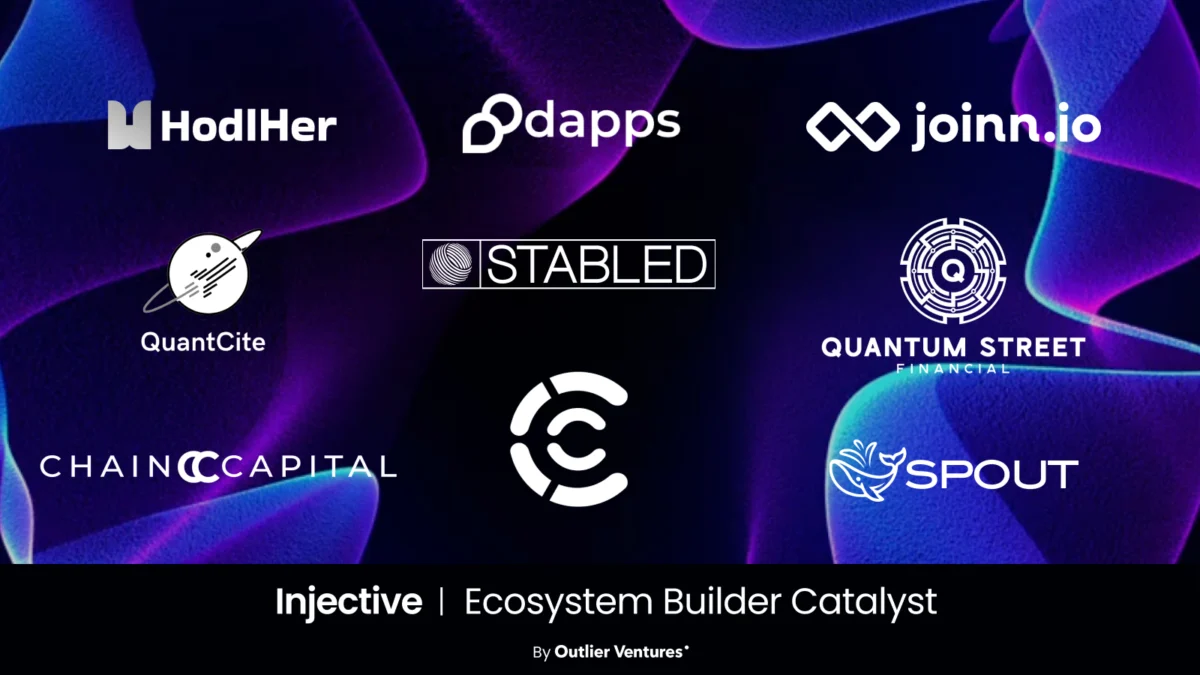
Outlier Ventures and Injective have officially announced the launch of their collaborative 9-week virtual accelerator program, the Injective Ecosystem Builder Catalyst. This strategic initiative is designed to support, mentor, and scale the next generation of high-growth decentralized finance (DeFi) and infrastructure projects operating natively within the Injective ecosystem. As the financial technology sector moves past basic token swapping and primitive decentralized applications, this accelerator focuses on building institutional-grade, high-performance architecture capable of competing directly with traditional financial systems.
The launch arrives at a critical juncture for the broader blockchain industry. Decentralized finance total value locked (TVL) has steadily climbed toward the $140 billion threshold, while Real-World Asset (RWA) tokenization has scaled by over 380% since 2022. By leveraging Injective’s specialized infrastructure—which features sub-second transaction finality, gasless user experiences, and MultiVM interoperability—the newly selected cohort aims to bridge the gap between traditional finance (TradFi) and decentralized rails. The nine-week intensive curriculum provides these startups with targeted mentorship, technical guidance, legal structuring advice, and direct access to ecosystem liquidity incentives.
A Paradigm Shift Toward Institutional-Grade Financial Infrastructure
The evolution of decentralized finance is currently undergoing a structural transformation. For years, the sector relied heavily on replicated primitives, simple automated market makers (AMMs), and fragmented liquidity pools that hindered widespread institutional adoption. However, the maturation of high-throughput layer-1 blockchains has paved the way for institutional-grade products that match the performance of legacy financial networks while retaining the composability and transparency of distributed ledgers.
The Injective Ecosystem Builder Catalyst cohort is built around this thesis. Rather than porting outdated legacy applications to a new chain, the participating founders are engineering entirely new financial primitives. These include agentic trading systems, advanced cross-chain liquidity routers, and tokenized private debt markets that derive their efficiency from Injective’s native financial modules. The architecture of Injective allows these projects to access shared liquidity pools natively, mitigating the fragmentation issues that have historically plagued multi-chain ecosystems.
Industry observers note that the convergence of institutional capital, regulatory clarity in key jurisdictions, and high-performance network architecture is creating a fertile ground for enterprise-grade blockchain applications. Outlier Ventures, a prominent Web3 accelerator and venture capital firm, partnered with Injective precisely to capture this wave of innovation, ensuring that early-stage founders receive the institutional backing required to scale in a competitive global market.
Detailed Profile of the Selected Cohort Startups
The inaugural cohort features a diverse group of nine startups addressing various verticals within fintech, institutional trading, real-world asset tokenization, and decentralized infrastructure. Each project utilizes Injective’s underlying technology to solve distinct inefficiencies in current global financial markets.

QuantCite operates as an institutional-grade Order and Execution Management System (OEMS) integrated with advanced smart-routing technology. Designed specifically for quantitative trading funds and professional market participants, QuantCite unifies execution venues across both centralized exchanges and decentralized liquidity pools, delivering the sub-second execution speeds and depth required for high-frequency trading strategies.
Joinn addresses the financial inclusion gap in emerging markets by offering a fintech application that enables everyday users to access yield-generating, tokenized financial assets. Functioning through a Web2-like user interface backed by secure blockchain infrastructure, Joinn features gasless and signless cross-chain transactions, 24/7 account access, a companion Visa card experience, and an integrated artificial intelligence agent designed to automate portfolio compounding.
Choice functions as a decentralized exchange and aggregation layer optimized explicitly for the Injective network. By deploying a proprietary routing algorithm that indexes liquidity across multiple internal and external venues, Choice ensures optimal swap execution while minimizing price slippage for traders navigating complex asset pairs.
Stabled serves as an international B2B payments platform designed to bypass legacy correspondent banking networks. By utilizing stablecoin rails for compliant cross-border settlements, Stabled enables enterprises to execute instantaneous transfers, thereby drastically reducing foreign exchange (FX) losses and settlement delays.
Quantum Street bridges traditional capital markets and blockchain infrastructure by focusing on the tokenization of off-chain assets. Comprising financial engineering specialists, the firm structures transactions around cash-flowing business operations, creating authentic economic utility for stablecoins and contributing directly to the expansion of on-chain Total Value Locked (TVL).
Spout targets the multi-trillion-dollar global equities market by facilitating the borrowing and lending of U.S. public equities on-chain. Utilizing a Collateralized Debt Position (CDP) economic model, Spout allows users to access 0% APR margin loans while simultaneously providing lenders with competitive annual percentage yields hovering around 10%.
Dapps.co introduces a Web3-native social networking environment aimed at restoring economic agency to digital creators. Incorporating tokenized communities, decentralized economies, direct tipping mechanisms, and paid direct messaging, the platform also integrates an AI-driven provenance layer designed to combat low-quality synthetic content.
Chain Capital transforms illiquid private debt into compliant, tradable securities. By tokenizing corporate invoices and receivables, the platform automates the securitization workflow, reducing middle-office operational costs by up to 75% and offering institutional investors secure access to high-yield fixed-income exposures.
HodlHer positions itself as an artificial intelligence-driven operating system built natively on Injective. Through intelligent autonomous personas, the platform assists users, creators, and decentralized autonomous organizations (DAOs) in managing the full operational loop, spanning market perception, strategic reasoning, and on-chain execution.

Chronology of the Accelerator and Forthcoming Milestones
The inception of the Injective Ecosystem Builder Catalyst cohort began with an extensive global scouting phase led by Outlier Ventures and Injective core contributors. Hundreds of early-stage applicants underwent rigorous technical evaluations, economic model audits, and founder interviews before the final nine companies were selected.
The virtual accelerator program officially commenced in early 2026, kicking off a structured nine-week curriculum focused on product-market fit, tokenomics design, regulatory compliance, and go-to-market strategies. Throughout the program, founders participate in weekly masterclasses, one-on-one mentorship sessions with industry leaders, and technical workshops led by core Injective engineers.
The culmination of this 9-week intensive process will be the Injective Ecosystem Builder Catalyst Demo Day, scheduled for February 25, 2026. This virtual showcase will provide the cohort companies with a direct platform to present their refined products, technological breakthroughs, and growth metrics to a curated audience of leading venture capitalists, angel investors, liquidity providers, and strategic ecosystem partners. Registration for the Demo Day is currently open to the public via digital event platforms such as Luma.
Macroeconomic Implications and the Future of DeFi Composability
The convergence of traditional finance mechanics and decentralized infrastructure signifies a maturation phase for the digital asset industry. Analysts suggest that the next major capital inflow into blockchain networks will not be driven purely by speculative retail participation, but rather by institutional efficiency gains. Financial institutions are increasingly seeking ways to lower clearing times, reduce counterparty risk, and automate complex collateral management workflows.
Injective’s architecture addresses these institutional requirements by providing functional parity with traditional order books while unlocking advanced composability features that are fundamentally impossible within legacy financial silos. For instance, the ability to combine automated market-making strategies with real-world asset yields, cross-chain margin trading, and AI-driven execution agents represents a significant leap forward in capital efficiency.
As the cohort companies prepare for their public unveiling at the upcoming Demo Day, industry stakeholders will be closely monitoring how these novel financial primitives perform in live market environments. The success of these startups could serve as a blueprint for the broader adoption of high-performance layer-1 networks in enterprise finance. Through targeted acceleration programs like the Ecosystem Builder Catalyst, Outlier Ventures and Injective continue to lay the groundwork for a robust, institutional-grade decentralized economy destined to scale well into the next decade.

