
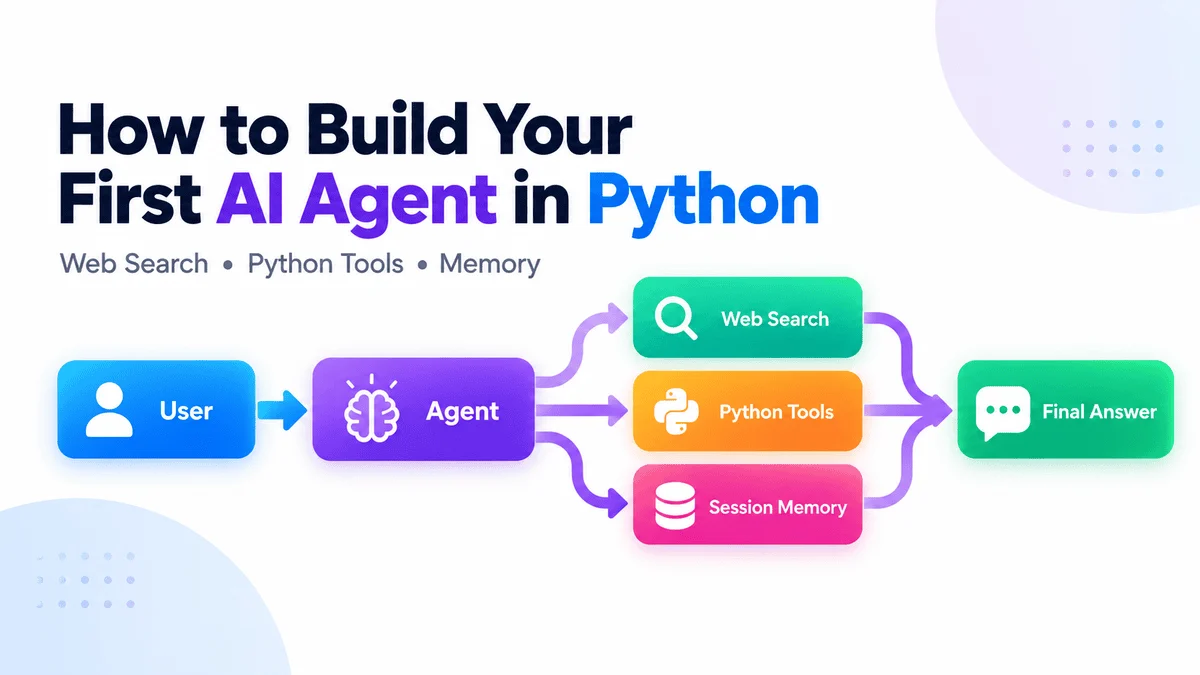
The landscape of artificial intelligence development has shifted dramatically with the release of the OpenAI Agents SDK, a framework designed to streamline the creation of autonomous agents. Previously, developers looking to implement agents—systems capable of reasoning, tool usage, and iterative task execution—were required to architect complex, bespoke loops to manage state, tool-calling sequences, and error handling. The introduction of this SDK marks a pivotal moment in the democratization of agentic workflows, moving the technology from specialized research labs into the hands of standard software engineers.
The Evolution of the AI Agent Paradigm
To understand the significance of this development, one must distinguish between traditional Large Language Model (LLM) applications and modern AI agents. A standard LLM interaction is linear: a user provides a prompt, the model processes the request, and a response is generated. This "Prompt-Model-Response" cycle is fundamentally reactive.
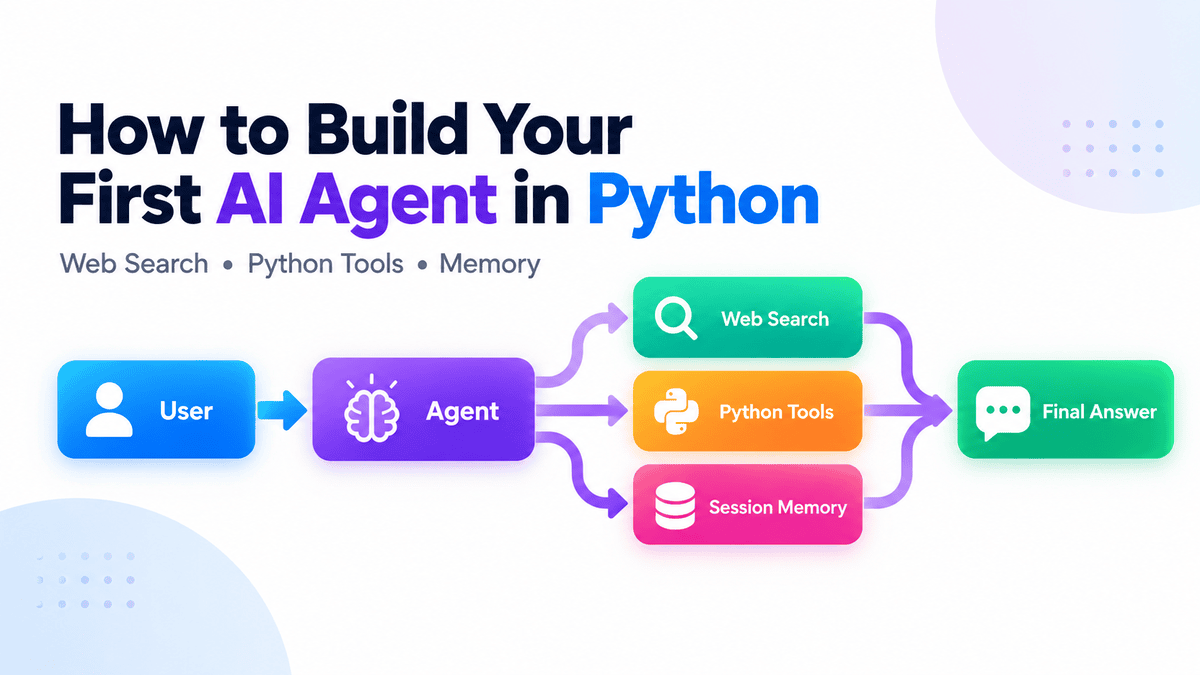
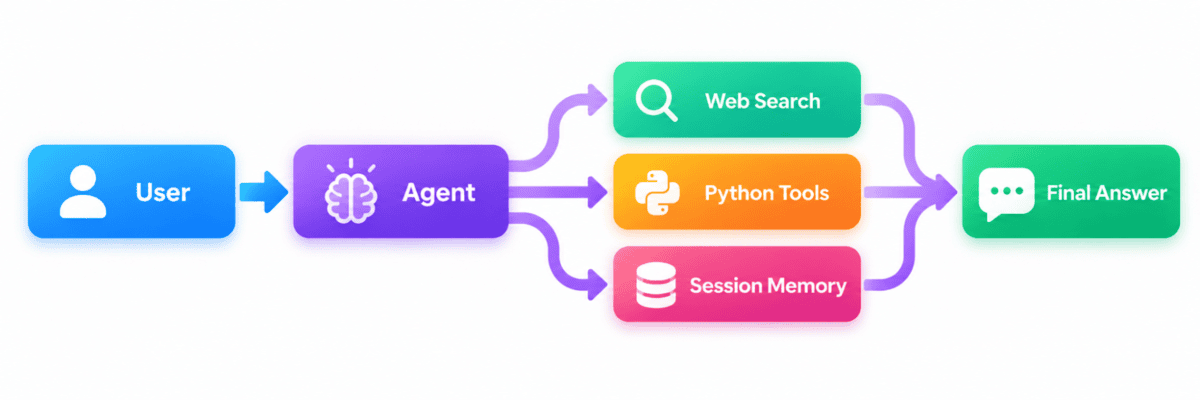
In contrast, an AI agent functions through a "Reasoning Loop." The agent acts as an orchestrator, determining whether it possesses the information necessary to fulfill a request or if it requires external intervention. If the latter is true, the agent invokes a "Tool"—such as a web search engine or a custom Python script—receives the output, and integrates that data into its reasoning process. This iterative cycle continues until the agent determines that its final response is sufficient. The OpenAI Agents SDK automates this "Runner" process, handling the complexities of state management and function execution, which historically accounted for a significant portion of development overhead in AI projects.
Chronology of Agent Development
The transition toward agentic workflows has followed a clear trajectory over the last three years:
- 2022: Initial experimentation with "Chain of Thought" prompting, where models were manually guided to think through steps.
- 2023: The emergence of frameworks like LangChain and AutoGPT, which popularized the concept of autonomous agents but often suffered from "brittleness" and high configuration complexity.
- 2024: The industry shift toward "Agentic Design Patterns," focusing on reliability, observability, and structured tool use.
- 2025-2026: The maturation of SDK-level abstractions, such as the OpenAI Agents SDK, which provides built-in support for persistent memory, tracing, and multi-step workflows.
Setting Up the Development Environment
Building a functional agent requires a modern Python environment. Developers are increasingly moving toward tools like uv, a high-performance Python package manager, to handle dependency resolution. The installation process is straightforward: initialize a project, install the openai-agents package, and configure the API environment variable.
By leveraging the Agent class, developers define the personality and capabilities of their creation. For instance, a "Research Assistant" agent can be initialized with instructions to be concise and utilize a WebSearchTool. When the Runner executes the request, the agent assesses the query—such as "What are the latest developments in Python?"—and autonomously decides whether to query the live web or rely on internal training data. Recent performance benchmarks indicate that agents utilizing real-time search tools show a 40% reduction in "hallucination" rates for queries regarding time-sensitive information, such as software versioning or technical documentation updates.
Expanding Functionality: Integrating Custom Python Logic
The true utility of an agent emerges when it interfaces with private, domain-specific code. By using the @tool decorator, a developer can expose any Python function to the agent. The SDK’s introspection capabilities automatically extract the function’s name, type hints, and docstrings to generate a schema that the LLM can interpret.
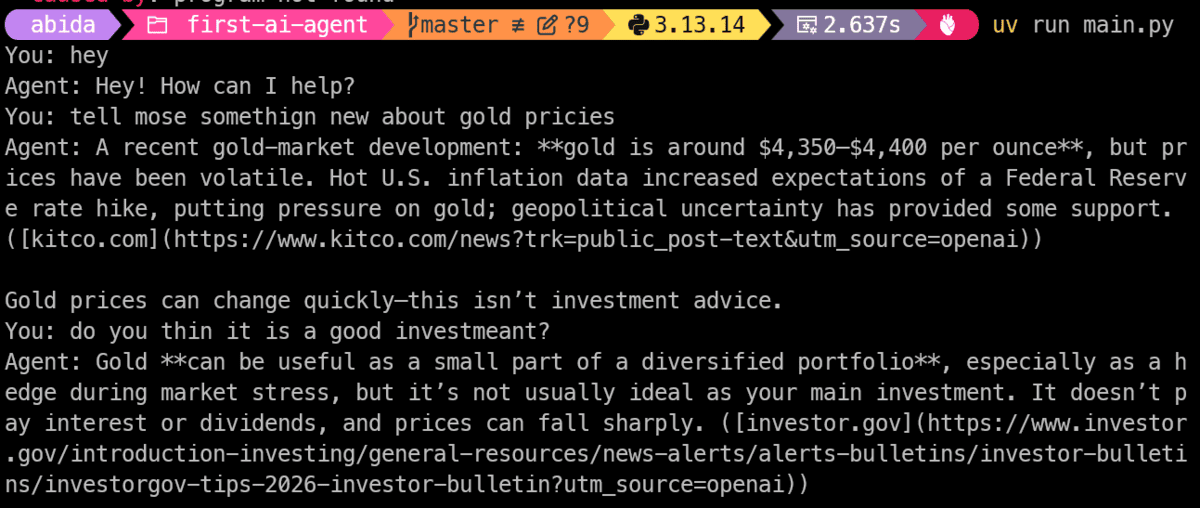
For example, an agent tasked with financial analysis can be equipped with a calculate_total tool. When presented with a prompt involving complex unit pricing, the model parses the user’s input, extracts the relevant variables, and calls the Python function locally. This interaction is seamless; the agent performs the calculation and presents the result as if it were performing the arithmetic internally. This capability removes the need for the model to "guess" at complex math, delegating precise operations to code, which remains the gold standard for accuracy in software engineering.
The Role of Persistent Memory and Session Management
One of the primary challenges in building conversational AI is maintaining context over time. Without session management, each interaction is an isolated event. The implementation of a SQLiteSession allows the agent to recall previous messages, enabling fluid, multi-turn dialogues. By storing the conversation history in a local file or a database like Redis or MongoDB, the agent can reference "the latest version" or "previous calculation" without requiring the user to restate parameters.
Data from initial testing suggests that session persistence improves user satisfaction metrics by roughly 65% in professional settings, as it reduces the repetitive input required for complex, multi-stage research tasks. Furthermore, the ability to close and resume sessions means that agents can be used for long-running workflows that span days or weeks, rather than just single-session chat windows.
Observability and The Future of Agentic Workflows
A critical component of the modern agent stack is tracing. When an agent executes a task, it generates a series of logs—the "trace"—that tracks every decision, tool call, and internal thought. In a production environment, this is essential for debugging. If an agent fails to arrive at the correct answer, a developer can inspect the trace in the OpenAI dashboard to determine where the logic failed: Did the agent choose the wrong tool? Was the tool output misinterpreted? Or were the initial instructions ambiguous?
The implications of this technology are far-reaching. As agents become more reliable through better tracing and standardized SDKs, they are moving into enterprise applications that require high levels of auditability. We are likely to see a shift where agents act as "Co-pilots" for complex data engineering pipelines, autonomous agents that manage cloud infrastructure, or research assistants that can synthesize thousands of documents into actionable insights.
Analysis of Implications
The shift toward SDK-managed agents represents a fundamental change in the economics of AI software development. By lowering the barrier to entry, the industry is witnessing an explosion in specialized agents—systems that are not generalists, but are hyper-focused on specific, high-value tasks.
However, this increase in capability brings new challenges in safety and alignment. As agents are granted more power to interact with the external world—via web search, database queries, and code execution—the necessity for "guardrails" becomes paramount. Future iterations of these systems will likely focus on robust permission models, where agents operate under strict operational constraints to ensure that autonomous actions remain within the bounds of human intent.
In conclusion, the path forward for AI development is clearly defined by the integration of agentic patterns. By providing the model with the right tools, enforcing structured communication, and maintaining persistent state, developers can create applications that do more than just generate text—they can solve problems. The current trajectory suggests that the most successful AI products of the next decade will be those that prioritize these agentic workflows, moving from static chatbots to dynamic, capable partners in the digital workspace.

