
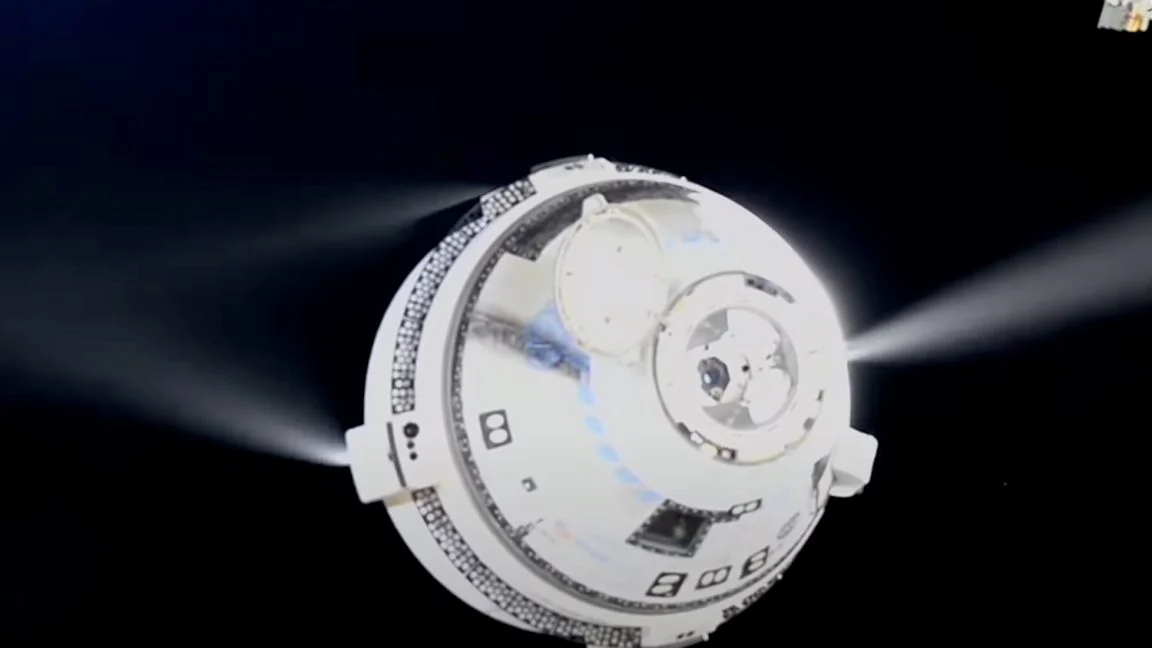
As the International Space Station (ISS) approaches its final operational decade, NASA faces a complex strategic crossroads regarding the future of American human spaceflight. With the SpaceX Dragon spacecraft—the workhorse of the Commercial Crew Program—expected to conclude its service life by or before 2030, the agency is forced to reconcile its long-term logistical requirements with a shifting industrial landscape. The transition, which involves extending the ISS mission through 2032 and facilitating the transition to private commercial low-Earth orbit destinations (CLDs), has placed the spotlight squarely on Boeing’s Starliner program and the broader implications of monopoly versus competition in the orbital transportation sector.
A Chronology of the Commercial Crew Transition
The genesis of the current dilemma lies in the early 2010s, when NASA shifted from the government-operated Space Shuttle era to the Commercial Crew Program (CCP). The goal was to foster a robust private market for orbital transport. SpaceX and Boeing were selected in 2014 to develop systems capable of ferrying astronauts to the ISS.
- 2014: NASA awards multi-billion dollar contracts to Boeing and SpaceX.
- 2020: SpaceX’s Crew Dragon successfully completes the Demo-2 mission, restoring domestic human launch capability to the United States.
- 2022-2024: Starliner encounters a series of technical setbacks, including software anomalies during uncrewed orbital flight tests and hardware issues involving valve seals and parachute systems.
- 2024: NASA confirms the extension of the ISS through 2032, setting the stage for the next generation of private space stations.
- 2025 and beyond: The anticipated retirement of the current generation of Dragon hardware looms, necessitating a successor or a reliable alternative.
The Strategic Value of Starliner
Despite the well-documented technical hurdles and cost overruns associated with the Starliner program, NASA officials maintain that the vehicle remains a vital national asset. In the eyes of the agency, abandoning the project at this late stage would represent a significant loss of taxpayer-funded infrastructure. The rationale is grounded in the necessity of redundancy. Relying on a single provider for access to the ISS or future private stations poses an unacceptable risk to mission continuity.
Jared Isaacman, a prominent figure in the commercial space sector, has been vocal about the practical realities of market demand. During recent briefings, he highlighted that NASA’s projected demand for LEO access is relatively modest, estimated at two seats every six to nine months. This low frequency of flights makes it difficult to justify the massive capital expenditure required to fund a second, entirely new crew transportation competition. While critics have suggested that NASA should open the field to emerging players like Blue Origin or The Exploration Company, the prohibitive costs—likely running into the billions—render such an endeavor fiscally challenging for a space agency already juggling deep-space exploration priorities like the Artemis program.
Economic Realities and the Monopoly Risk
The primary concern among stakeholders and industry analysts is the potential for a temporary monopoly. If Dragon exits the market and Starliner remains the sole certified U.S. vehicle for crew transport, the lack of competitive pressure could lead to inflated costs. Currently, for missions Starliner-2 through Starliner-6, NASA and Boeing have negotiated a price point of approximately $90 million per seat. While this is a fixed figure for near-term missions, the long-term pricing for the 2030s remains opaque.
During a recent industry briefing, John Mulholland, Boeing’s vice president and program manager of Commercial Crew, addressed the ambiguity regarding future pricing. Mulholland noted that Boeing could not provide firm, long-term quotes to prospective CLD operators because the Starliner spacecraft and the Vulcan launch vehicle remain in the final stages of their respective certification processes. "We couldn’t provide detailed pricing to the CLD suppliers as the Vulcan rocket has not been certified, and the spacecraft has not been certified," Mulholland stated. "That will come in the future, and obviously we want to be as competitive as possible."
This lack of transparency has caused unease among the private companies tasked with building the next generation of space stations. Without predictable transportation costs, the business models for these commercial destinations become increasingly volatile, potentially threatening the viability of the post-ISS LEO economy.
Industry Perspectives and Boeing’s Ambition
Boeing views its role not merely as an ISS contractor, but as a future pillar of the LEO economy. The company’s leadership has signaled an intent to leverage its partnership with NASA to secure contracts with private space station providers. The certification of the United Launch Alliance (ULA) Vulcan rocket is a critical component of this strategy, as it provides the necessary launch capability for future Starliner missions beyond the initial six mandated by NASA.
"We’re incredibly excited about the partnership with NASA," Mulholland added. "To continue to fly to the International Space Station, and then obviously, with the Vulcan certification, missions beyond the current six that we have. Certainly, we have talked to all of the CLD providers about becoming their preferred transportation supplier in the future."
This ambition, however, hinges entirely on execution. Boeing has struggled to maintain the cadence and reliability that NASA requires, and the pressure is mounting. The company is effectively competing against the legacy of its own past performance, needing to prove that it can deliver a safe, reliable, and cost-effective service that can justify its seat pricing to both government and commercial clients.
Broader Implications for the New Space Economy
The transition from the ISS to a constellation of private stations represents a fundamental shift in how humanity operates in space. For decades, space stations were strictly the domain of sovereign states. The shift toward a fee-for-service model where private entities own the infrastructure, and companies like Boeing provide the transit, is intended to mirror the commercial aviation industry.
However, the "New Space" economy is still in its infancy. Analysts point out that the current regulatory and economic frameworks are not yet fully optimized for this transition. Key implications include:
- Launch Vehicle Dependence: The integration of Starliner with the Vulcan rocket is a potential point of failure. Any delays in the certification of the launch vehicle will ripple through the entire crew transportation pipeline, affecting both NASA’s ISS objectives and the construction timelines of commercial stations.
- Market Elasticity: If Boeing’s seat prices remain high due to a lack of competition, the "commercial" nature of the LEO destinations may be compromised, as the cost of getting crew and cargo to orbit will constitute the majority of operating expenses for these private stations.
- National Security and Prestige: Maintaining a domestic capability for human spaceflight is viewed as a national security imperative. The U.S. government is unlikely to allow a total reliance on foreign partners, meaning the government will likely continue to subsidize crew transportation in one form or another to ensure a persistent American presence in orbit.
Conclusion
The path forward for NASA and its commercial partners is fraught with technical, financial, and strategic complexities. While the extension of the ISS until 2032 provides a necessary buffer, it also sets a hard deadline for the maturation of the commercial space industry. Boeing finds itself in a precarious position: it is the primary backup to SpaceX, a necessary partner for the ISS, and a hopeful provider for the future LEO economy.
For NASA, the decision to stick with Starliner is a bet on the long-term utility of the hardware already in development. The agency is betting that by investing in the completion of the Starliner system, it can mitigate the risks of a monopoly by fostering a reliable, albeit expensive, transport option that can eventually be scaled. Whether that bet pays off depends on Boeing’s ability to transition from a development-focused program to a consistent, flight-proven service provider. As the decade progresses, the eyes of the aerospace industry will remain fixed on these test flights, the certification process, and the evolving seat prices that will ultimately dictate the accessibility of low-Earth orbit for the next generation of explorers.

