
The rapid maturation of artificial intelligence in software development has introduced a paradoxical dilemma for global cybersecurity: the imminent eradication of software vulnerabilities may soon render digital systems so secure that law enforcement and intelligence agencies lose their primary investigative capabilities. Coming out of the recent Usenix Security conference in Baltimore, cybersecurity researchers and cryptographic experts are increasingly confronting a counterintuitive reality. While automated bug-hunting models developed by firms such as Anthropic, OpenAI, and various international laboratories are successfully purging decades of accumulated software flaws, this unprecedented surge in defense capabilities threatens to abruptly close the window on offensive cyber-surveillance, setting the stage for renewed geopolitical friction over digital backdoors.
The Historical Trajectory of Electronic Surveillance and the Going Dark Debate
To understand the magnitude of the impending shift, it is necessary to examine the evolution of electronic surveillance over the past two decades. In the early 2000s, exemplified culturally by the investigative methods depicted in media such as the television series The Wire, wiretapping relied heavily on analog telephony, payphones, and emerging, non-encrypted cellular devices. From a technological standpoint, the intercept capabilities required by law enforcement in 2002 differed little from those utilized in the late 1980s.
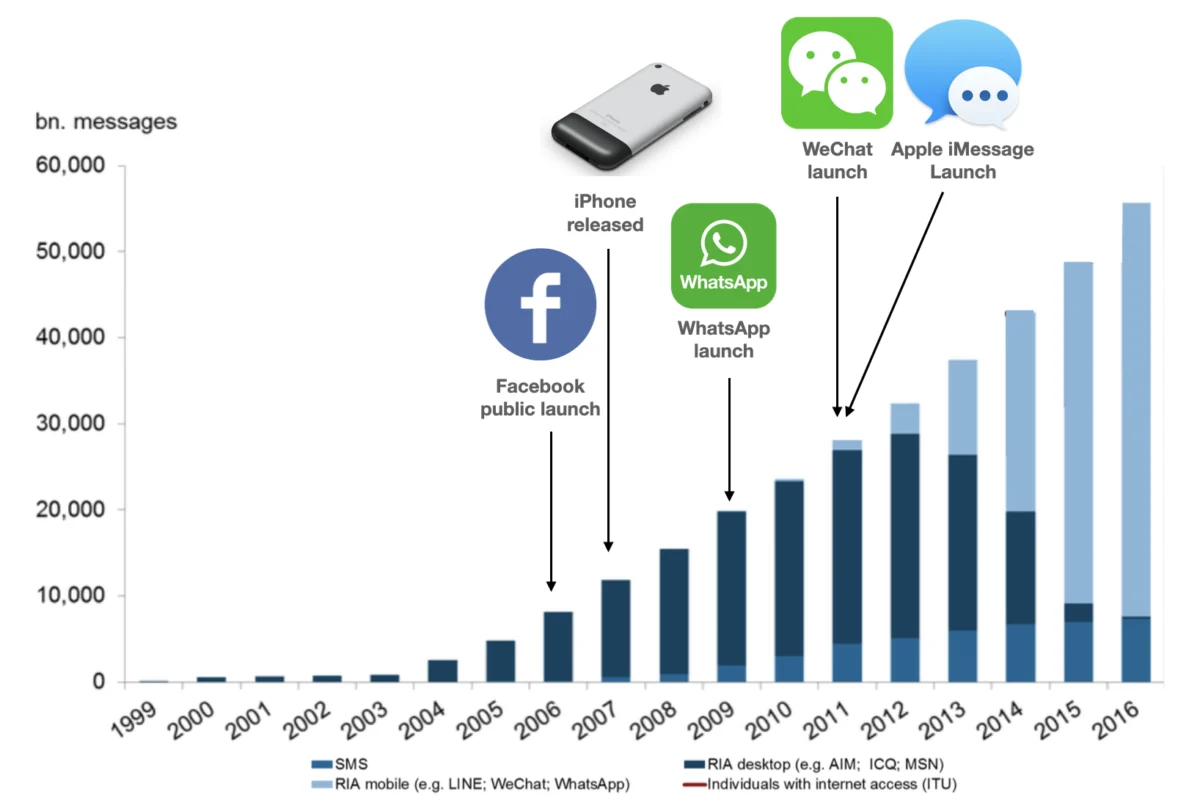
This status quo fractured rapidly in the late 2000s with the widespread adoption of smartphones capable of storing local data. Law enforcement agencies initially capitalized on this localized data until 2010, when Apple introduced passcode-derived encryption for iPhone storage, a standard quickly mirrored by Android developers. The subsequent deployment of end-to-end encryption for text messaging—pioneered by Apple and rapidly scaled by platforms like WhatsApp, which surpassed 600 million users by 2014 and nearly a billion by 2016—fundamentally transformed the communications landscape.
Faced with this transition, federal authorities pushed back aggressively. In 2014, then-FBI Director James Comey launched the Going Dark initiative, initiating a public policy debate regarding the obligations of technology providers to maintain data legibility for public safety. The conflict escalated legally in 2016 during the high-profile Apple v. FBI encryption dispute, wherein the federal government compelled Apple to assist in unlocking a device used in a terrorist attack. Although Apple refused, the legal stalemate was ultimately broken not through a judicial mandate, but through commercial exploit acquisition. An external private entity demonstrated that physical and digital workarounds existed to bypass device encryption without manufacturer assistance.

For the subsequent decade, this dynamic sustained a precarious equilibrium. While intelligence and law enforcement agencies periodically lobbied for legislated exceptional access or backdoors, the urgency of their requests subsided. Agencies increasingly relied on the commercial exploit market, purchasing targeted phone-unlocking tools such as GrayKey and remote exploitation frameworks like NSO Group’s Pegasus. Meanwhile, software vendors continuously patched vulnerabilities, but offensive security researchers consistently maintained an operational edge.
The Rise of AI-Driven Vulnerability Discovery and Automated Defense
That offensive edge is now facing obsolescence due to the rapid deployment of frontier cyber-models capable of automated vulnerability discovery. In April 2026, Anthropic released an advanced model designated Mythos, which demonstrated exceptional proficiency in identifying complex software vulnerabilities. Citing national security risks, the United States government temporarily restricted the export and broad access of the model, limiting its availability to domestic agencies and vetted contractors.
However, regulatory export controls proved largely ineffective at establishing a monopoly on automated security analysis. Competing entities, including OpenAI and international open-weight model laboratories such as China’s Z.ai and Moonshot, quickly demonstrated comparable capabilities in cyber-defense and vulnerability detection. These systems have systematically uncovered critical software flaws at a scale and velocity that outpaces traditional human code review.
Rather than exclusively empowering malicious actors, this wave of artificial intelligence is fundamentally transforming software engineering lifecycles. Major technology enterprises are currently integrating AI-driven vulnerability scanning directly into continuous integration and continuous deployment (CI/CD) toolchains. Consequently, legacy softwarebases containing decades of latent vulnerabilities are being audited and remediated at an unprecedented pace. Industry analysts project that within the next two years, mainstream software platforms will largely exhaust their inventory of remotely exploitable, low-hanging security bugs.
Implications for Law Enforcement and Intelligence Operations
While the eradication of exploitable software bugs represents a monumental victory for global cybersecurity and user privacy, it presents a severe structural crisis for intelligence and law enforcement operations. For the first time since the widespread adoption of modern encryption in 2010, federal agencies face the genuine prospect of going completely dark across advanced, well-maintained software ecosystems.

Without commercially available zero-day exploits or readily discoverable software flaws to facilitate lawful hacking, investigative agencies will likely experience a dramatic reduction in their technical surveillance capabilities. This operational deficit is expected to reignite intense policy debates surrounding exceptional access mechanisms and mandatory encryption backdoors.
Industry stakeholders and academic researchers have long warned that government-mandated backdoors introduce systemic vulnerabilities that can be exploited by foreign adversaries, organized crime syndicates, and hostile nation-states. Despite these warnings, the destruction of organic vulnerability markets will likely generate intense political pressure on technology companies to re-architect their systems for law enforcement access. Such demands risk creating a fragmented global technology market, where foreign governments may altogether abandon reliance on U.S.-developed software to mitigate the risk of domestic surveillance compromises.
Strategic Outlook and Future Policy Challenges
As the software industry approaches a threshold of unprecedented security driven by artificial intelligence, policymakers and cybersecurity professionals face complex decisions regarding the balance between national security and cryptographic integrity. The impending closure of the vulnerability market forces a critical re-evaluation of how intelligence agencies gather digital evidence in an era where software systems are largely impenetrable by conventional hacking methods.
Ultimately, the transition toward hyper-secure software ecosystems highlights a profound systemic shift. As automated defense mechanisms outpace offensive exploitation capabilities, stakeholders across government, industry, and academia must navigate an increasingly complex landscape where absolute digital security carries significant geopolitical and operational consequences.

