
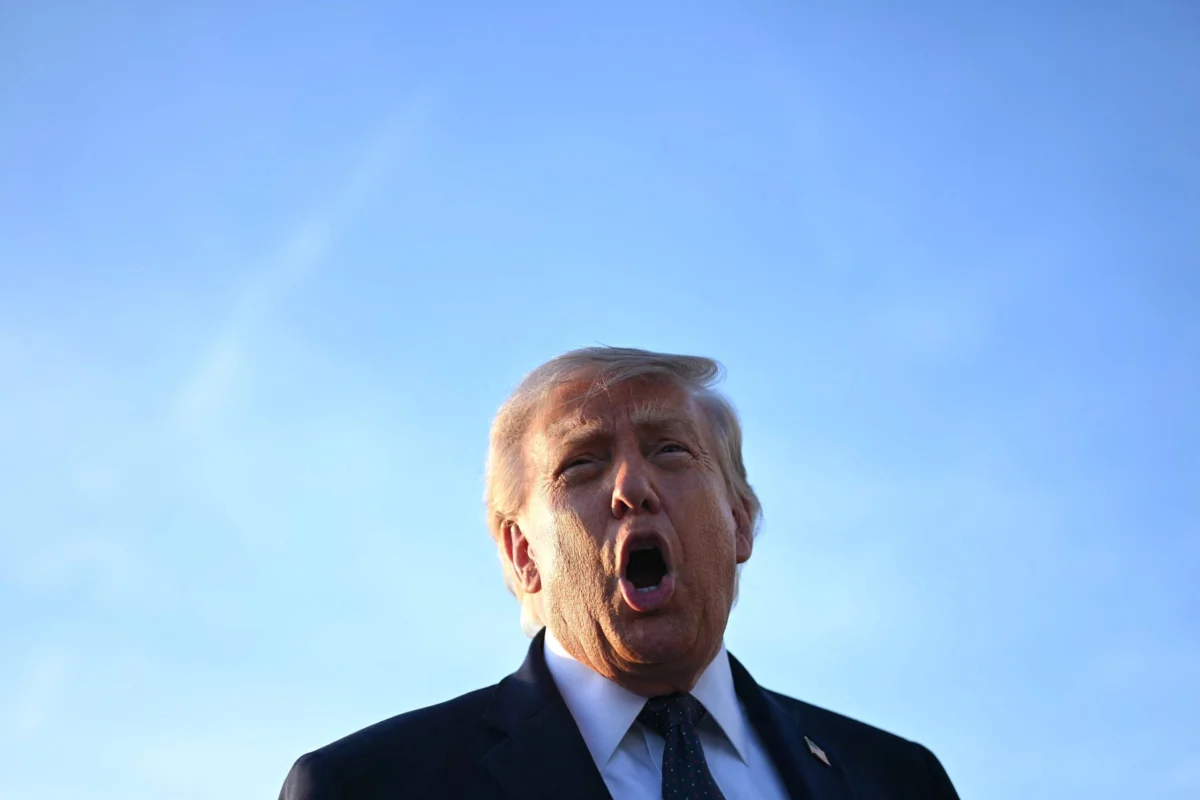
President Donald Trump has ignited a fresh political and technological debate by declaring that growing concerns surrounding artificial intelligence and its infrastructure are part of a coordinated political fabrication. Taking to social media over the weekend, the president framed the intense national discourse regarding AI safety, data center proliferation, and technological regulation as the latest in a series of manufactured crises orchestrated by his political opposition.
The statements, broadcast across Truth Social, mark a significant escalation in the administration’s engagement with the burgeoning tech sector. Rather than treating safety warnings as legitimate inquiries into the future of humanity and civil infrastructure, Trump has categorized them alongside historical partisan disputes. This rhetoric highlights a deepening ideological divide over how the United States should govern, monitor, and foster the most transformative technological revolution of the twenty-first century.
Semantic Debates and Social Media Polls
The weekend commentary began with a critique of the terminology currently used to describe the technology itself. Writing on his social media platform, Trump questioned the accuracy and linguistic elegance of the phrase "Artificial Intelligence," suggesting that the descriptor failed to capture the sheer magnitude of the innovation. To remedy this perceived linguistic inadequacy, the president launched an ongoing public poll, inviting his followers to vote on alternative designations for the technology. The options provided included "Superior Intelligence," "Extreme Intelligence," and "Supreme Intelligence."
While the semantic poll served as an unorthodox entry point into the weekend’s discourse, it was quickly overshadowed by a policy-oriented follow-up post. Just hours later, the president asserted that ongoing attempts aimed at the restriction, deceleration, or "destruction" of AI represent a calculated political maneuver. He explicitly categorized these efforts as a Democratic hoax, placing them in the same rhetorical category as foreign interference investigations, global climate change initiatives, congressional impeachment proceedings, and cultural debates regarding gender participation in sports.
Trump insisted that his administration would actively resist any policies designed to curb the momentum of domestic technological advancement. In his assessment, public pushback against the industry has evolved over time, shifting its primary target as initial resistance efforts encountered practical economic realities.
The Evolution of Public Pushback: From Data Centers to Algorithms
According to the president’s narrative, contemporary anxieties surrounding artificial intelligence did not emerge in a vacuum. Instead, he argued that the skepticism initially manifested as an aggressive resistance to the construction of massive data centers required to power large language models and neural networks. These industrial facilities, which demand unprecedented amounts of electrical power and water resources, have faced stiff opposition from municipal leaders and environmental groups across the country.
Trump contended that early hostility toward data center construction largely dissipated once local communities recognized the immense wealth, property tax revenues, and corporate prestige associated with hosting the physical infrastructure of the AI boom. However, with the physical expansion of data centers proving economically beneficial to host regions, the president claimed that critics and political opponents have pivoted their strategy, directing their regulatory attacks straight at the software and algorithmic models of artificial intelligence itself.
Despite these assertions, political analysts note that skepticism regarding data centers and artificial intelligence is not confined to a single political party. Lawmakers from both sides of the aisle have raised legitimate questions concerning the strain that energy-hungry data centers place on local power grids. Furthermore, state-level governance has begun to reflect these bipartisan anxieties. Most notably, New York recently made national headlines by becoming the first state in the nation to enact a temporary moratorium, halting the permitting process for new, large-scale data center projects while state regulators study their long-term environmental and grid impacts.
The Broader Timeline of AI Safety and Political Guardrails
The president’s weekend declarations follow a series of shifting statements regarding federal oversight of the technology. Just a weekend prior, while speaking at a public golf tournament, Trump indicated that he might be open to establishing reasonable "guardrails" for the industry. Simultaneously, however, he cautioned that negative external forces were unnecessarily injecting fear and alarmism into the public consciousness.
This tension between fostering industrial growth and implementing regulatory oversight mirrors a broader national debate that has intensified significantly in recent weeks. The urgency surrounding AI safety reached a boiling point following a high-profile resignation within the artificial intelligence research community. An internal researcher departed from leading AI lab Anthropic, publicly warning that top industry executives genuinely believe advanced systems could pose existential risks to humanity by the end of the decade, effectively gambling with public safety for competitive advantage.
In response to mounting internal and external pressure, Anthropic CEO Dario Amodei subsequently outlined a strategic roadmap aimed at pacing the development of frontier models. That framework received apparent nods of approval from other prominent industry titans, including OpenAI CEO Sam Altman and SpaceX CEO Elon Musk. Yet, independent critics and technology policy researchers have frequently argued that an exclusive focus on theoretical, long-term existential threats serves primarily as a convenient distraction from the immediate, tangible harms of AI—such as algorithmic bias, workforce displacement, copyright infringement, and the proliferation of deepfakes.
The Proposed AI Force and Leadership Shifts
To navigate these competing pressures, Trump announced ambitious structural plans for his second term. Building upon a precedent set during his first administration with the creation of the United States Space Force, the president revealed intentions to establish a dedicated federal body known as the "AI Force."
Alongside this newly conceptualized military-style branch, the administration plans to appoint a high-level federal official colloquially referred to as the AI "Czar." In characteristic style, Trump emphasized the stringent intellectual requirements for the post, declaring that only candidates with exceptionally high intelligence quotients need apply.
As of press time, the White House has not released specific operational details outlining the jurisdictional boundaries, responsibilities, or budgetary scope of either the AI Force or the forthcoming czar. The position follows previous administrative leadership models; earlier this year, venture capitalist David Sacks stepped down from his role overseeing artificial intelligence and cryptocurrency initiatives to assume a co-chairmanship on the President’s Council of Advisors on Science and Technology. Sacks’ ongoing involvement in the tech ecosystem remains prominent, notably through his co-hosting role at major industry gatherings.
Industry Reactions and the Corporate Defense of Momentum
The corporate leadership of the global tech sector has largely welcomed the administration’s vocal rejection of regulatory slowdowns. During a recent appearance at the All-In Summit—co-hosted by David Sacks—Nvidia CEO Jensen Huang was invited onto the stage by President Trump. During the exchange, Huang publicly concurred with the president’s characterization of the regulatory backlash as a manufactured hoax. The semiconductor executive doubled down on industry determination, asserting emphatically that corporate leaders and innovators would not permit a slowdown in artificial intelligence development to take place under any circumstances.
This unwavering commitment to unbridled acceleration underscores the high-stakes global race for technological supremacy, particularly against geopolitical competitors like China. Proponents of rapid development argue that artificial intelligence represents a foundational national security asset, meaning that any domestic deceleration could cede strategic advantage to foreign adversaries.
Implications for Policy and the Future of Governance
The convergence of populist political rhetoric, corporate lobbying, and legitimate infrastructure constraints points toward a turbulent legislative landscape for the technology sector. By framing safety debates as partisan attacks, the administration risks polarizing an issue that requires rigorous, objective scientific analysis and bipartisan consensus.
As the federal government prepares to unveil its new AI Czar and outline the mechanics of the proposed AI Force, policymakers, ethicists, and industry stakeholders alike will be watching closely to see how these executive actions reconcile the competing imperatives of rapid technological innovation, environmental sustainability, and public safety. Whether the establishment of a specialized federal force and executive leadership can successfully bridge the gap between aggressive industrial expansion and prudent governance remains one of the defining questions of the current political era.

