
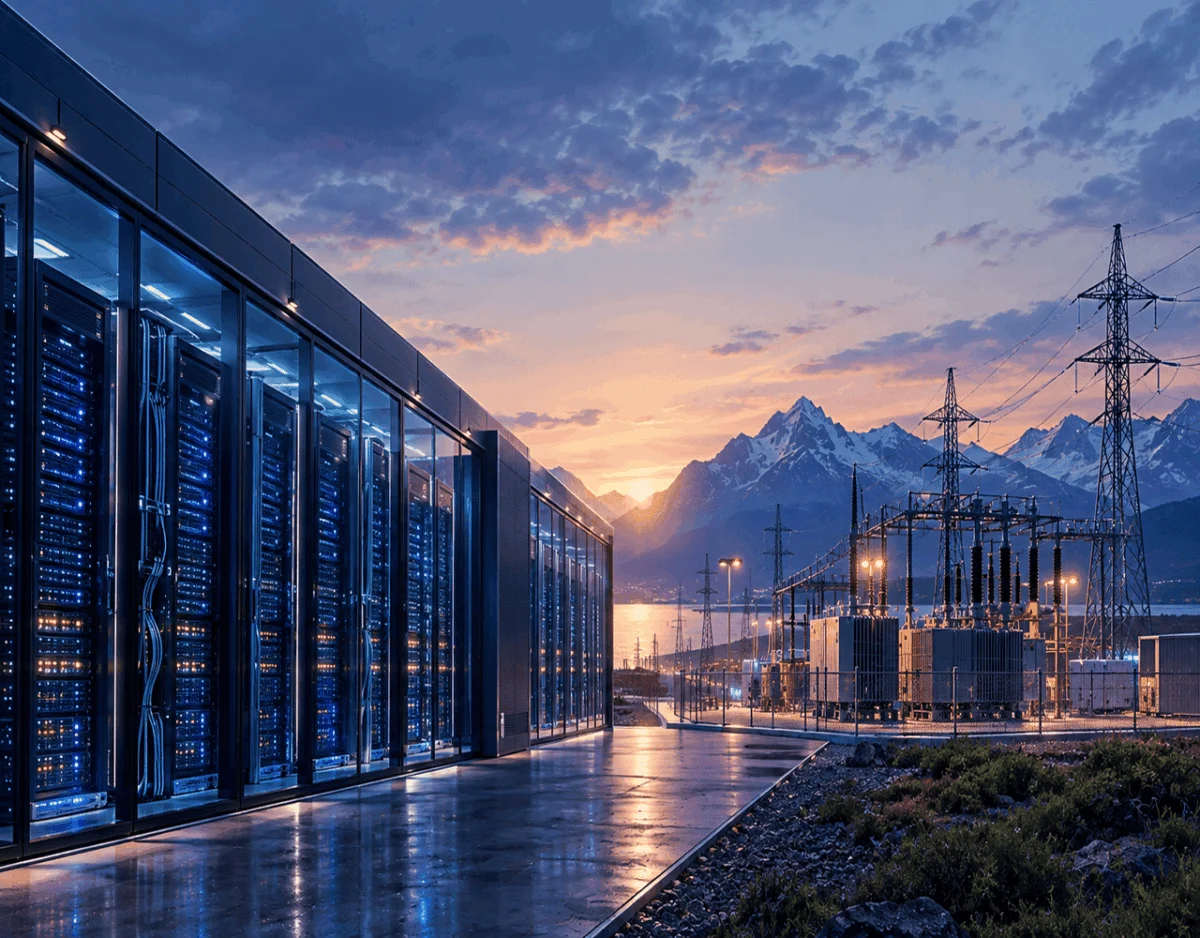
The global artificial intelligence boom has triggered a frantic, multi-billion-dollar race for advanced hardware, with technology giants and specialized cloud providers alike hoarding prized graphic processing units (GPUs). Yet, as data centers strain against local power grids and energy markets face unprecedented volatility, industry executives are realizing that chips alone are no longer the ultimate bottleneck. The true limiting factor of the AI revolution has shifted from the silicon itself to the heavy physical infrastructure required to energize, cool, and connect it.
While market leaders adopt capital-light rental models or rush toward public listings to fund massive GPU fleets, European infrastructure firm Clichmont is executing a radically different playbook. Rather than participating in the hyper-competitive market for rented cloud capacity, the company is prioritizing the ownership of the underlying real estate, power grids, and cooling systems. In an exclusive interview, Clichmont CEO Alexis Cathalifaud breaks down the company’s contrarian strategy, detailing why physical infrastructure ownership reigns supreme, the rigorous calculus behind site selection—spanning from solar-powered facilities in Alicante to heavy-duty builds in Bodø, Norway—and the strategic, long-term utility of the ecosystem’s native digital asset, the $CLAI token.
The Shifting Landscape of AI Compute and the Infrastructure Deficit
To understand Clichmont’s operational philosophy, one must examine the macro-level pressures currently reshaping the data center industry. Over the past three years, generative AI models have expanded exponentially in parameter size and computational requirements. Training and running these massive workloads requires dense clusters of accelerators capable of drawing unprecedented amounts of electricity.
Historically, data centers were engineered for standard cloud computing and web hosting, where power densities rarely exceeded 5 to 10 kilowatts per rack. Modern AI infrastructure, by contrast, frequently demands densities ranging from 40 to over 100 kilowatts per rack, necessitating advanced liquid cooling systems and direct, high-capacity ties to electrical grids. Consequently, a widening gap has emerged between the demand for AI compute and the availability of grid-connected, power-ready land.
Industry analysts estimate that global data center power consumption could double by the end of the decade, placing immense strain on regional utility providers. In major technology hubs across Northern Virginia, Dublin, and Frankfurt, power moratoriums and multi-year waiting lists for electrical substation connections have become commonplace. Against this backdrop, companies that rely entirely on rented GPU capacity find themselves at the mercy of hyperscalers and third-party infrastructure providers, absorbing volatile pricing models, rigid deployment schedules, and external power constraints.
GPU Access vs. Infrastructure Ownership: The Clichmont Thesis
Addressing the core differentiator of his company’s business model, CEO Alexis Cathalifaud argues that the conventional race for GPU access misses a fundamental economic truth.
"Because GPU access gives you compute; infrastructure ownership gives you control over the economics of compute," Cathalifaud states.
When enterprises lease GPU capacity from traditional cloud providers, they inherently inherit those providers’ limitations, including fixed networking architectures and arbitrary pricing structures. More importantly, hardware depreciation cycles move at a staggering pace. A state-of-the-art GPU deployed today may experience significant market depreciation within three to four years as newer, more efficient silicon architectures hit the market.
Conversely, power-ready data center capacity represents a long-lived, highly durable strategic asset. Land acquisitions, grid interconnections, heavy-duty electrical substations, cooling systems, and fiber-optic network pathways retain their value across multiple generations of computing hardware. By focusing on owning the facility rather than just the chips inside it, Clichmont positions itself to continuously upgrade its hardware fleets—swapping older accelerators for newer models—without destabilizing its foundational business model.
"A company can buy chips and still have nowhere suitable to deploy them," Cathalifaud notes. "Securing 10,000 GPUs is one problem; securing the tens of megawatts of reliable electricity, cooling, and network infrastructure required to operate them is another."
Challenging the Status Quo: Navigating a Market of Giants
Clichmont enters a rapidly maturing market populated by well-funded competitors such as CoreWeave, Crusoe, and Lambda, several of which have achieved massive valuations and pursued aggressive public market strategies. Rather than disputing the success or viability of these enterprises, Cathalifaud acknowledges that they have successfully validated the immense global appetite for specialized AI compute.
However, Clichmont’s structural divergence lies in its philosophical definition of scarcity. While competitors have largely focused on accumulating massive fleets of rented or financed GPUs to capture immediate cloud-rental revenues, Clichmont is betting that the ultimate long-term moat will be physical asset ownership. In a market where every enterprise is chasing the latest silicon, Clichmont aims to control the physical environments where that silicon must inevitably reside.
This approach introduces distinct operational challenges, most notably the high capital intensity required to build physical assets from the ground up. While rental models offer corporations a high degree of financial flexibility—allowing them to scale down or shift providers if market conditions sour—data center ownership locks capital into long-duration assets. For Clichmont, mitigating this risk relies entirely on rigorous site selection, disciplined financial sequencing, and deep integration with regional energy markets.
Energy as the Primary Filter: Site Selection in Bodø and Alicante
As energy constraints increasingly dictate the geographical expansion of the tech sector, Clichmont’s site selection criteria reflects a fundamental industry adage: chips can be shipped anywhere in the world, but megawatt capacity cannot.
The company’s diverse portfolio highlights a strategic approach to geography and climate. Clichmont operates a solar-powered facility in Alicante, Spain, while simultaneously developing a new build in Bodø, Norway. According to Cathalifaud, these locations were not chosen based on a single attractive variable, but rather on how completely the local infrastructure equation balances out.
"Power is the first filter: how many megawatts can we secure, at what cost, how reliable is that supply, and—critically—how quickly can it actually be delivered?" Cathalifaud explains.
Once power availability and time-to-market are established, the company evaluates cooling architectures, regional climate conditions, fiber-optic connectivity, regulatory permitting processes, and long-term expansion capabilities. Northern Norway offers an advantageous environment characterized by cold ambient temperatures that naturally facilitate highly efficient air and liquid cooling, alongside a robust, renewable-heavy energy grid. Alicante, meanwhile, provides a distinct energy profile that allows the company to integrate solar power directly into its operational strategy.
This localized adaptability ensures that Clichmont’s facilities are not cookie-cutter designs, but rather custom-engineered infrastructure solutions tailored to the unique resource endowments of their host regions.
The Role of $CLAI Within the Broader Ecosystem
Beyond physical real estate and power engineering, Clichmont’s ecosystem incorporates a digital economic layer via its native token, $CLAI. In an industry where token-based models frequently draw skepticism—often viewed as speculative additions tacked onto traditional businesses—Cathalifaud addresses criticisms head-on.
"The skeptical view is completely fair," he notes. "A token shouldn’t exist just because a company operates in AI. If $CLAI were simply a financing wrapper around our data centers, I wouldn’t consider that a compelling reason to create it."
Instead, Clichmont operates strictly as the foundational infrastructure business, building and operating physical compute capacity. The $CLAI token is designed to function as an adjacent digital economic layer supporting on-chain participation, treasury management, and community governance—functions that conventional corporate equity structures are not inherently optimized to handle.
Cathalifaud emphasizes that the token must continually earn its utility independently of market speculation. The underlying physical infrastructure must remain fully viable on its own merits, while the token must demonstrate transparent, measurable utility that cannot be replicated by a standard corporate database. This dual standard establishes a clear benchmark for accountability as the ecosystem matures.
The Realities of Scaling Physical Infrastructure
For entrepreneurs and executives transitioning from software-based ventures to physical infrastructure development, the learning curve can be punishing. Software systems scale at digital speeds; if user demand doubles overnight, cloud engineers can typically provision additional virtual machines with a few keystrokes.
Physical infrastructure, by contrast, operates on the unforgiving timeline of the physical world. Every additional megawatt of data center capacity is bound to tangible dependencies: electrical grid approvals, heavy-duty transformers, specialized switchgear, advanced cooling loops, municipal permits, and heavy construction timelines.
"You can have the land and not have the power," Cathalifaud points out. "You can have the power allocation and wait months for electrical equipment. You can have the building ready and still be waiting for a grid connection. One missing component can delay an entire deployment."
Furthermore, software errors can be patched overnight via code updates, whereas structural mistakes in a multi-million-dollar electrical system are exceptionally costly and difficult to reverse. Building a 50-megawatt facility requires making capital allocation decisions today based on speculative forecasts of what power densities, cooling mechanisms, and GPU architectures will look like three to five years down the road.
Consequently, the core competency of an infrastructure operator is not merely construction, but precise timing. Building too early leaves expensive capital sitting idle; building too late means missing critical market windows as clients migrate to faster competitors.
Strategic Outlook and Long-Term Positioning
Looking ahead over a three-year horizon, Clichmont does not harbor ambitions to outscale hyperscale behemoths like CoreWeave or Nebius. Instead, the company has carved out a targeted, highly disciplined niche.
The overarching goal is to establish Clichmont as one of the most efficient independent AI infrastructure operators in Europe, distinguished by secure power assets, high-density GPU capacity, and a proven track record of rapidly bringing compute online. By focusing on favorable energy economics, future-proof facility design, and diversified service offerings catering to enterprise AI, high-performance computing (HPC), and private workloads, the company aims to insulate itself from the boom-and-bust cycles of pure GPU rental markets.
As the artificial intelligence sector matures, the ultimate victors may not necessarily be the companies that hold the most fleeting hardware leases, but those that successfully master the complex intersection of power, engineering, and physical asset ownership. Clichmont’s calculated gamble is that long-term control over the foundational mechanics of compute will ultimately outlast any individual silicon cycle.

