
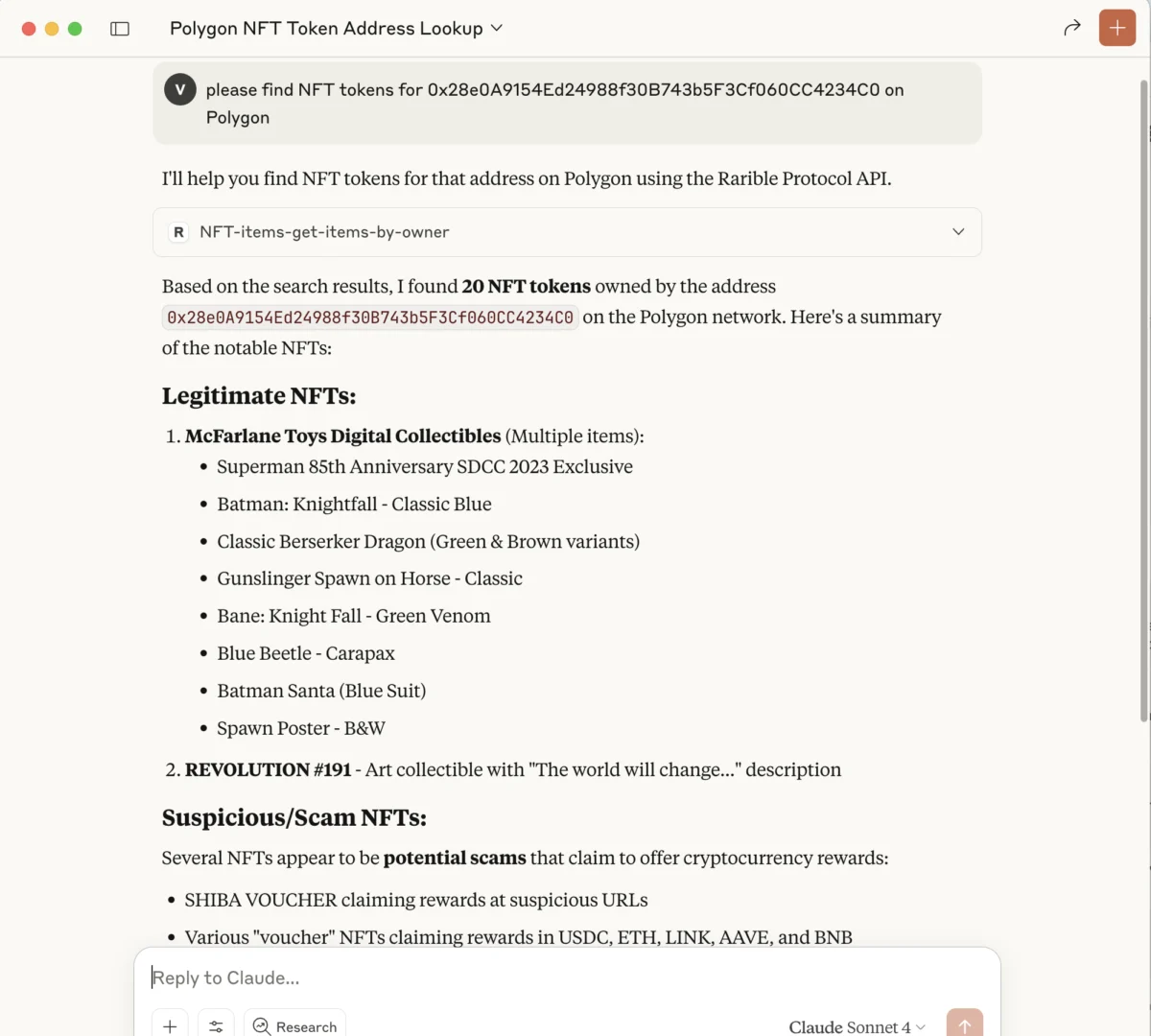
The digital asset landscape has reached a significant milestone in the convergence of blockchain technology and artificial intelligence with the official release of the Rarible Model Context Protocol (MCP) Server. This new development tool is designed to eliminate the historical barriers to accessing Non-Fungible Token (NFT) data by allowing developers and users to query complex blockchain information using natural language. By bridging the gap between Large Language Models (LLMs) and the Rarible Protocol’s extensive data index, the MCP Server facilitates a more intuitive approach to building decentralized applications, market dashboards, and AI-driven trading agents.
Historically, the process of retrieving NFT data—such as floor prices, ownership history, and trending collections—has been characterized by significant technical friction. Developers have traditionally been required to construct elaborate front-end architectures or write multifaceted API queries to extract structured data from various blockchain networks. The Rarible MCP Server addresses this inefficiency by integrating directly with LLMs like Anthropic’s Claude and the AI-powered code editor Cursor. This integration allows the LLM to act as a translator, converting a user’s plain-English questions into precise, structured queries that pull real-time data from the Rarible Protocol.
The Evolution of NFT Data Accessibility
To understand the impact of the Rarible MCP Server, it is necessary to examine the evolution of blockchain data retrieval. In the early stages of the NFT market, data was largely siloed and required direct interaction with smart contracts via remote procedure calls (RPCs). As the ecosystem matured, platforms like Rarible developed robust APIs to index this data, making it easier for developers to build marketplaces. However, as the industry enters the "AI-agent" era, even standard APIs can present a hurdle for rapid prototyping and autonomous systems.
The introduction of the Model Context Protocol represents a shift toward "AI-native" infrastructure. MCP is an open standard that enables developers to provide context to LLMs in a secure and structured manner. By adopting this protocol, Rarible is positioning its protocol not just as a source of data, but as a conversational utility. This move aligns with broader industry trends where the value of data is increasingly tied to its "discoverability" and ease of use by non-human agents, such as autonomous trading bots or automated research assistants.
Technical Specifications and Supported Networks
The Rarible MCP Server is currently in its beta phase, offering a production-grade, type-safe TypeScript SDK. This ensures that developers can integrate the tool into their existing workflows with high reliability and minimal debugging. The SDK is designed to be modular, supporting both browser-based and server-side environments, and is compatible with both CommonJS and ES Modules. This versatility is crucial for developers working with different tech stacks or those who need to maintain tight code bundles for performance optimization.
At launch, the MCP Server provides comprehensive support for a variety of blockchain ecosystems. This includes all major Ethereum Virtual Machine (EVM) chains—such as Ethereum mainnet, Polygon, and Base—as well as specialized networks like Eclipse and Flow. The inclusion of Eclipse is particularly noteworthy, as it represents the first Layer 2 solution that brings the Solana Virtual Machine (SVM) to Ethereum, highlighting Rarible’s commitment to cross-chain interoperability. Flow, known for its high throughput and consumer-centric NFT applications, also benefits from this integration, allowing for easier analysis of its unique ecosystem.
Empowering the Next Generation of Web3 Developers
The primary beneficiaries of the Rarible MCP Server are developers who require rapid access to NFT data without the overhead of building custom backend layers. The SDK is particularly optimized for:

- AI Tool Builders: Developers creating AI assistants that need to provide real-time market advice or portfolio tracking.
- Marketplace Operators: Teams looking to add "search-by-intent" features to their platforms, allowing users to find NFTs using descriptive phrases rather than just filters.
- Data Analysts: Professionals who can now use LLMs to generate complex reports on collection rankings, floor price volatility, and wallet movements through simple prompts.
- Prototypers: Hackathon participants and startup founders who need to validate ideas quickly by connecting their front-end designs to live data in minutes.
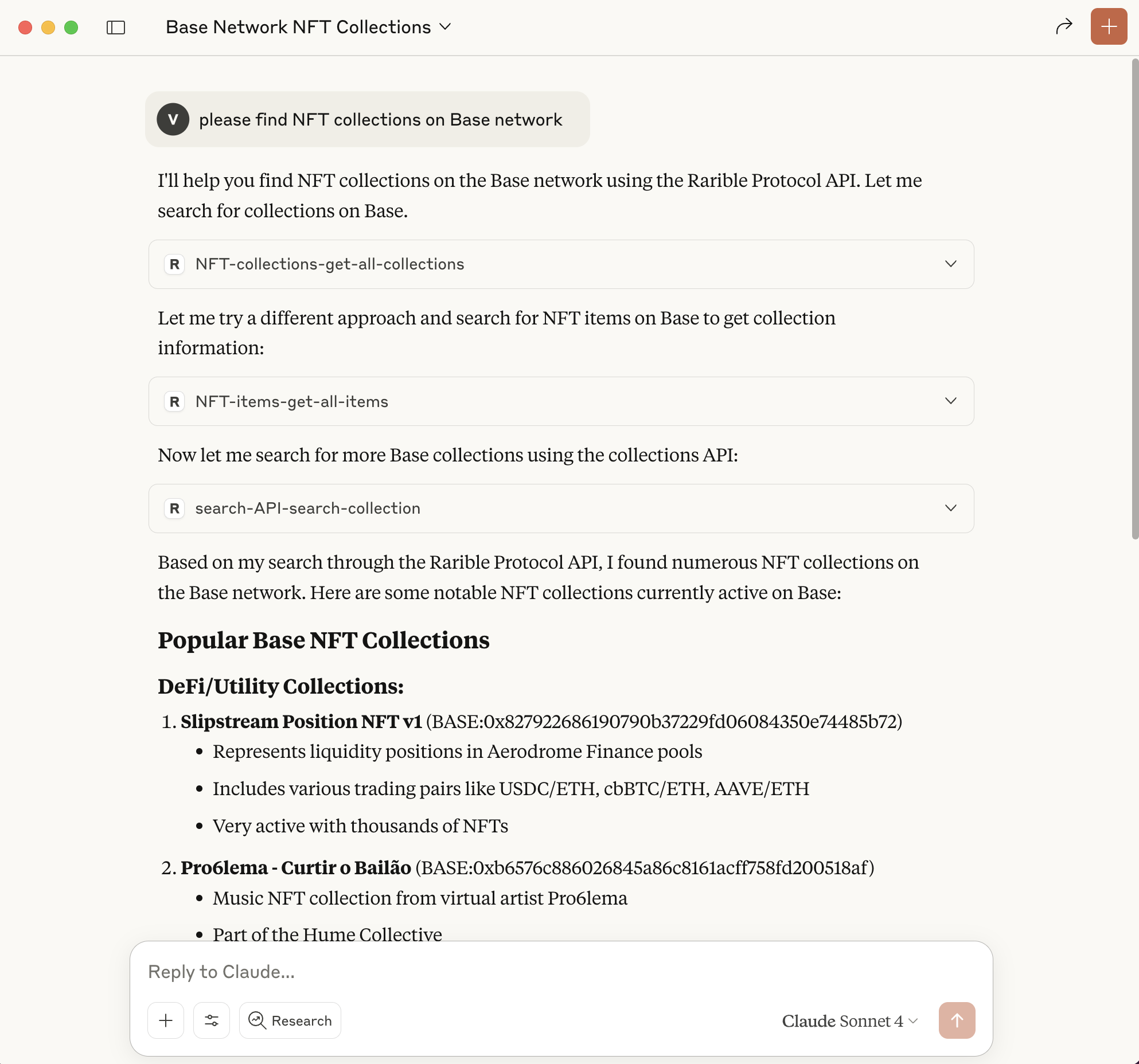
The SDK translates prompts such as "What are the top five collections on Base by volume today?" or "Show me all NFTs owned by this specific wallet on Ethereum" into safe, structured API calls. This reduces the "time-to-market" for new applications and lowers the technical barrier for entry into the Web3 space.
Integration with Claude Desktop and Professional Workflows
A standout feature of the Rarible MCP Server is its seamless integration with Claude Pro via the Claude Desktop application. This setup allows the LLM to call live endpoints from the Rarible Protocol directly during a conversation. By modifying a local configuration file (claude_desktop_config.json), users can authorize Claude to act as a powerful interface for the Rarible Protocol.
This integration eliminates the need for manual data entry or copy-pasting API responses. When a user asks Claude about the floor price of a specific collection, the LLM recognizes the "tool" provided by the MCP server, executes the query in the background, and presents the structured result within the chat interface. This workflow represents a significant leap in productivity for researchers and developers who use LLMs as their primary workspace.
To facilitate this, Rarible has streamlined the authentication process. Developers can request an API key through the official Rarible website, which is then used to sign requests made through the MCP server. This ensures that while the data is easily accessible via natural language, the underlying infrastructure remains secure and compliant with standard API usage policies.

Supporting Data and Market Context
The launch of the MCP Server comes at a time when the demand for real-time blockchain data is surging, despite fluctuations in overall NFT trading volumes. According to industry reports, the number of active developers in the Web3 space has remained resilient, with an increasing focus on "AI-Web3" synergies. By providing a tool that caters specifically to this intersection, Rarible is tapping into a high-growth niche.
Furthermore, the complexity of the NFT market has grown with the proliferation of Layer 2 solutions. Tracking a single asset’s history across multiple chains has become a daunting task. Rarible’s ability to aggregate this data into a single, queryable interface via the MCP server provides a significant competitive advantage. It simplifies the multi-chain experience, which is often cited as one of the biggest hurdles to mainstream blockchain adoption.
Analysis of Broader Implications
The release of the Rarible MCP Server is more than just a technical update; it is a strategic move toward the "democratization" of blockchain data. When data is hidden behind complex code, it is effectively restricted to a small group of highly skilled individuals. By enabling natural language queries, Rarible is moving toward a future where a much broader range of professionals—from marketers to financial advisors—can interact with blockchain data directly.
Moreover, this development signals a shift in how blockchain protocols compete. In the past, competition was based on liquidity and user count. In the future, competition may shift toward "developer experience" (DX) and how well a protocol integrates with the AI tools that developers are already using. By being an early adopter of the Model Context Protocol, Rarible is setting a standard for other protocols to follow.
From a technical perspective, the move to a type-safe, modular SDK reflects a maturing industry. The "move fast and break things" era of early DeFi and NFTs is being replaced by a focus on "production-grade" infrastructure. This transition is necessary for attracting institutional interest and building applications that can scale to millions of users.
Future Outlook and Community Engagement
As the Rarible MCP Server remains in beta, the protocol team has emphasized the importance of community feedback. They have established dedicated channels on Discord and Telegram to support developers and gather insights on potential improvements. Future updates are expected to include support for additional blockchain networks and more granular data endpoints, such as deeper trait analysis and historical bidding patterns.
The long-term vision for the Rarible MCP Server is to become the "connective tissue" between the vast world of NFTs and the rapidly evolving capabilities of artificial intelligence. As LLMs become more sophisticated at reasoning and executing tasks, the availability of structured, real-time data will be the deciding factor in the utility of AI-driven Web3 applications.
In conclusion, the Rarible MCP Server represents a vital step forward in making NFT data accessible, actionable, and AI-ready. By simplifying the interaction between human intent and blockchain data, Rarible is not only helping developers save time but is also laying the groundwork for a new generation of intelligent, data-aware decentralized applications. As the industry continues to monitor the beta phase, the impact of this tool on the speed and creativity of Web3 development is expected to be substantial.

