
The push to establish comprehensive regulatory frameworks for America’s nascent cryptocurrency market is reaching a critical juncture, with key legislation facing an August recess deadline and ongoing debates over ethical guidelines for elected officials and the prevention of illicit finance. Simultaneously, federal agencies have missed a crucial deadline for implementing stablecoin regulations, highlighting the complexities and challenges inherent in governing the rapidly evolving digital asset space. Public sentiment, as revealed by a recent survey, underscores a deep-seated distrust in the crypto industry, amplifying calls for robust oversight.
CLARITY Act’s Legislative Gauntlet: A Race Against the Clock
The digital asset market structure bill, known as the CLARITY Act, is on a fast track to the Senate floor, with Senate Majority Leader John Thune (R-SD) committing to a vote before the chamber’s traditional summer recess, slated to begin after August 7. This legislative urgency comes as stakeholders across the political spectrum grapple with fundamental questions of market integrity, investor protection, and the role of digital assets in the broader financial system.
Senator Thune, in a July 14 statement to Bloomberg, acknowledged the lack of an "exact" date but affirmed his dedication to bringing the CLARITY Act to a vote. He expressed "hope" that a revised version of the bill could garner Democratic support, a crucial factor given the Senate’s 60-vote threshold for passage. This means all 53 Republican senators (effectively 52, considering Senator Mitch McConnell’s hospitalization) would need to back the bill, along with a significant number of Democrats, to reach the required supermajority. Thune’s willingness to proceed even without guaranteed Democratic backing suggests an awareness of the political stakes, potentially banking on the influence of well-funded crypto political action committees (PACs) on midterm campaigns.
The Ethics Quagmire: Trump’s Crypto Holdings and Conflicts of Interest
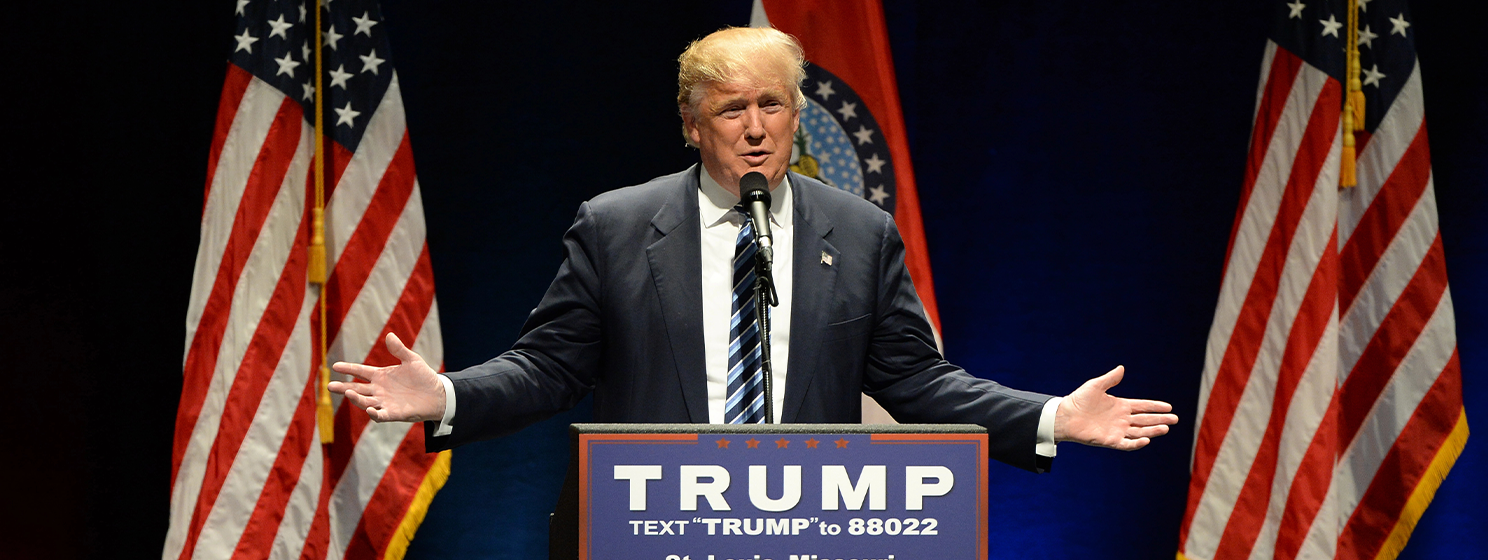
The primary impediment to bipartisan consensus on the CLARITY Act remains the contentious "ethics" issue. Democrats have consistently raised concerns about the bill’s perceived lack of provisions to limit or prohibit elected officials and their immediate families from profiting from crypto businesses. This issue gained significant traction and "new urgency" following financial disclosure documents revealing that former President Trump earned "well over $1 billion from various crypto ventures" in the preceding year. Critics argue that allowing officials to benefit financially from an industry they regulate creates a blatant conflict of interest, as they possess the power to weaken or eliminate regulatory obstacles facing their own investments.
In an effort to bridge this divide, two prominent Republican senators and staunch crypto supporters, Bernie Moreno (OH) and Cynthia Lummis (WY), met with former President Trump at the White House last week. The meeting, which also included White House chief of staff Susie Wiles, counsel David Warrington, Acting Attorney General Todd Blanche, and crypto advisor Patrick Witt, aimed to discuss potential ethics language. Senator Thom Tillis (R-NC) voiced optimism ahead of the meeting, hoping for an agreement "by the end of this week," deeming the timing "critical" for a pre-recess vote.
However, Democratic skepticism persists. Representative Ruben Gallego (D-AZ) expressed dismay at the lack of Democratic involvement in these high-level discussions, criticizing the "very weak" ethics text reportedly shown to Trump. Gallego warned that such language would grant "a lot of latitude to the president to continue doing his grift," asserting unequivocally that without "strong ethics," Democratic votes would not materialize.
Reports regarding the outcome of the White House meeting were initially conflicting. The Block quoted a source indicating "no agreement on what, if any provisions Trump can get behind," with a second source corroborating that the GOP senators "couldn’t get him to agree to anything." These sources suggested Trump’s reluctance stemmed from fears of "future prosecutions based on his activity to date," implying a desire for retroactive immunity.
Yet, a late Monday tweet from journalist Eleanor Terrett offered a contrasting narrative, stating that "the White House has agreed on an ethics package for the Clarity Act and sent the language to certain Senate Republicans this afternoon." Brendan Petersen of Punchbowl News corroborated this "breakthrough on ethics language" citing "three sources familiar" with the situation, though he cautioned that "details remain elusive, and Democrats have not seen text." The crucial question remains whether any ethics language acceptable to Trump will be robust enough to satisfy Democratic demands for genuine accountability and conflict-of-interest prevention.
Prior to these White House discussions, Senator Lummis had promised a new CLARITY draft circulated earlier in the month, allowing time for review by politicians and stakeholders. Her suggestion that this draft might include "brackets" for final ethics language indicated the depth of the divide. The delay in circulating a comprehensive new draft underscores the ongoing challenges in bridging what some have termed a "Grand Canyon-wide" chasm between the parties. Senator Mark Warner (D-VA) articulated the Democratic frustration, lamenting that Republicans frequently "backpedal" on agreed-upon drafts after "industry is freaked out," urging them to learn to say "no" to crypto operators.
Four Senate Democrats – Chris Murphy (CT), Chris Van Hollen (MD), Jeff Merkley (OR), and Elizabeth Warren (MA) – underscored their opposition at a Capitol Hill press conference, joined by actor and crypto critic Ben McKenzie and representatives from Americans for Financial Reform. Senator Murphy starkly declared that the CLARITY Act would be "a fundamental corruption if it gives Trump’s corruption the protection of law," while Senator Van Hollen, without qualification, labeled it a "corrupt piece of legislation that will do a lot of harm."
Illicit Finance Concerns: A Battle Over Accountability
Beyond the ethics debate, the CLARITY Act’s provisions regarding "illicit finance" have generated significant controversy. These provisions aim to offer developers of noncustodial decentralized finance (DeFi) platforms a degree of legal immunity when their platforms are exploited for criminal activities. This aspect has drawn fierce opposition from law enforcement and prosecutors who contend it would complicate crypto-related prosecutions.
While CLARITY supporters have highlighted recent "reversals" by some law enforcement groups on these views, the Department of Justice (DoJ) appears steadfast in its concerns. Punchbowl News reported on July 16 that the DoJ’s Criminal Division reiterated its objections, arguing the illicit finance text would "impose a higher burden of proof for prosecutions" involving money laundering charges. This directly contrasts with the industry’s push for greater legal certainty for DeFi developers, who argue they are not custodians of funds and thus should not be held liable for user misuse.
However, Amanda Tuminelli, CEO of the DeFi Education Fund, challenged Punchbowl’s report, claiming it "gets DOJ’s position wrong" and referencing "recent, directly-on-point, publicly reported DOJ statements from June 23 saying the exact opposite" of the cited email. This highlights the ongoing confusion and conflicting interpretations surrounding official positions on this complex issue.
Adding to the nuanced landscape, the Federal Law Enforcement Officers Association (FLEOA) offered its support for CLARITY, albeit with "targeted recommendations to strengthen the legislation and preserve essential federal law enforcement authorities." FLEOA’s recommendations include calls for "greater clarity regarding accountability within decentralized financial systems," prevention of "regulatory circumvention through artificial decentralization," revision of the "specific intent" language to an existing "knowledge standard," preservation of current criminal liability standards, and an explicit reaffirmation that the legislation does not limit established federal investigative authorities. Summer Mersinger, current CEO of the Blockchain Association (BA), quickly celebrated FLEOA’s conditional support as a positive step.
In stark contrast, the National Sheriffs’ Association (NSA) released a video last week, unequivocally labeling crypto "the cartel currency of choice" and demanding that Congress "fix" the bill "before it’s too late." This strong stance from a major law enforcement body underscores the deep divisions and unresolved issues surrounding the illicit finance aspects of the CLARITY Act, threatening its ability to achieve broad consensus. Kristin Smith, former CEO of the Blockchain Association and current CEO of the Solana Policy Institute, speaking at the Injective Summit, acknowledged the ethics issue as "the big elephant in the room," but emphasized her members’ focus: "whatever you decide on ethics, that’s really not our concern… But please don’t let it kill all the hard work that we put in the rest of the bill." This statement perfectly encapsulates the industry’s desire for regulatory clarity, even if it means compromising on other contentious aspects.
GENIUS Act: Stablecoin Regulations Miss Deadline, Global Pressures Mount
While the CLARITY Act dominates current headlines, another significant piece of crypto legislation, the stablecoin-focused GENIUS Act, recently marked its first anniversary with a notable regulatory lapse. July 18, 2026, was the deadline for regulatory bodies such as the Federal Deposit Insurance Corporation (FDIC), the Treasury Department’s Office of the Comptroller of the Currency (OCC), and others to issue the Act’s final rules. Despite releasing proposals, a cohesive, final set of rules has yet to emerge.
Nonetheless, the GENIUS Act rules are still slated to officially take effect on July 18, 2028. This two-year countdown has already begun for stablecoins operating in the U.S. market, most notably Tether’s USDT, which will be required to formally "withdraw access to U.S. customers" if it does not comply with the new regulations. The Act mandates that stablecoin asset reserves be held exclusively in cash and similarly redeemable vehicles like U.S. Treasury Bills.
Tether CEO Paolo Ardoino has previously stated the company’s commitment to ensuring USDT meets GENIUS requirements. However, Tether’s most recent reserve "attestation" revealed that the token is still backed by nearly $50 billion worth of non-compliant assets, including Bitcoin (BTC), gold bricks, and "highly controversial ‘secured’ loans." This historical lack of transparency and diversification into riskier assets has been a persistent criticism of Tether, making compliance with the strict GENIUS Act requirements a significant challenge.
In January, Tether launched a new U.S.-focused stablecoin, USAT, which it claims will be fully compliant with the new rules, intending for USDT to pivot its focus to non-U.S. markets. Adoption of USAT has been relatively slow, with a market cap of approximately $185 million, a mere fraction of USDT’s colossal $184 billion market cap. However, USAT’s market cap has seen significant growth since April, when it was below $50 million, leading Ardoino to claim this surge represented "regulated digital dollar adoption accelerating at exactly the moment U.S. policy is beginning to catch up with market demand."
The U.S. regulatory landscape for stablecoins is not an isolated phenomenon. The European Union (EU) has already implemented its Markets in Crypto Assets (MiCA) regulations, with a July 1 deadline for compliance. This has had immediate repercussions for stablecoins like USDT, as digital asset exchanges began restricting EU customers’ access. For instance, OKX recently offered 8% deposit bonuses to EU customers, incentivizing them to convert their USDT to the MiCA-compliant USDC token issued by Circle (NASDAQ: CRCL), highlighting a strategic shift in the global stablecoin market towards regulated, compliant offerings. The international push for stablecoin regulation underscores a global recognition of their potential systemic importance and the need for robust oversight.
Public Distrust: A Call for Greater Regulation
The ongoing regulatory debates occur against a backdrop of significant public skepticism towards the cryptocurrency industry. A recent survey released by Crypto Watchdog, a non-profit dedicated to "educating consumers about the extreme risks involved in the cryptocurrency industry," revealed deep-seated distrust among U.S. voters. While Crypto Watchdog’s executive director, Chapin Fay, maintains the group is "not anti-crypto" but "pro-innovation" and "accountability," the survey results paint a challenging picture for the industry.
Conducted by Basswood Research, the survey polled 1,000 registered voters and found that a substantial 65% expressed a "high level of distrust" in crypto. An even higher percentage, 68%, indicated they are "not open to owning" digital tokens. The most common words respondents associated with crypto, after "Bitcoin," were "criminals," "scammers," and "fraud," reflecting a pervasive negative perception.
Furthermore, 70% of respondents believe crypto is "designed to benefit insiders and scammers rather than helping ordinary people achieve investment success." This sentiment is reinforced by the finding that 81% believe crypto is "easily controlled and manipulated by a small number of powerful insiders." The inherent volatility and lack of transparency also fueled concerns, with 81% agreeing that "it’s nearly impossible to know why crypto values rise and fall because the industry lacks basic transparency."
Perhaps unsurprisingly, given these findings, a significant majority (72%) of respondents believe "there should be more regulation of the cryptocurrency industry." Critically, even among current crypto owners, 68% agreed that "more oversight is necessary to protect consumers." These survey results underscore a clear public mandate for increased regulatory intervention, providing additional impetus for lawmakers to finalize legislation like the CLARITY Act and rigorously implement stablecoin rules. The findings suggest that for the crypto industry to gain broader public trust and adoption, it must proactively address concerns about transparency, manipulation, and illicit activities, moving beyond self-regulation to embrace comprehensive governmental oversight. The persistent public apprehension, coupled with the slow pace of regulatory clarity, indicates a long and arduous path ahead for the digital asset ecosystem in the United States.

