
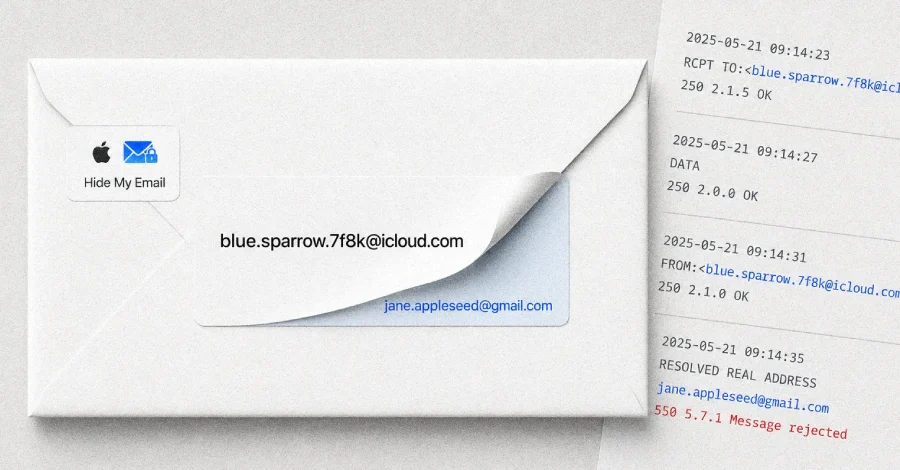
Apple has recently deployed a crucial fix for a significant security flaw within its "Hide My Email" service, a premium feature designed to safeguard user privacy by generating unique, disposable email addresses. The vulnerability, which persisted for over a year after its initial disclosure, had the potential to unmask users’ real email addresses, thereby undermining the core privacy guarantees of the service. This development comes amidst growing scrutiny and a pending class-action lawsuit accusing the tech giant of misrepresenting the privacy capabilities of this very feature.
The resolution of this long-standing issue was formally implemented by Apple on July 3, 2026, as reported by 404 Media. The vulnerability was initially brought to Apple’s attention on June 13, 2025, by Tyler Murphy, co-founder of EasyOptOuts, a service dedicated to helping users manage their online data. The extended timeline from disclosure to a successful patch highlights potential challenges in addressing complex privacy vulnerabilities within sophisticated digital ecosystems.
Understanding Hide My Email: A Pillar of Apple’s Privacy Ecosystem
Introduced by Apple in June 2021 as part of its iCloud+ subscription offering, Hide My Email was heralded as a robust privacy-enhancing tool. Its fundamental purpose is to generate unique, random email addresses for users, which then automatically forward incoming messages to their designated personal email inbox. This mechanism is designed to create a layer of anonymity, shielding users’ primary email addresses from third parties, reducing unwanted spam, and mitigating risks associated with data breaches. For instance, when signing up for a new service or making an online purchase, a user could employ a generated Hide My Email address instead of their personal one. If that service were later compromised, only the disposable address would be exposed, not the user’s primary contact.
Apple has consistently positioned itself as a champion of user privacy, often contrasting its data protection policies with those of other tech giants. Features like Hide My Email are central to this narrative, promising users greater control over their personal information in an increasingly data-driven world. The service requires a paid iCloud+ subscription, bundling it with other privacy-focused features such as iCloud Private Relay and HomeKit Secure Video support. This premium offering underscores the perceived value and trust users place in Apple’s ability to deliver on its privacy commitments.
The Nature of the Vulnerability: Unmasking Real Identities
The critical flaw in Hide My Email revolved around a seemingly innocuous interaction: the rejection of an email as spam. Details, previously withheld to prevent potential exploitation, emerged more clearly following the fix. The core of the problem was that if a message sent to a user’s Hide My Email address was automatically classified and rejected as spam by the receiving mail server, the user’s actual, personal email address would, under certain conditions, appear in the server’s email logs.
This mechanism represents a significant breach of the feature’s intended privacy. Email logs, while typically not publicly accessible, are routinely reviewed by system administrators and, in some cases, can be exposed through misconfigurations or targeted attacks. The fact that a legitimate message, if incorrectly flagged as spam, could trigger this leak meant that users were unknowingly vulnerable even when interacting with non-malicious senders. As Tyler Murphy and Ben Weiner of EasyOptOuts explained to 404 Media, "We don’t know how often hidden email addresses were leaked in email logs. For many major email hosts, the leak was triggered simply by an email being automatically rejected as spam, even if it was a legitimate message. Such emails probably didn’t make it to your inbox, so you can’t review your spam folder to learn whether you were affected." This particular aspect highlights the insidious nature of the vulnerability: users had no direct way to detect or prevent the exposure of their real email addresses.

A Protracted Patching Timeline: A Chronology of Events
The journey from discovery to resolution for this vulnerability spans over a year, raising questions about the speed and effectiveness of Apple’s security response protocols.
- June 2021: Apple officially announces and launches the Hide My Email feature as part of iCloud+.
- June 13, 2025: Tyler Murphy, co-founder of EasyOptOuts, responsibly discloses the vulnerability to Apple, providing details of how real email addresses could be unmasked.
- March 2026: Apple makes its first attempt to patch the reported issue. This attempt is later determined to be unsuccessful, indicating the complexity or the subtle nature of the flaw.
- June 30, 2026: A second patching attempt is made by Apple, which also fails to fully resolve the vulnerability. The persistence of the flaw through multiple patch cycles suggests that the underlying cause was deeply embedded or difficult to isolate.
- July 3, 2026: Apple successfully deploys a fix that addresses the Hide My Email vulnerability. This marks the culmination of over a year of engagement between the security researcher and the company.
- July 7, 2026: Apple clarifies that while the bug has been resolved, there remains a possibility that real email addresses linked to Hide My Email addresses created before this date may have been captured in mail transfer logs when non-malicious emails were bounced. This caveat is critical, implying that historical data exposure might still exist, even if the active vulnerability is patched.
- July 20, 2026 (Reported Tuesday): 404 Media publishes its report detailing Apple’s fix and the specifics of the vulnerability, given that the flaw is no longer exploitable.
- July 21, 2026: Wider news dissemination of the fix and its implications occurs.
This timeline underscores a significant delay in addressing a privacy-critical flaw, especially for a company that prides itself on security and user trust. Industry best practices for responsible disclosure often aim for a much shorter resolution window, typically 90 days, though complex issues can extend this. Over a year for a vulnerability that directly undermines a core privacy feature is notably long.
Statements and Legal Ramifications: The Class-Action Lawsuit
The delayed resolution of this vulnerability has not gone unnoticed by affected users, culminating in a class-action lawsuit filed against Apple. The complaint, titled "Alvarez v. Apple Inc.," directly accuses Apple of misleading its customers regarding the privacy of its Hide My Email feature, particularly given that it is a paid service.
The lawsuit alleges that "Apple promised Hide My Email as a privacy feature customers paid for, whether directly through iCloud+ or indirectly through Apple’s product-wide privacy representations, and failed to deliver it." Furthermore, the complaint asserts, "Worse, Apple has been fully aware of this problem for over a year and has not fixed it." A particularly damning accusation is that "At no point during this period did Apple disable or pause Hide My Email, warn its customers of the flaw, or correct its privacy representations."
These allegations strike at the heart of consumer trust. Users pay for iCloud+ services with the explicit expectation of enhanced privacy and security. If a core feature designed for privacy is found to be leaking sensitive information, and the company was aware of this for an extended period without informing its user base, it constitutes a serious breach of that trust. The class-action lawsuit seeks to hold Apple accountable for these alleged failures, potentially seeking damages for affected users and demanding changes in Apple’s practices regarding transparency and timely disclosure of vulnerabilities.
While Apple has not issued a public statement directly acknowledging the lawsuit or the specifics of the vulnerability beyond deploying the fix, their actions speak volumes. The multiple attempts to patch the flaw and the eventual success on July 3, 2026, implicitly confirm the existence and severity of the issue.
Broader Impact and Implications: Trust, Transparency, and Future Privacy

The resolution of the Hide My Email vulnerability, while a positive step, carries significant implications for Apple, its users, and the broader cybersecurity landscape.
Erosion of User Trust: Apple’s brand identity is heavily intertwined with its privacy stance. Failures like the Hide My Email flaw, especially when coupled with a prolonged resolution period and a lack of proactive user communication, can significantly erode consumer trust. Users who subscribed to iCloud+ specifically for features like Hide My Email may now question the efficacy of other privacy safeguards offered by the company. Rebuilding this trust requires not only fixing vulnerabilities but also demonstrating greater transparency and responsiveness in the future.
Legal Precedent and Accountability: The class-action lawsuit could set a precedent for how tech companies are held accountable for privacy features they market and sell. If successful, it could compel companies to be more rigorous in their testing, more transparent about known flaws, and more proactive in informing users of potential exposures. This could lead to stricter regulatory oversight regarding privacy assurances in paid services.
The Challenge of Responsible Disclosure: The extended timeline of over a year from disclosure to fix highlights the complex relationship between security researchers and large corporations. While Apple has a robust bug bounty program, the specific circumstances surrounding this vulnerability suggest that some flaws are more challenging to remediate than others, or that internal processes might need streamlining. This case underscores the importance of clear communication channels, timely updates, and a commitment to prompt patching once a vulnerability is confirmed.
Future of Privacy Features: This incident serves as a crucial reminder that even sophisticated privacy-enhancing technologies can have unforeseen weaknesses. It emphasizes the need for continuous auditing, rigorous security testing, and a "privacy-by-design" approach that anticipates potential vectors of attack or information leakage. For users, it reinforces the message that while such features are valuable, they are not infallible and should be part of a broader strategy for digital hygiene.
Data Remediation and User Awareness: The caveat that real email addresses linked to Hide My Email addresses created before July 7, 2026, may have been captured in mail transfer logs is particularly concerning. This means that even after the fix, a user’s data might already be compromised in historical logs that could persist for varying periods depending on server policies. Apple has not yet provided guidance on how users can determine if they were affected or what steps, if any, they should take to mitigate potential past exposure. This lack of clarity leaves many users in an uncertain position, unable to verify their own privacy status.
In conclusion, while Apple’s deployment of a fix for the Hide My Email vulnerability is a necessary step, the circumstances surrounding its prolonged existence and the ensuing class-action lawsuit underscore critical challenges in maintaining digital privacy. The incident serves as a powerful reminder for both technology providers and users about the delicate balance between innovation, security, transparency, and accountability in the ever-evolving landscape of online privacy.

