
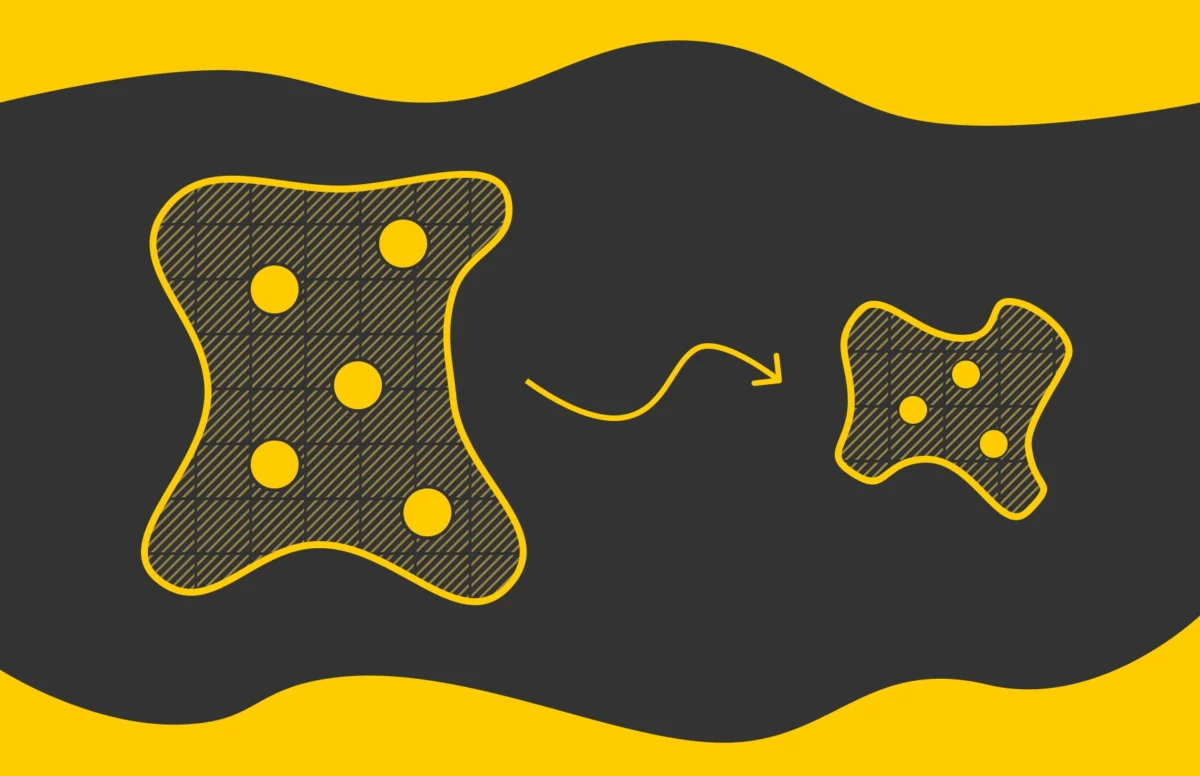
The rapid proliferation of generative artificial intelligence has brought the challenge of computational efficiency to the forefront of modern computer science, as the processing of unstructured data such as high-resolution images, video, and natural language requires immense hardware resources. Within this landscape, autoencoders have emerged as a foundational architecture designed to mitigate heavy computation by compressing input data into lower-dimensional representations while preserving essential context. By utilizing unsupervised learning—a method that does not require labeled datasets—autoencoders allow machine learning models to identify latent structures within data, making them indispensable for tasks ranging from noise reduction to complex image synthesis in models like Stable Diffusion.
The Architectural Framework of Autoencoders
To understand the utility of autoencoders, one must examine their three-part structural design: the encoder, the bottleneck (or latent space), and the decoder. This "hourglass" architecture is engineered to force a model to learn the most efficient possible representation of data.
The encoder serves as the initial phase, typically utilizing convolutional neural networks (CNNs) for image-based tasks. Its primary function is to receive high-dimensional input and systematically reduce its dimensionality through a series of layers. During this process, the network discards redundant information, distilling the data down to its core features.
The bottleneck represents the narrowest point of the network. This stage contains the latent space representation, often referred to as an "embedding." This compressed vector is a mathematical summary of the input data. The size of the bottleneck is a critical hyperparameter; if it is too large, the network may simply memorize the input without learning useful features, a phenomenon known as "overfitting." Conversely, if it is too small, the network will lose critical information, leading to poor reconstruction.

The final stage is the decoder, which performs the inverse operation of the encoder. It takes the compressed embedding from the bottleneck and attempts to reconstruct the original input as accurately as possible. For the decoder to succeed, the encoder must have captured the most salient features of the data in the latent space.
A Chronology of Autoencoder Development
The conceptual roots of autoencoders date back to the mid-1980s, but their practical application has evolved significantly alongside advancements in hardware and neural network theory.
In 1986, researchers including David Rumelhart and Geoffrey Hinton introduced the concept of using backpropagation to train networks to learn "identity mappings," where the output matches the input. However, it was not until 2006 that Hinton and Ruslan Salakhutdinov demonstrated that deep autoencoders could be effectively pre-trained, sparking a "deep learning renaissance." This allowed for more complex feature extraction than traditional linear methods like Principal Component Analysis (PCA).
By 2013, the introduction of Variational Autoencoders (VAEs) by Diederik Kingma and Max Welling transformed autoencoders from simple compression tools into generative models. Unlike standard autoencoders, VAEs map inputs to a probability distribution in the latent space, allowing researchers to sample from that space to create entirely new data points. This paved the way for the sophisticated generative models seen today, including Latent Diffusion Models (LDMs) which dominate the current AI landscape.
Training Dynamics and the Reconstruction Loss
The primary advantage of the autoencoder framework is its self-supervised nature. In a traditional supervised learning setup, a model requires a "ground truth" label (e.g., a picture of a dog labeled "dog"). Autoencoders circumvent this requirement by using the input data itself as the label.

During the training phase, an image is passed through the encoder to the bottleneck and then reconstructed by the decoder. The model’s performance is measured by how closely the reconstructed output matches the original input. This is quantified using a "reconstruction loss" function, most commonly the Mean Squared Error (MSE).
MSE calculates the average of the squares of the errors—the difference between the pixel values of the original image and the reconstructed version. The resulting loss value is used to perform backpropagation, updating the weights across the entire network to minimize error in future iterations. Through this iterative process, the network "learns" which features are most important for maintaining the integrity of the data under high levels of compression.
Data Benchmarks and Compression Efficiency
The efficiency of autoencoders is best illustrated through their application in state-of-the-art generative models. Stable Diffusion, a prominent text-to-image model, utilizes an autoencoder to perform "Latent Diffusion."
In a standard workflow, processing an image at a resolution of 512 x 512 pixels with three color channels (RGB) involves managing 786,432 individual values. Performing complex mathematical operations on this volume of data in real-time is computationally prohibitive for most consumer-grade hardware. However, by using a trained autoencoder, Stable Diffusion compresses this input into a latent representation of 64 x 64 x 4, totaling only 16,384 values.
This represents a compression ratio of approximately 48x. By working in this "latent space" rather than the "pixel space," the model can generate high-quality imagery with a fraction of the VRAM (Video Random Access Memory) that would otherwise be required. This efficiency is what has allowed high-end AI capabilities to move from massive data centers to local desktop computers.

Diverse Applications: Beyond Simple Compression
While data compression is the most common use case, the versatility of the autoencoder architecture allows for several specialized applications:
-
Denoising Autoencoders (DAE): In this configuration, the model is fed an image that has been intentionally corrupted with random noise. The decoder is then tasked with reconstructing the original, clean image. This forces the encoder to ignore the "noise" and focus solely on the underlying structural features of the data. DAEs are widely used in medical imaging and satellite photography to clarify distorted visuals.
-
Image Inpainting: Autoencoders can be trained to fill in missing parts of an image. By masking certain patches of the input and requiring the model to predict what should be in those gaps, the network learns a deep understanding of visual context and object geometry.
-
Watermark and Object Removal: Similar to inpainting, autoencoders can be fine-tuned to identify and remove specific unwanted artifacts, such as watermarks or photobombers, by reconstructing the background based on the surrounding pixels.
-
Anomaly Detection: In industrial and financial sectors, autoencoders are trained on "normal" data (e.g., healthy engine sounds or legitimate credit card transactions). When the model encounters an anomaly, it fails to reconstruct it accurately, resulting in a high reconstruction loss. This spike in loss serves as an automated flag for potential fraud or mechanical failure.

Technical Challenges: The Blurriness Problem
Despite their power, autoencoders are not without technical limitations. One of the most persistent issues in standard autoencoder design is the "blurriness problem" associated with MSE loss.
MSE loss operates by averaging pixel values to find a mathematical middle ground. In scenarios where an image has sharp edges or high-contrast transitions—such as a white line against a black background—the model may struggle to place the edge perfectly. Because the penalty for being off by a single pixel is high, the model often opts for a "safer" mathematical average, resulting in a gray, blurry transition rather than a sharp edge.
Industry experts have noted that while a blurry image might have a lower MSE score than a sharp image that is slightly shifted, the sharp image is visually superior to the human eye. To combat this, modern researchers often supplement MSE with "Perceptual Loss" or integrate Generative Adversarial Network (GAN) components, where a second "discriminator" network evaluates whether the reconstructed image looks realistic, forcing the decoder to produce sharper, more detailed results.
Broader Impact and Future Implications
The continued refinement of autoencoder technology has significant implications for the future of digital infrastructure. As the world generates more data than ever before, the ability to store and transmit that data in highly compressed, latent forms will be vital for reducing the energy consumption of data centers.
Furthermore, the rise of "edge AI"—the deployment of artificial intelligence on mobile devices and IoT sensors—relies heavily on the principles of autoencoding. By stripping away non-essential data at the point of capture, devices can perform complex analysis without needing to upload massive files to the cloud.

In the creative industries, autoencoders are democratizing high-end visual effects. Tools once reserved for major film studios, such as automated rotoscoping and texture synthesis, are now available to independent creators through software powered by these neural architectures.
As generative AI moves toward video and 3D modeling, the role of the autoencoder as a "data gatekeeper" will only grow. By mastering the art of the bottleneck, researchers are not just making models smaller; they are making them smarter, forcing machines to understand the essence of the information they process. The shift from raw data processing to latent space manipulation represents a fundamental change in how humanity interacts with digital information, positioning the autoencoder as a cornerstone of the next technological era.

