
For more than a quarter of a century, the International Space Station (ISS) has served as a unique laboratory, orbiting approximately 400 kilometers above the Earth’s surface. Since the arrival of the first long-duration crew in November 2000, this pressurized habitat has hosted hundreds of astronauts, thousands of scientific experiments, and an unintended cargo: a diverse array of terrestrial microorganisms. In the confined, microgravity environment of the station, where stellar radiation levels are significantly higher than on Earth, the evolution and survival of these microbes present a critical area of study for space agencies worldwide.
As the ISS ages, the biological landscape within its modules has become increasingly complex. Just as an old piece of produce in a domestic refrigerator eventually succumbs to mold, the surfaces and systems of the space station have developed their own distinct microbiomes. Understanding which species are resilient enough to survive—and potentially thrive—in these extreme conditions is no longer a matter of academic curiosity but a fundamental requirement for the safety of long-duration space missions, including future voyages to the Moon and Mars.
The Shift to Metagenomic Analysis
Historically, identifying microbes required "culturing" them—growing samples in Petri dishes to see what emerged. However, this method is limited, as many microbial species cannot be grown under standard laboratory conditions. Modern astrobiology has shifted toward metagenomics, a powerful tool that allows scientists to bypass the culturing process entirely. By extracting and sequencing all the DNA from an environmental sample, researchers can identify every organism present, from bacteria and fungi to viruses, regardless of whether they can be grown in a lab.
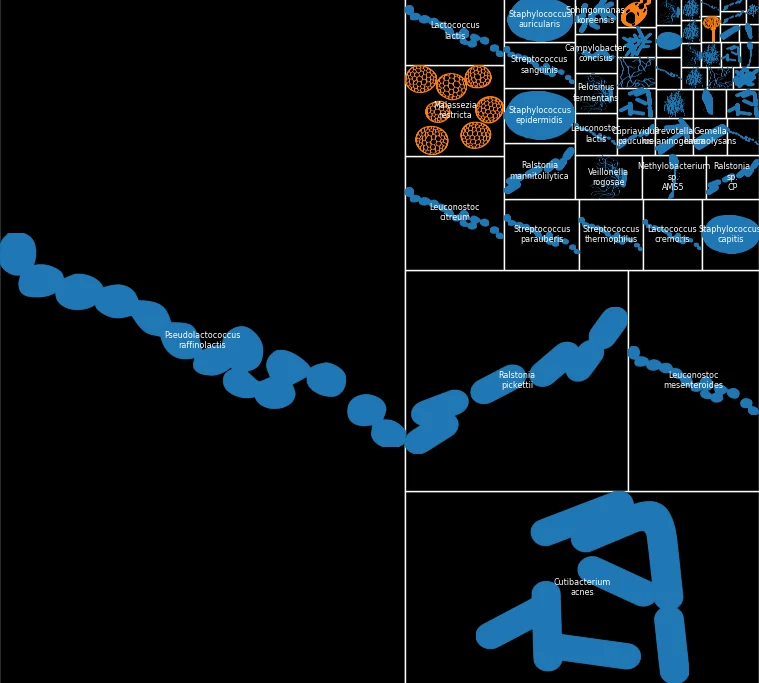
A landmark study by Urbaniak et al., published in the journal Microbiome, utilized metagenomics to conduct a comprehensive census of the ISS. The research team analyzed samples from eight different locations across the station, including the foot restraints, waste and hygiene compartments, and the dining table. One specific sample, identified as F4_S5_P, provides a fascinating glimpse into the microbial life shared by astronauts during their meals. This sample was obtained by wiping a sterile scientific cloth across the station’s dining table, followed by DNA extraction and high-throughput sequencing.
Chronology of Biological Monitoring on the ISS
The effort to monitor the ISS microbiome has evolved through several distinct phases:
- 2000–2010: Culture-Dependent Monitoring. Early missions relied on "swab-and-growth" techniques. Crew members would wipe surfaces and press them into agar slides, which were either incubated on-site or returned to Earth.
- 2008: The Kimchi Experiment. In a notable event for space food science, South Korea’s first astronaut, Yi So-yeon, brought specially formulated kimchi to the ISS. The Korea Atomic Energy Research Institute (KAERI) spent millions of dollars developing a version of the fermented dish that was safe for space, utilizing high-dose radiation to kill off bacteria while preserving flavor.
- 2014–Present: The Genomic Era. The introduction of the MinION sequencer to the ISS allowed for the first DNA sequencing in space. This paved the way for studies like those by Urbaniak et al., which provide a high-resolution map of the station’s microbial inhabitants.
- 2022–Current: Advanced Metagenomic Surveys. Recent analyses have focused on "viable" DNA, using treatments like Propidium Monoazide (PMA) to ensure that the DNA being sequenced comes from intact, living cells rather than dead cellular debris.
Decoding the Dining Table: Key Findings
The analysis of the dining table sample revealed a complex ecosystem dominated by four primary species, accounting for approximately 75% of the detected DNA. These findings highlight the intimate link between the human inhabitants and their environment.
The most prevalent species identified include:
- Pseudolactococcus raffinolactis: Commonly associated with raw milk and food production, its presence likely stems from the variety of dairy-based or processed foods consumed by the crew.
- Cutibacterium acnes: A ubiquitous bacterium found on human skin. Its high concentration on the dining table is a direct result of human shedding, as skin cells and their associated microbes are constantly released into the station’s recycled air.
- Ralstonia pickettii: An environmental bacterium known for its ability to survive in low-nutrient conditions. In terrestrial settings, it has been implicated in hospital outbreaks due to its tendency to contaminate medical equipment and purified water systems. Its presence on the ISS suggests a high level of resilience to the station’s rigorous cleaning protocols.
- Leuconostoc mesenteroides: Perhaps the most intriguing find, this bacterium is a primary agent in the fermentation of vegetables.
The Kimchi Legacy and Microbial Persistence
The detection of Leuconostoc mesenteroides sparked particular interest among researchers. By extracting the specific reads for this species and performing a targeted assembly of the DNA contigs, scientists were able to match the sequences to strain MSL129—a strain specifically isolated from kimchi.
While the 2008 Korean space kimchi was treated with radiation to neutralize live bacteria, the presence of viable DNA from this specific strain years later suggests a complex narrative. It indicates that despite sterilization efforts, terrestrial food-related bacteria can find niches within the ISS environment. The fact that the sample was treated with PMA—which filters out DNA from dead cells—strongly implies that these "kimchi microbes" were not just remnants but were part of a living, persistent population on the ISS dining surface.

Computational Methodology: The Speed of Kraken2
Identifying these species from a sea of raw genetic data requires immense computational power and sophisticated algorithms. While the Basic Local Alignment Search Tool (BLAST) has long been the gold standard for sequence comparison, it is often too slow for the massive datasets generated by modern metagenomics. A single ISS sample can contain over 75,000 pairs of DNA reads, while larger studies involve millions.
To manage this volume, researchers utilize tools like kraken2. Unlike BLAST, which performs a detailed alignment to account for every mutation and gap, kraken2 focuses on speed through the use of "k-mers"—short, fixed-length subsequences of DNA.
The algorithm works through several innovative steps:
- K-mer Decomposition: The query sequence is broken into overlapping strings of length k.
- Minimizers: To reduce redundancy, the tool uses "minimizers"—the alphabetically first "l-mer" within a k-mer. This allows the system to represent multiple similar sequences with a single, compact identifier.
- Compact Hashing: The minimizers are converted into hash codes.
Kraken2employs a "compact hash" strategy, where the hash is split into two parts. One part is stored as the value, while the other determines the position in the database. This significantly reduces the memory footprint and increases search velocity. - Taxonomic Assignment: Each k-mer is mapped to the Lowest Common Ancestor (LCA) in a taxonomic tree. The entire read is then assigned to the taxon that has the highest frequency of hits among its k-mers.
This approach allows bioinformaticians to identify species with "interstellar speed," providing a rapid census of the ISS microbiome that would have taken weeks using older technology.
Broader Implications and Planetary Protection
The presence of resilient bacteria like Ralstonia pickettii and food-related microbes on the ISS has significant implications for future space exploration. As NASA and its international partners look toward the "Lunar Gateway" and eventually a crewed mission to Mars, the management of the "built environment" microbiome becomes a matter of life and death.
Antimicrobial Resistance: There is ongoing concern that the stressors of space—radiation and microgravity—could accelerate the development of antimicrobial resistance. If a bacterium like Acinetobacter baumannii (also detected in small amounts on the ISS dining table) were to develop resistance in a closed loop, the options for treating an infected astronaut would be dangerously limited.
Planetary Protection: The "Kimchi Connection" serves as a reminder of how easily Earth-based life can be transported. "Planetary Protection" protocols are designed to prevent the forward-contamination of other worlds. If terrestrial microbes can survive the trip to the ISS and persist for years on its surfaces, the risk of accidentally seeding Mars with Earth-bound bacteria is a tangible threat that could compromise the search for indigenous extraterrestrial life.
Health and Nutrition: On a more positive note, understanding how fermentation bacteria like L. mesenteroides behave in space could lead to the development of "probiotic" environments or fresh food production systems for long-duration travel, helping to maintain astronaut gut health.
Conclusion
The microbial survey of the International Space Station dining table demonstrates that the station is far from a sterile void. It is a vibrant, evolving ecosystem where human biology, food science, and environmental resilience intersect. By leveraging the power of metagenomics and high-speed computational tools like kraken2, scientists can now monitor this invisible crew in real-time.
The transition from theory-heavy evolutionary alignment to high-speed k-mer matching reflects a broader shift in bioinformatics. As we amass more data about the life that travels with us into the cosmos, the ability to rapidly distinguish between a harmless food-grade bacterium and a potential pathogen will be the cornerstone of safe passage to the stars. The discovery of "space kimchi" bacteria is a testament to the persistence of life and a reminder that wherever humans go, our microbial shadows are sure to follow.

