
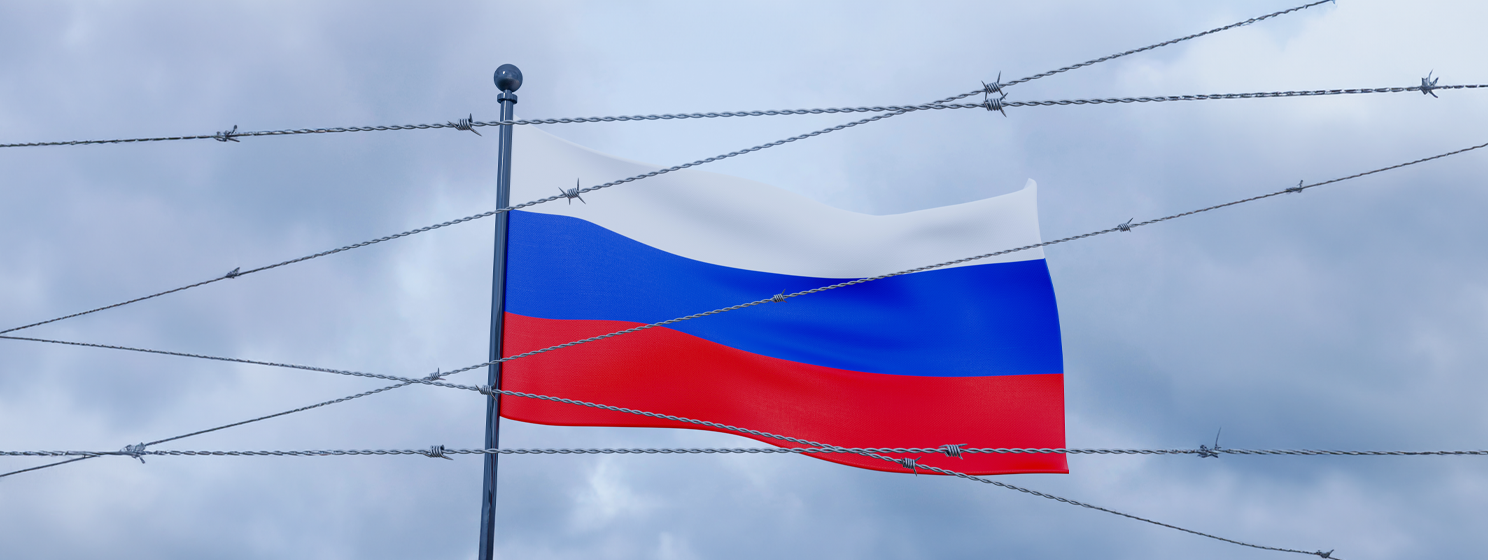
The United Kingdom has escalated its economic pressure on Russia, targeting a ruble-backed stablecoin issuer and the HTX digital asset exchange for their alleged roles in facilitating Russia’s efforts to circumvent international sanctions. This move underscores a growing global determination to close loopholes exploited by the Kremlin following its 2022 invasion of Ukraine, particularly within the burgeoning cryptocurrency landscape.
I. UK Sanctions: A Broad Front Against Evasion
On May 26, the U.K. government’s Foreign, Commonwealth & Development Office (FCDO) unveiled a comprehensive new round of measures designed to disrupt Russian illicit financial networks. These actions specifically target individuals and entities believed to be instrumental in helping Russia evade the stringent economic penalties imposed by Western nations. Among the most prominent entities on the U.K.’s updated sanctions list is the A7 network, identified as a Kremlin-backed operation that has allegedly exploited Kyrgyzstan’s financial systems to channel significant funds into Russia’s war economy. The FCDO stated that this network claimed to have moved over $90 billion in the past year alone—a staggering sum equivalent to approximately half of Russia’s annual military expenditure and nearly one-fifth of the country’s total foreign trade transactions.
The scale of these alleged transactions highlights the critical role cryptocurrency and shadow financial systems have come to play in Russia’s economic resilience against sanctions. U.K. Foreign Secretary Yvette Cooper issued a stern warning, asserting, “If the Kremlin thinks it can evade our sanctions by hiding behind crypto networks and shadow financial systems, it is gravely mistaken.” This statement reflects a concerted effort by Western powers to adapt their enforcement strategies to the evolving tactics of sanctions evasion.
II. The A7 Network and A7A5 Stablecoin: Russia’s Digital Lifeline
At the heart of the A7 network’s operations is the ruble-backed A7A5 stablecoin. Launched in early 2025, this digital asset rapidly ascended to prominence, reportedly supplanting the role previously played by Tether’s USDT stablecoin in sanctions-evading transactions. A7A5’s swift adoption by Russian entities signals a strategic shift in their approach, favoring a natively Russian, ruble-denominated digital asset to bypass traditional financial channels.
The A7 network itself is not a standalone private venture; it is partially owned by Promsvyazbank (PSB), a Russian state-owned bank with deep ties to the country’s military-industrial complex. PSB has been under international sanctions for years due to its strategic importance to the Russian government. Furthermore, A7A5 was notably the first token to be officially granted "digital financial asset" status by the Kremlin, underscoring its sanctioned and strategic importance within Russia’s financial architecture. This official endorsement provides a layer of legitimacy within Russia, even as it draws condemnation and sanctions from abroad.
The emergence of A7A5 and the A7 network is a direct response to the unprecedented scope and scale of international sanctions imposed on Russia. Following the full-scale invasion of Ukraine in February 2022, Western nations, including the G7, the EU, and the UK, implemented sweeping measures targeting Russia’s central bank, major financial institutions, key industries, and oligarchs. These sanctions aimed to cripple Russia’s economy, limit its access to international finance, and degrade its ability to fund the war. In this context, the A7A5 stablecoin represents a deliberate and state-backed mechanism to create an alternative financial rail, leveraging blockchain technology to circumvent traditional correspondent banking relationships that have been severed by sanctions.
The A7 network has been the subject of multiple rounds of international sanctions prior to this latest UK action. The European Union, for instance, recently took action against the Kyrgyzstan-based parent company of the Meer digital asset exchange, specifically noting that "significant amounts of the government-backed stablecoin A7A5 are traded" on its platform. This demonstrates a coordinated international effort to dismantle the infrastructure supporting Russia’s crypto-based evasion.
Further illustrating the widespread nature of these evasion attempts, the EU, UK, and United States have collectively targeted other exchanges heavily involved in routing large volumes of A7A5. Among these is Kyrgyzstan-based Grinex, a rebranded iteration of Garantex, which itself was forced offline last year following an international law enforcement operation. In a curious development, Grinex reported in April that it had been hit by a "large-scale cyberattack with indications of involvement by foreign intelligence agencies," resulting in the alleged loss of $13 million "belonging to Russian users." While the full details of this incident remain murky, it highlights the high-stakes environment in which these illicit financial operations occur.
The UK’s latest sanctions specifically target key individuals involved in these networks. Sergey Mendeleev, a co-founder of Garantex, is now on the UK’s hit list, alongside A7 executives Igor Gorin and Irini Akopian, and Israeli national Liran Cohen. The sanctions also extend to three Georgian companies: Rapira Group, ARVIX LLC, and Aifory, all described as "Georgian companies operating Russia-focused exchanges seeking to evade sanctions." These firms had previously been flagged by the National Bank of Georgia last September for operating without local permission, though Georgian authorities appeared to have taken no direct action at that time. Other targeted entities include the El Salvador-registered but Russia-serving ABCeX platform, Alistera Limited, Bitpapa IC FZC LLC, EXMO Exchange Limited, and OJSC Virtual Assets Issuer—the entity behind USDKG, Kyrgyzstan’s state-backed gold-backed/dollar-denominated stablecoin.
Oleg Ogienko, an A7 executive, recently commented on the stablecoin’s future, telling CoinDesk on May 24 that A7A5 "has a good chance to stay competitive even after the sanctions are lifted. If you trade with Russia, you need convenient and fast means of settlement." Ogienko also claimed that A7A5 attracts individuals seeking high returns, offering a 13.5% interest rate. This rate, while attractive, is only one point below Russia’s benchmark interest rate, reflecting the country’s inflationary war economy. However, cross-border payments remain A7A5’s primary and most critical use case.
The growing compliance of major stablecoin issuers like Tether, which now honors U.S. law enforcement requests to freeze tokens linked to illicit activities, could further amplify A7A5’s importance. This shift could see A7A5 playing a pivotal role not only for Russia but also for other sanctioned nations, potentially including Iran’s plans to monetize access to the Strait of Hormuz, thereby creating a new vector for global illicit finance.
III. HTX (Formerly Huobi) Under Sanctions Spotlight
The U.K.’s recent actions mark a significant precedent: it is the first time the country has applied Regulation 17A of its 2019 sanctions framework directly to cryptocurrency exchanges. This regulation broadly prohibits financial institutions from serving as correspondent banks or processing payments for sanctioned entities. Crucially, these restrictions apply even if transactions occur between accounts not directly under sanctions but are downstream from—or appear destined for—a sanctioned account. Furthermore, U.K. financial institutions and virtual asset service providers are now explicitly required to freeze assets linked to sanctioned entities or individuals.
This regulatory development places a direct bullseye on HTX, the prominent digital asset exchange affiliated with Justin Sun, previously known as Huobi. The official UK statement justifying HTX’s designation cites "reasonable grounds to suspect that HUOBI GLOBAL SA is or has been involved in obtaining a benefit from or supporting the Government of Russia by providing financial services, or making available funds, economic resources, goods or technology, to a person, namely A7 LIMITED LIABILITY COMPANY, which is carrying on business in a sector of strategic significance to the Government of Russia." The UK further alleges that Huobi also provided similar services to GARANTEX Europe OU and may have "channelled over $1.5 billion back into the Kremlin’s hands."
HTX’s immediate response, issued via its official X (formerly Twitter) account, stated that the U.K. sanctions "arrived today without prior notice or any supporting evidence shared with us." While reassuring customers that "all user funds are safe," HTX attempted to distance itself by claiming that Huobi Global "is distinct from the online HTX exchange." However, this claim appears to be undermined by Huobi’s own legal filings, which explicitly state that it "owns and operates HTX." Regardless of this internal contradiction, HTX vowed to "work with relevant UK authorities to understand the basis for the action and to address any concerns promptly."
An HTX spokesperson further informed CoinDesk that "A7A5 was trying to list their stablecoin. However, following our rigorous internal due diligence and compliance review processes, their application was explicitly rejected." This claim was supported by A7’s Oleg Ogienko, who stated that A7 had "approached all the leading [centralized exchanges] several months ago" for A7A5 listings, but "all of them rejected our application almost at once because they are scared of secondary sanctions." Ogienko reiterated that A7 did not ultimately need centralized exchanges, as "our business model runs on DeFi [decentralized finance] infrastructure." Justin Sun’s personal response to the news mirrored his characteristic denials of HTX/Huobi ownership, while professing his belief in the platform’s "full compliance with all applicable laws" and expressing confidence in a prompt resolution of the UK’s concerns.
The sanctions against HTX represent a significant escalation in the use of financial regulations against cryptocurrency platforms for geopolitical purposes. It sends a clear message to other exchanges that facilitating transactions for sanctioned entities, even indirectly, carries severe consequences. This action is likely to prompt a broader re-evaluation of compliance procedures across the crypto industry, particularly for platforms with a global user base and operations in multiple jurisdictions. The alleged channeling of $1.5 billion underscores the vast sums that can move through these digital channels, posing a substantial challenge to traditional sanctions enforcement.
IV. Stablecoin Innovation and Adoption in the West
While the UK grapples with sanctions evasion, other parts of the Western financial world are pushing forward with regulated stablecoin innovation and adoption.
On Wednesday, SoFi Technologies, a U.S. national chartered bank, announced the launch of its SoFiUSD stablecoin, now available directly on its banking app. This marks a significant milestone, as SoFi claims it is "the first time that a U.S. national bank-issued stablecoin is available directly on a banking app." SoFi CEO Anthony Noto highlighted the importance of this development, stating that it means "people no longer have to choose between blockchain technology and regulated banking products." SoFiUSD has initially been released on the Ethereum and Solana networks, with plans for expansion to additional networks in the near future.
In the coming weeks, SoFiUSD is also expected to launch on Bullish Global (NASDAQ: BLSH), SoFi’s first centralized exchange partner, aiming to provide seamless trading for institutional clients. Furthermore, SoFi members will soon gain the ability to convert SoFiUSD into interest-bearing tokenized deposits, which will be eligible for Federal Deposit Insurance Corporation (FDIC) coverage, enhancing user confidence and security. SoFi also plans to enable "24/7/365" cross-border transfers of SoFiUSD, leveraging its March partnership with Mastercard (NASDAQ: MA) to offer SoFiUSD as a settlement option on the credit card giant’s global payments network. This integrated approach by SoFi aims to bridge the gap between traditional banking and the digital asset space, offering a regulated and convenient stablecoin experience.
Concurrently, Jack Dorsey’s digital payments firm, Block (NASDAQ: XYZ), has delivered on its promise to offer stablecoin access to users of its popular Cash App service. Cash App now supports transfers of the USDC stablecoin, issued by Circle (NASDAQ: CRCL), across four major networks: Ethereum, Solana, Polygon, and Arbitrum. This broad network support enhances interoperability and user flexibility. However, Cash App has implemented certain limitations: customers can send a maximum of $2,000 worth of stablecoins daily, with a weekly outgoing transfer cap of $5,000. While there appears to be no daily limit on stablecoin receipts, the weekly total for incoming transfers must remain under $10,000. These limits are separate from existing Bitcoin (BTC) transaction limits, and notably, stablecoin options are not yet available for New York state residents, likely due to stringent state-specific financial regulations.
Interestingly, Cash App will not display a separate stablecoin balance within customer accounts. Instead, the app will covertly convert USDC to cash and back on behalf of users, aiming for a seamless, behind-the-scenes experience. For the time being, stablecoin transactions are offered fee-free. Block’s decision to integrate stablecoins, announced last November, came despite the known reservations of its founder, Jack Dorsey, a staunch Bitcoin maximalist. Dorsey had previously expressed dismay at the move due to the centralized control inherent in fiat-backed tokens. However, he acknowledged that Cash App "customers want to use" stablecoins, prioritizing user demand.
Miles Suter, Block’s Bitcoin Product Lead, reiterated the company’s long-term vision in a recent tweet, stating that Block remains "singularly focused on bitcoin becoming the native currency of the internet." Suter characterized stablecoins as "upgraded fiat" that will "upgrade the financial infrastructure that Cash App is already built on" and "get people comfortable moving money on internet-native rails. And once people are on open rails, bitcoin is a step away." This perspective views stablecoins as an onboarding mechanism, a bridge to a future where Bitcoin reigns supreme for payments. However, data continues to show that Bitcoin’s high transaction fees and slower settlement times currently limit its widespread adoption for everyday payments, with "nobody using BTC to pay for things," as acknowledged by the article.
V. Regulatory Headwinds in Europe: Caution and Control
Across the Atlantic, the European Central Bank (ECB) continues to maintain a cautious stance, resisting recommendations to loosen regulatory restrictions that crypto proponents argue are stifling the growth and appeal of euro-backed stablecoins. This conservative approach reflects a deep-seated concern within European financial institutions about potential risks to financial stability and monetary policy.
The latest recommendations came from the Bruegel think tank in a paper titled "A new strategy to contain stablecoin risks in the European Union." The paper warned that the EU policymakers’ current preference for tokenized deposits over euro-based stablecoins risks the latter ceding market dominance to their dollar-backed counterparts, which currently account for a staggering 99.76% of all fiat-backed tokens globally. This imbalance raises concerns about potential dollarization of digital finance within Europe.
Among Bruegel’s key recommendations were proposals to "dispense" with the current requirement under the EU’s landmark Markets in Crypto-Assets Regulation (MiCA) for "systemic" (i.e., major) stablecoin issuers to hold 60% of their fiat reserves in cash in EU banks. The paper also suggested allowing stablecoin issuers to "remunerate stablecoin holders directly," provided the interest rate offered remains below standard deposit rates. Crucially, Bruegel advocated for EU-regulated issuers to have "access to the ECB’s balance sheet, including to lending-in-last-resort facilities," a controversial proposal that would effectively make the ECB a backstop for stablecoin liquidity.
The European Commission recently launched a public consultation on MiCA’s rules, indicating a willingness to address some of these concerns. However, Reuters reported that the ECB delivered a stark warning to European Union finance ministers. The central bank argued that Bruegel’s recommendations would "make bank deposits more fickle, weakening an economically vital sector and the central bank’s ability to engineer interest rates." This echoes concerns previously voiced by ECB President Christine Lagarde, who, while acknowledging the potential of blockchain technology, suggested that the potential negatives of wider stablecoin implementation currently outweigh their benefits.
The Bruegel paper’s authors presented their findings to "an informal gathering of EU finance policymakers" on May 22, reportedly receiving a "mixed" reaction. The strongest pushback came precisely on the suggestion that the ECB should serve as a financial backstop for stablecoin issuers, highlighting the deep reluctance of central banks to extend such guarantees to non-traditional financial instruments.
In the United Kingdom, Bank of England (BoE) Governor Andrew Bailey has also voiced similar concerns, specifically warning that America’s comparatively looser stablecoin rules could lead to "bank runs" on U.K. financial institutions. This scenario could arise if foreign stablecoin holders, seeking better conditions or perceiving greater stability, withdraw funds from UK banks. The UK’s proposed stablecoin rules, for instance, envision requiring 40% of stablecoin reserves to be held in "unremunerated" BoE cash accounts, a figure that could still be revised in future regulatory drafts. This stringent reserve requirement is designed to enhance stability but could also make UK-issued stablecoins less attractive compared to those from jurisdictions with more flexible reserve rules. The differing approaches underscore a broader international debate on how to balance innovation, financial stability, and national economic interests in the rapidly evolving digital asset space.
VI. Global Regulatory Divergence: ECRI’s Comparative Analysis
The fragmented global regulatory landscape for stablecoins was further illuminated by a paper issued on May 21 by the European Credit Research Institute (ECRI). This comprehensive document compares and contrasts stablecoin regulations across seven major jurisdictions: the EU, U.S., U.K., Hong Kong, Singapore, Japan, and the United Arab Emirates.
The ECRI’s analysis focused on four critical aspects of stablecoin regulation:
- Treatment of Foreign-Issued Tokens: How jurisdictions approach stablecoins issued outside their borders.
- Accepted Reserve Assets: The types of assets permissible as backing for stablecoins.
- Regulatory Framework: Whether stablecoins are anchored within existing financial regulations or require bespoke, new rules.
- Permitted and Prohibited Activities: The specific actions and services allowed or disallowed for stablecoin issuers and users within a jurisdiction.
While encouraging a thorough review of the entire document, the ECRI’s recommendations provide crucial insights into the path forward for global stablecoin governance.
Firstly, echoing the Bank of England’s concerns about the need for international standards, ECRI advocates for "an architecture of mutual recognition." This approach would allow for the acceptance of foreign-issued stablecoins alongside locally-issued tokens without countries having to choose between "full insulation and unrestricted openness." A two-tier approach, such as the U.K.’s proposed plan to restrict domestic payments to U.K.-issued sterling-backed stablecoins while permitting other stablecoins for cross-border transfers, is seen as a viable model. This, according to ECRI, would "address the risks regulators care about in a targeted way, preserve the global fungibility on which the principal use cases depend, and create a meaningful incentive to local issuance without resort to exclusion."
Secondly, regarding fiat reserves, the ECRI notes a significant divergence, with none of the seven markets treating the issue identically. While acknowledging each jurisdiction’s right to define its own reserve requirements, ECRI argues that "regulators should articulate their reserve-composition choices as the redistributive decisions they are," rather than simply presenting them as "technical prudential rules." This implies that decisions about reserve assets have broader economic and political implications. The paper also calls for international financial bodies like the Bank for International Settlements (BIS), the Financial Stability Board (FSB), and the International Monetary Fund (IMF) to conduct research on the international consequences of these divergent reserve regimes, identifying "trade-offs that no single jurisdiction can clearly see from its own vantage."
Thirdly, ECRI emphasizes the need for a global consensus on the "yield" issue, which will ultimately determine "what kind of financial instrument a stablecoin should be." If stablecoins are considered direct equivalents of cash, then no yield is warranted. However, if they are closer to shares in money market funds, "then yield is the natural compensation for using capital and the prohibition becomes a regulatory choice that requires justification." This distinction is fundamental to how stablecoins are regulated, taxed, and integrated into the broader financial system.
In conclusion, the global stablecoin landscape is characterized by a dynamic interplay of innovation, regulatory caution, and geopolitical maneuvering. From the UK’s targeted sanctions against Russian evasion networks to the cautious optimism for regulated stablecoins in the US and the prudent resistance in Europe, the future of digital currencies remains a complex, multi-faceted challenge requiring ongoing international dialogue and adaptive policy frameworks. The ECRI’s analysis underscores the critical need for a harmonized approach to ensure both financial stability and the responsible evolution of digital finance.

