
Ethereum activated the Fusaka upgrade on Dec. 3, 2025, raising the network’s records availability skill through Blob Parameter Overrides that incrementally expanded blob targets and maximums.
Two subsequent adjustments raised the target from 6 blobs per block to 10, then to 14, with a most ceiling of 21. The draw changed into once to slice again layer-2 rollup charges by growing throughput for blob records, the compressed transaction bundles that rollups submit to Ethereum for security and finality.
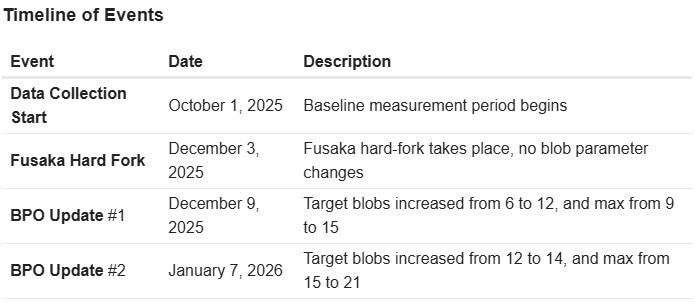
Three months into records collection, the results gift a hole between skill and utilization. A MigaLabs diagnosis of over 750,000 slots since Fusaka’s activation exhibits that the network will not be always the truth is reaching the target blob count of 14.
Median blob usage the truth is declined after the first parameter adjustment, and blocks containing 16 or more blobs account for elevated pass over charges, suggesting reliability degradation on the edges of most fresh skill.
The narrative’s conclusion is stutter: no additional will enhance in the blob parameter till excessive-blob pass over charges normalize and query materializes for the headroom already created.
What Fusaka modified and when it took living
Ethereum’s pre-Fusaka baseline, established through EIP-7691, set up the target at 6 blobs per block with a most of 9. The Fusaka upgrade launched two sequential Blob Parameter Override adjustments.
The first changed into once activated Dec. 9, raising the target to 10 and essentially the most to fifteen. The 2d changed into once activated Jan. 7, 2026, pushing the target to 14 and essentially the most to 21.
These adjustments didn’t require arduous forks, and the mechanism enables Ethereum to dial skill through consumer coordination in resolution to protocol-degree upgrades.
The MigaLabs diagnosis, which published reproducible code and methodology, tracked blob usage and network efficiency across this transition.
It came across that the median blob count per block fell from 6 earlier than the first override to 4 afterward, no topic the network’s skill growing. Blocks containing 16 or more blobs remain extraordinarily rare, taking place between 165 and 259 times every across the observation window, searching on the articulate blob count.
The network has headroom it is a long way not always the truth is the exhaust of.
One parameter discrepancy: the narrative’s timeline textual sigh describes the first override as raising the target from 6 to 12, nonetheless the Ethereum Foundation’s mainnet announcement and consumer documentation characterize the adjustment as 6 to 10.
We exhaust the Ethereum Foundation’s parameters as source: 6/9 baseline, 10/15 after the first override, 14/21 after the 2d. However, we address the narrative’s dataset for seen utilization and pass over-charge patterns as the empirical backbone.
Miss charges climb at excessive blob counts
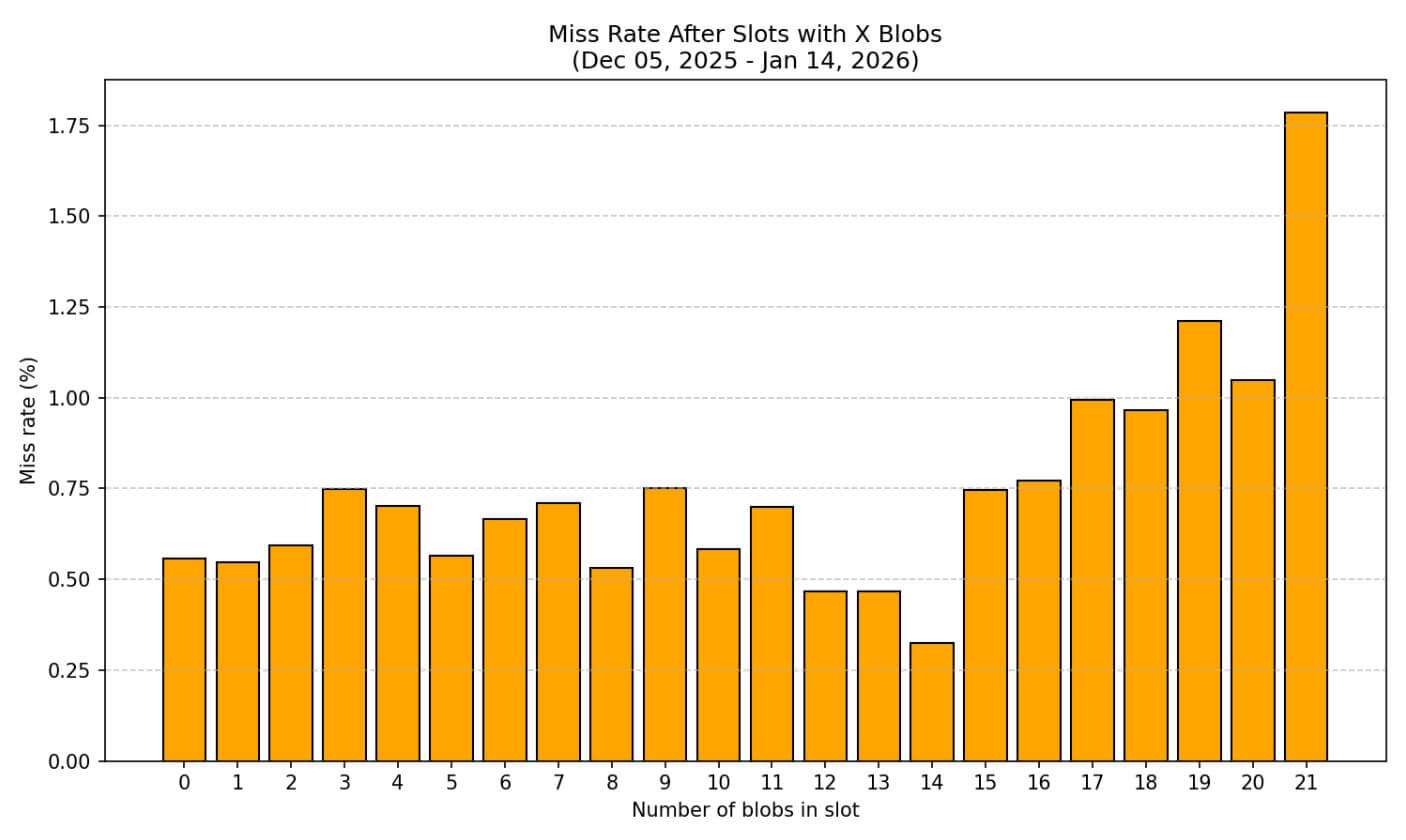
Community reliability measured through overlooked slots, which may well be blocks that fail to propagate or attest properly, exhibits a clear pattern.
At lower blob counts, the baseline pass over charge sits round 0.5%. As soon as blocks attain 16 or more blobs, pass over charges climb to 0.77% to 1.Seventy 9%. At 21 blobs, essentially the most skill launched in the 2d override, the pass over charge hits 1.Seventy 9%, more than triple the baseline.
The diagnosis breaks this down across blob counts from 10 to 21, exhibiting a unhurried degradation curve that accelerates past the 14-blob target.
This degradation issues due to it suggests the network’s infrastructure, equivalent to validator hardware, network bandwidth, and attestation timing, struggles to address blocks on the higher waste of skill.
If query indirectly rises to maintain the 14-blob target or push towards the 21-blob most, the elevated pass over charges can even translate into well-known finality delays or reorg threat. The narrative frames this as a balance boundary: the network can technically route of excessive-blob blocks, nonetheless doing so repeatedly and reliably stays an originate quiz.
Blob economics: why the reserve ticket ground issues
Fusaka didn’t handiest compose better skill. It also modified blob pricing through EIP-7918, which introduces a reserve ticket ground to conclude blob auctions from collapsing to 1 wei.
Earlier than this replace, when execution charges dominated and blob query stayed low, the blob disagreeable price can even spiral downward till it successfully disappeared as a ticket signal. Layer-2 rollups pay blob funds to submit their transaction records to Ethereum, and these funds are purported to state the computational and network charges that blobs impose.
When funds tumble to shut zero, the financial feedback loop breaks, and rollups eat skill with out paying in proportion. This ends up in the network losing visibility into true query.
EIP-7918’s reserve ticket ground ties blob funds to execution charges, making sure that even when query is level-headed, the cost stays a main signal.
This prevents the free-rider field where low-ticket blobs assist wasteful usage and offers clearer records for future skill decisions: if blob funds halt elevated no topic elevated skill, query is exact; if they give device to the ground, headroom exists.
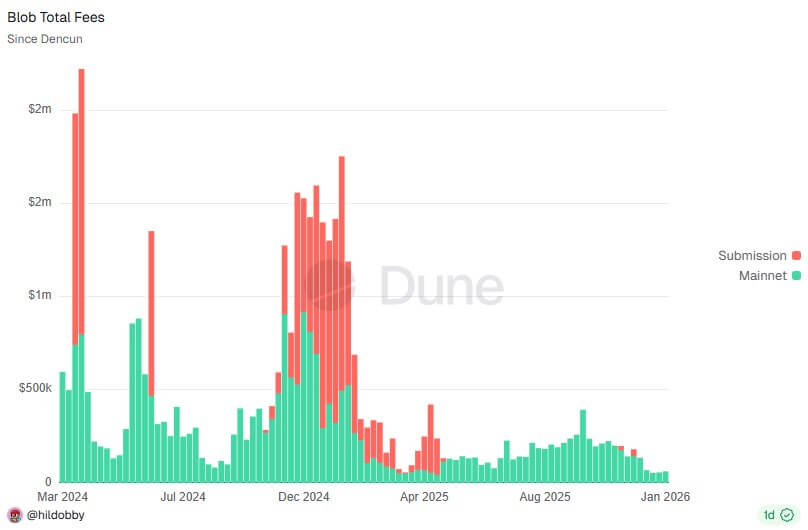
Early records from Hildobby’s Dune dashboard, monitoring Ethereum blobs, exhibits that blob funds beget stabilized after Fusaka in resolution to continuing the downward spiral considered in earlier sessions.
The frequent blob count per block confirms MigaLabs’ finding that utilization hasn’t surged to maintain the fresh skill. Blocks mechanically elevate fewer than the 14-blob target, and the distribution stays closely skewed towards lower counts.
What the records exhibits about effectiveness
Fusaka succeeded in growing technical skill and proving the Blob Parameter Override mechanism works with out requiring contentious arduous forks.
The reserve ticket ground appears to be functioning as intended, stopping blob funds from turning into economically meaningless. But utilization lags in the assist of skill, and reliability on the edges of most fresh skill exhibits measurable degradation.
The pass over charge curve suggests Ethereum’s most fresh infrastructure comfortably handles the pre-Fusaka baseline and the first override’s 10/15 parameters, nonetheless begins to stress past 16 blobs.
This creates a threat profile: if layer-2 job surges and pushes blocks towards the 21-blob most on a typical basis, the network can even face elevated pass over charges that compromise finality and reorg resistance.
Attach a query to patterns offer one other signal. Median blob usage falling after the first override, no topic elevated skill, suggests that layer-2 rollups are not currently constrained by blob availability.
Both their transaction volumes haven’t grown ample to require more blobs per block, or they’re optimizing compression and batching to suit within gift skill in resolution to growing usage.
Blobscan, a faithful blob explorer, exhibits particular person rollups posting reasonably consistent blob counts over time in resolution to ramping up to exhaust fresh headroom.
The pre-Fusaka field changed into once that runt blob skill would bottleneck Layer 2 scaling and defend rollup funds elevated as networks competed for scarce records availability. Fusaka addressed the skill constraint, nonetheless the bottleneck appears to beget shifted.
Rollups are not filling the available set up of abode, which ability both query hasn’t arrived but or other components, equivalent to sequencer economics, user job, and immoral-rollup fragmentation, are limiting enhance more than blob availability changed into once.
What comes next
Ethereum’s roadmap entails PeerDAS, a more fundamental redesign of info availability sampling that may well additional compose better blob skill whereas making improvements to decentralization and security properties.
Nonetheless, the Fusaka results indicate that raw skill will not be always the truth is the binding constraint correct now.
The network has room to develop into the 14/21 parameters earlier than desiring one other expansion, and the reliability curve at excessive blob counts signifies that infrastructure upgrades may well well must fetch up earlier than skill will enhance once more.
The pass over charge records offers a clear boundary situation. If Ethereum pushes skill elevated whereas 16+ blob blocks gathered gift elevated pass over charges, it risks introducing systemic instability that can even surface all the very best device through excessive-query sessions.
The safer path is to let utilization upward push towards essentially the most fresh target, monitor whether pass over charges toughen as customers optimize for elevated blob hundreds, and alter parameters handiest once the network demonstrates it goes to reliably address edge instances.
Fusaka’s effectiveness relies on the metric. It expanded skill efficiently and stabilized blob pricing through the reserve ground. It didn’t pressure instant utilization will enhance or clear up the reliability challenges at most skill.
The upgrade created headroom for future enhance, nonetheless whether that enhance materializes stays an originate quiz the records hasn’t answered but.