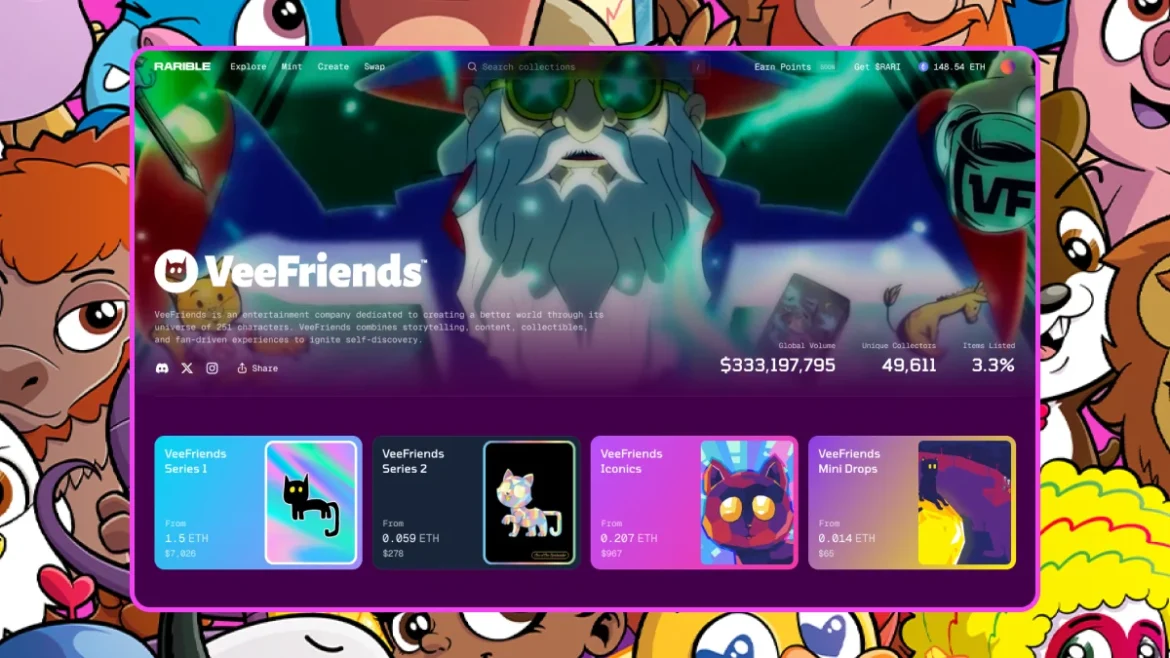
The digital asset marketplace Rarible has officially unveiled its new "Branded Storefronts" initiative, marking a significant shift in how intellectual property and consumer brands interact with blockchain technology. This launch, headlined by a primary partnership with the Gary Vaynerchuk-led VeeFriends universe, signals a transition from centralized, generalist NFT marketplaces toward bespoke, brand-centric ecosystems. By providing a dedicated environment for VeeFriends’ extensive character library, Rarible aims to transform the onchain shopping experience from a purely transactional process into a narrative-driven engagement model. The move reflects a broader trend in the Web3 industry where the "storefront" is becoming the primary interface for digital identity, community building, and e-commerce.
The collaboration with VeeFriends is not merely a listing update but a comprehensive overhaul of the user interface designed to cater to both crypto-native collectors and mainstream fans. Since its inception in 2021, VeeFriends has evolved from a collection of 10,255 non-fungible tokens (NFTs) into a multi-media empire spanning physical toys, animation, and large-scale events like VeeCon. The new storefront on Rarible.com serves as a centralized hub for this ecosystem, aggregating all VeeFriends digital collectibles while providing contextual storytelling and real-time statistics. This structural change addresses a long-standing criticism of the NFT market: that general marketplaces often strip away the brand identity of creators in favor of a standardized grid of tokens.
The Evolution of the Onchain Consumer Experience
The launch of the VeeFriends storefront introduces several key technical integrations aimed at reducing the friction typically associated with blockchain transactions. Central to this strategy is the "VeeFriends Wallet," powered by Privy. This infrastructure allows users to sign in and create a digital wallet using only an email address, effectively removing the barrier of seed phrases and external browser extensions that have historically deterred non-technical users. Furthermore, the integration of Crossmint enables "fiat-to-NFT" purchases, allowing consumers to use traditional payment methods such as credit cards, Apple Pay, and Google Pay.
These features are part of a larger movement toward "invisible" blockchain technology. By abstracting the complexities of wallet management and gas fees, Rarible and VeeFriends are positioning onchain commerce as a direct competitor to traditional e-commerce platforms like Shopify or Amazon. The storefront also ties into the $RARI rewards program, governed by the RARI Foundation. This loyalty layer incentivizes activity within the storefront, potentially qualifying participants for ecosystem rewards, thereby blurring the lines between commerce and community participation.
A Chronology of VeeFriends and Rarible Development
To understand the significance of this launch, one must look at the timeline of both entities. Rarible emerged in early 2020 as one of the first community-centric NFT marketplaces, pioneering the concept of a decentralized autonomous organization (DAO) for marketplace governance. Throughout the 2021 NFT boom, Rarible focused on multi-chain expansion, integrating with Ethereum, Flow, Tezos, and Polygon. However, as the market matured and speculative volume decreased, the platform began shifting its focus toward "white-label" solutions and creator-centric tools.

VeeFriends followed a parallel path of professionalization. Launched by Gary Vaynerchuk in May 2021, the project was designed to demonstrate the utility of smart contracts in business and marketing. Following a $50 million seed round led by Andreessen Horowitz (a16z) in 2022, VeeFriends expanded its intellectual property into physical retail through partnerships with Macy’s and Toys “R” Us. The transition to a dedicated Rarible storefront represents the latest stage in this evolution: the creation of a "digital flagship store" that matches the sophistication of the brand’s physical presence.
Supporting Data and Market Context
The shift toward branded storefronts comes at a critical juncture for the NFT industry. According to market data from 2023 and early 2024, generalist marketplaces have seen a decline in market share relative to "vertical" or brand-specific platforms. For instance, platforms like Blur have dominated the high-frequency trading segment, while brand-specific experiences (such as Nike’s .Swoosh or Starbucks Odyssey) have focused on high-engagement, low-friction environments.
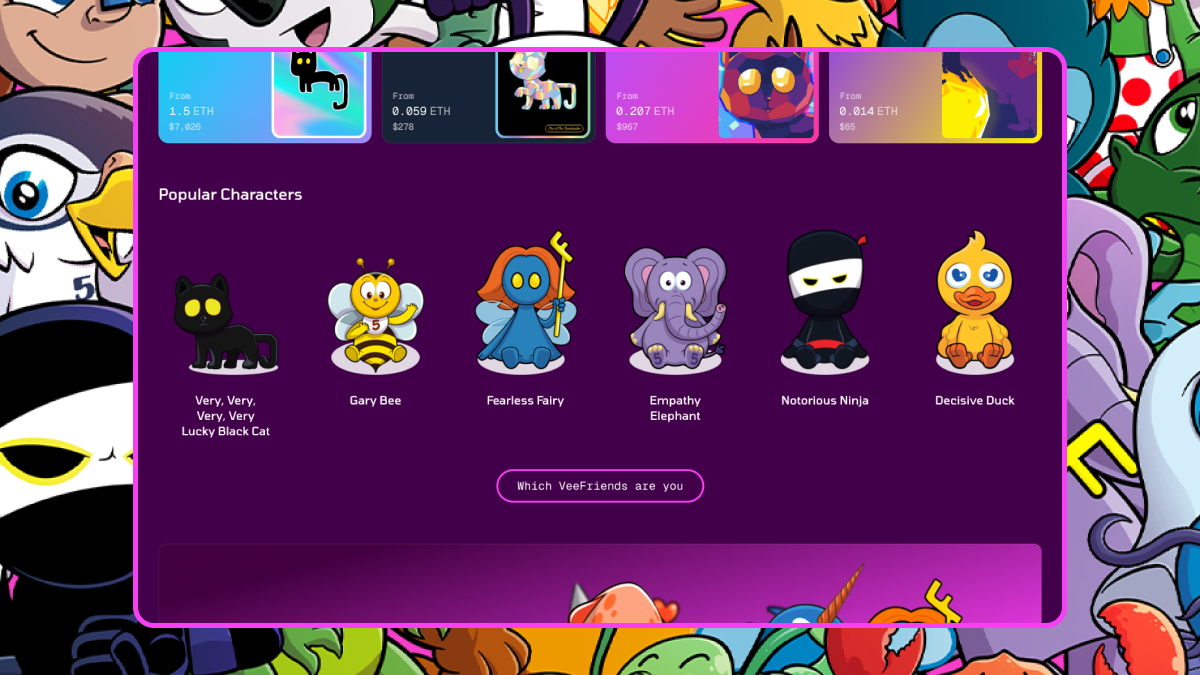
Data suggests that user retention is significantly higher on platforms that offer integrated storytelling rather than just a trading floor. By hosting the VeeFriends universe—which includes over 250 distinct characters—in a branded environment, Rarible is leveraging the "collectibility" factor of the IP. The storefront provides a space where the rarity and "lore" of characters like the "Empathy Elephant" or "Patient Panda" can be displayed alongside their market price, providing a more holistic view of the asset’s value.
Strategic Implications for Brand Management
For brands, the "Branded Storefront" model offers a level of control that was previously unattainable on secondary marketplaces. In a standard marketplace, a brand’s assets are often displayed alongside unrelated or even competing projects. The Rarible initiative allows for modularity, where brands can customize the visual aesthetic, the data points displayed, and the specific smart contracts supported.
This control extends to the management of royalties and creator fees. By directing their community to a branded storefront, creators can better ensure that the economic benefits of secondary trading are captured according to the original smart contract terms, rather than being bypassed by "royalty-optional" platforms. This is a vital consideration for the long-term sustainability of digital IP, where ongoing revenue often funds the development of new content and community utility.
Official Responses and the Introduction of Rarible Studio
While official statements from the launch emphasize the partnership with VeeFriends, the broader goal of Rarible is the democratization of these tools. The company has announced the upcoming rollout of "Rarible Studio," a dashboard designed to give brands direct, self-service control over their onchain presence. This "no-code" approach is intended to allow smaller creators and mid-sized enterprises to deploy the same level of storefront sophistication as VeeFriends without requiring a dedicated blockchain engineering team.
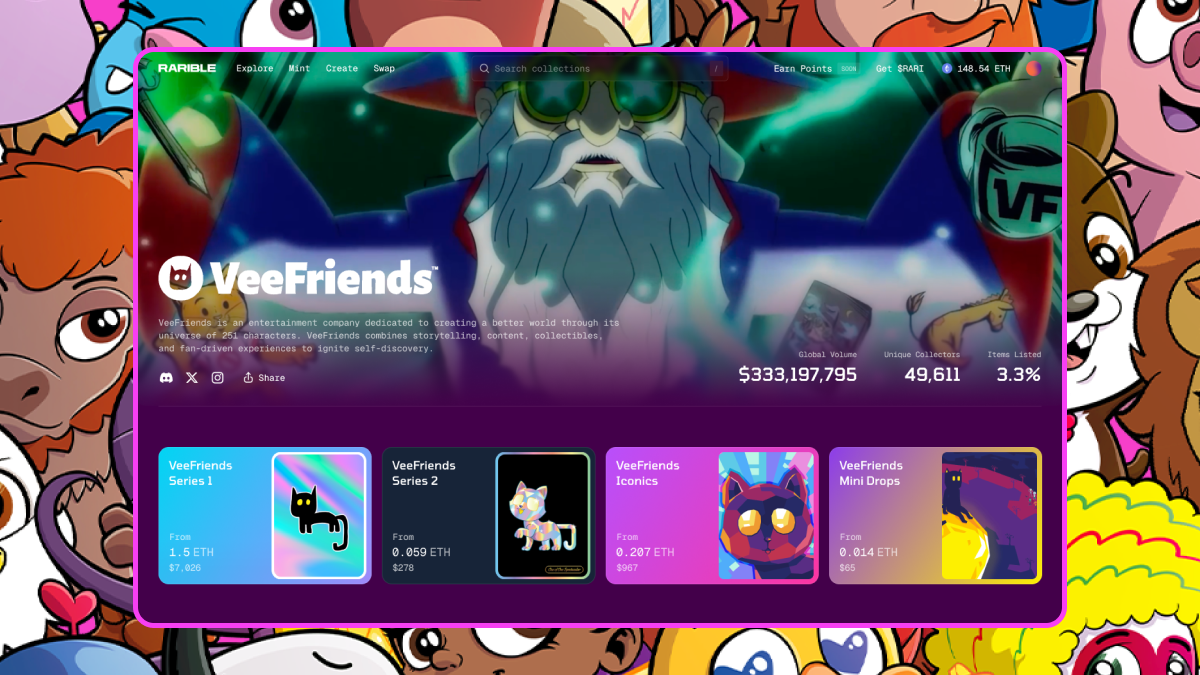
"As commerce moves onchain, storefronts become the new front page for every brand," the company stated during the launch. This sentiment is echoed by industry analysts who argue that the next phase of the internet—often dubbed Web3—will be defined by the "ownership economy." In this model, the relationship between a brand and its customer is direct and verifiable on the blockchain, eliminating many of the data-tracking and intermediary costs associated with traditional Web2 advertising and retail.
Broader Impact on the E-commerce Landscape
The implications of the Rarible-VeeFriends partnership extend beyond the NFT niche. If onchain storefronts can successfully integrate fiat payments and social logins while maintaining the benefits of blockchain (such as true ownership and interoperability), they pose a legitimate challenge to traditional e-commerce giants.
Traditional retail platforms operate on a "closed" database model, where a customer’s purchase history and digital assets are locked within a single ecosystem. In contrast, the onchain storefront model allows for "portable" loyalty. A digital collectible purchased on the VeeFriends storefront could, in theory, unlock benefits on other platforms, in video games, or at physical events, because the proof of ownership exists on a public ledger rather than a private server.
The Path Forward for Onchain Retail
The launch of the VeeFriends storefront is described by Rarible as "just the first step." In the coming months, several other high-profile brands are expected to debut their own customized spaces on the platform. This rollout will test the scalability of Rarible’s infrastructure and the willingness of mainstream consumers to adopt onchain commerce when the "crypto" elements are tucked behind a familiar shopping interface.
As the industry moves away from the speculative volatility of 2021, the focus has shifted toward utility, brand identity, and user experience. The collaboration between Rarible and VeeFriends serves as a case study for this transition. By prioritizing storytelling and ease of use, they are attempting to build a sustainable model for digital commerce that values long-term brand equity over short-term trading volume.
The success of this initiative will likely be measured not just by transaction volume, but by the degree to which it can attract and retain non-crypto-native users. If the "VeeFriends Wallet" and Crossmint integrations can successfully bridge the gap for the average fan, it may provide a blueprint for how every major consumer brand approaches the blockchain in the years to come. The future of brand commerce is increasingly appearing to be onchain, and the Rarible storefront launch represents a pivotal moment in making that future accessible to a global audience.