
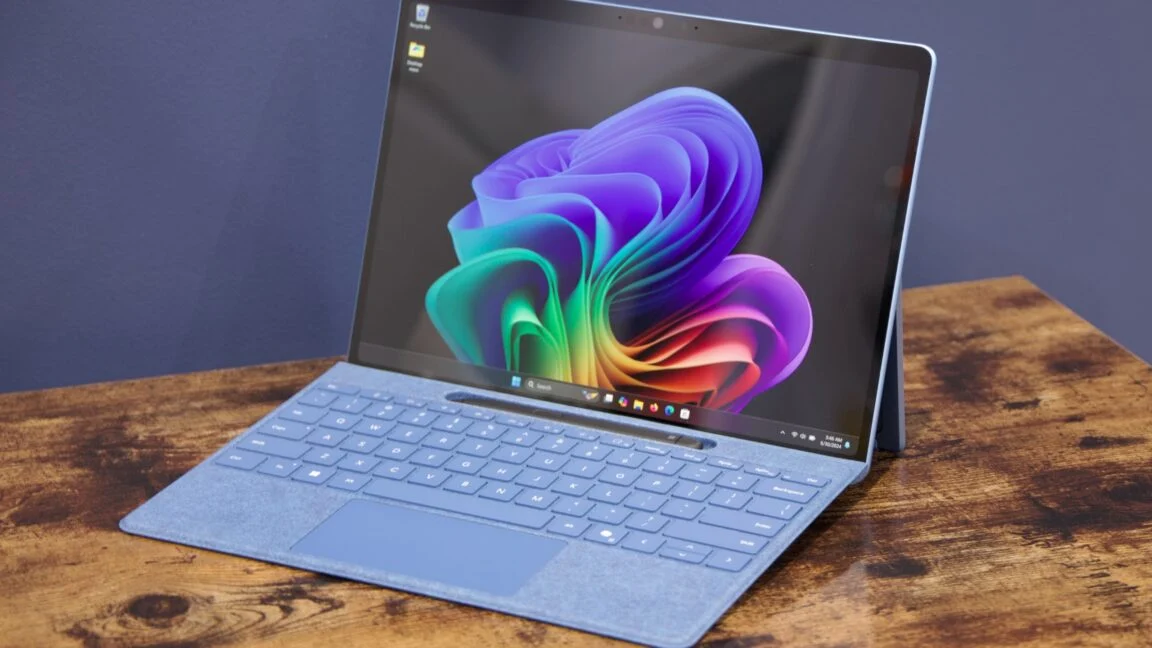
Microsoft has announced a substantial restructuring of its Surface hardware pricing, signaling a definitive end to the era of the sub-$1,000 premium Windows tablet and laptop. This strategic shift comes as the technology giant grapples with escalating production costs, specifically citing a volatile market for memory and essential semiconductors. Consumers who have been anticipating the arrival of the latest Surface iterations, potentially powered by Qualcomm’s high-performance Snapdragon X Elite processors, now face a significantly higher barrier to entry. The pricing adjustments represent a departure from Microsoft’s previous market positioning, where it sought to compete directly with mid-range and premium offerings from rivals such as Apple and Dell.
The price increases are not uniform but reflect a broad upward trend across the entire mobile computing portfolio. The 12-inch Surface Pro tablet, which formerly served as a more accessible entry point with a starting price of $799, has seen its base cost climb to $1,049—a $250 increase. Similarly, the 13-inch Surface Laptop, which launched at a competitive $899 just two years ago, now carries a starting price of $1,149. The most dramatic shifts are observed in the high-end configurations. Models that debuted in 2024 with a $999 price tag were initially adjusted to $1,199 earlier in 2025 following the discontinuation of the 256GB entry-level storage tiers. These same models have now been further adjusted to start at $1,499, representing a cumulative $500 increase over their original launch positioning.
The Catalyst: A Global Memory and Component Crisis
The primary driver behind these adjustments, as reported by industry analysts and confirmed by Microsoft, is the ongoing instability in the global supply chain for memory (DRAM) and storage (NAND flash) components. Microsoft has officially attributed the price hikes to "recent increases in memory and component costs," a sentiment echoed across the consumer electronics sector. The semiconductor industry has been characterized by a "RAM crisis" that began to manifest in late 2023 and has intensified throughout 2024 and into 2025.
This crisis is rooted in several converging factors. Following a period of oversupply in 2022, major memory manufacturers—including Samsung, SK Hynix, and Micron—significantly reduced production output to stabilize prices. However, the subsequent explosion in demand for Artificial Intelligence (AI) infrastructure led to a pivot in manufacturing priorities. Production lines that once produced standard consumer-grade DDR5 RAM were repurposed for High Bandwidth Memory (HBM) required for AI data centers and enterprise-grade servers. This pivot has left a vacuum in the consumer PC market, driving up the cost of the 16GB and 32GB modules that have now become the baseline for modern operating systems.
The impact of this shortage has been felt far beyond Microsoft’s Redmond headquarters. Other hardware manufacturers have faced similar dilemmas. Valve, the manufacturer of the Steam Deck, has experienced intermittent stock outages and delayed shipping schedules due to the same RAM scarcity. Similarly, the Raspberry Pi Foundation was forced to implement its second price hike in a two-month period earlier this year, citing the inability to absorb the rising costs of small-scale components.
Chronology of the Surface Pricing Evolution
To understand the magnitude of the current price hike, it is necessary to examine the trajectory of the Surface lineup over the last three years. In 2022, Microsoft positioned the Surface Pro 9 and Surface Laptop 5 as versatile machines that catered to both students and professionals. The entry-level Surface Pro 9 (Intel Core i5, 8GB RAM, 128GB SSD) launched at $799, making it a viable alternative to the iPad Pro and high-end Chromebooks.
By mid-2024, as Microsoft began integrating "Copilot+" AI features and transitioning toward ARM-based architecture with Qualcomm’s Snapdragon X Elite and Plus chips, the hardware requirements increased. Microsoft effectively raised the floor for system specifications, mandating 16GB of RAM as the minimum for an optimal AI experience. This shift necessitated the removal of the 8GB configurations, which naturally pushed the starting price from $799 to $999.
The transition continued into early 2025. Microsoft discontinued the 256GB storage models for its higher-end 13-inch Surface Pro and Surface Laptop, making the 512GB model the new entry point. This moved the starting price to $1,199. The most recent adjustment in late 2025, which brings the entry point to $1,499 for these premium models, marks a 50% increase in the base price of the high-end tier within an 18-month window. This trajectory suggests that Microsoft is repositioning the Surface brand as a strictly "prosumer" and enterprise luxury line, vacating the sub-$1,000 market to its OEM partners like Acer, Asus, and Lenovo.
Technological Shifts and the "AI PC" Premium
Beyond simple component costs, the integration of new technologies has contributed to the price surge. The adoption of the Snapdragon X Elite processor represents a significant investment in R&D and licensing. These chips offer industry-leading performance-per-watt and a dedicated Neural Processing Unit (NPU) capable of 45 TOPS (Trillions of Operations Per Second), which is essential for the local execution of Windows 11 AI features.
However, these cutting-edge chips are more expensive to procure than previous generations of mobile processors. When combined with the requirement for faster LPDDR5x memory and high-speed PCIe Gen 4 or Gen 5 storage, the "bill of materials" (BOM) for a modern Surface device has skyrocketed. Analysts suggest that the manufacturing cost of a base-model Surface Pro has increased by approximately 30% compared to the 2022 models. By raising prices, Microsoft is attempting to maintain its profit margins in a market where hardware sales have become increasingly thin.
Market Implications and Competitive Landscape
The decision to abandon the sub-$1,000 price point carries significant implications for Microsoft’s market share. Historically, the Surface Pro was a popular choice for higher education and creative freelancers. At $1,499, a Surface Pro (with the nearly mandatory keyboard cover and stylus often sold separately) can easily exceed $1,700. This places it in direct competition with the 14-inch MacBook Pro and high-end iPad Pro configurations.
Market analysts suggest that Microsoft may be intentionally narrowing its focus. By moving upmarket, the company avoids a "race to the bottom" on price with OEMs who operate on higher volumes and lower margins. However, this leaves a gap in the "premium portable" segment. Consumers looking for a high-quality Windows 11 experience under $1,000 will now have to look toward the Dell XPS 13 or the HP Spectre x360, which have managed to keep their entry-level pricing closer to the $1,000 mark, often by utilizing slightly older component inventories or different supply chain strategies.
There is also the question of enterprise adoption. Many corporations issue Surface devices to their mobile workforces. A $300 to $500 increase per unit is a substantial budgetary hurdle for IT departments managing thousands of devices. If the "RAM crisis" continues through 2026, as some industry experts predict, Microsoft may see a shift in enterprise procurement toward more cost-effective traditional laptop form factors.
Broader Industry Impact and Future Outlook
The Surface price hike serves as a bellwether for the broader PC industry. As Microsoft is often the first to adjust pricing due to its direct relationship with component suppliers and its role in setting the standard for Windows hardware, other manufacturers are expected to follow suit. The industry is currently facing a "perfect storm" of high demand for AI-capable hardware and a restricted supply of the very components that make that hardware possible.
Furthermore, the secondary market for electronics is likely to see a surge. As new Surface models become prohibitively expensive for the average consumer, the demand for refurbished and "last-gen" models is expected to rise, potentially keeping the resale value of older Surface Pro 8 and 9 models higher than usual.
In the long term, Microsoft’s strategy hinges on the perceived value of the "AI PC." If consumers and businesses find that the productivity gains from Copilot and local NPU processing justify the $1,500 investment, Microsoft’s gamble will have paid off. However, if the "AI revolution" in personal computing remains in its nascent, experimental stage, the high cost of entry may lead to a stagnation in Surface sales.
As of late 2025, the message from Microsoft is clear: the Surface is no longer a tool for the masses, but a premium instrument for those willing to pay a significant premium for the latest in ARM-based computing and integrated artificial intelligence. With the $1,000 price floor now firmly in the rearview mirror, the industry will be watching closely to see if the rest of the Windows ecosystem follows Microsoft into this new, more expensive territory.
